
Lieferung heute & morgen

Qualitätsgarantie

Willkommens-Angebote freischalten: KOSTENLOSE Lieferung | Bis zu 80 % RABATT | Kostenlose 30-Tage-JoyPlus-Testphase
App herunterladen
Solar lights for the garden do not need a permanent electrical connection and can usually be installed without tools. However, not every model is suitable for every area. Unclear information about brightness, battery life or weather resistance often leads to unsuitable purchases.
Before buying, watch out for these three common pitfalls:
Warm white solar lights at around 2700 K create a subtle atmosphere in the garden and are suitable for patios, flower beds and decorative borders. Cool white light at around 6500 K can emphasise contours more strongly and is better suited to functional solar path lights. RGB solar lights switch between different colours and are intended for decorative settings or seasonal displays.
Also check whether the light only switches on automatically at dusk or offers additional functions. According to the product description, the Aigostar Bluetooth Mesh Smart Solar Recessed Ground Light offers RGB+CCT settings between 2700 K and 6500 K, app control, schedules and group control. A compatible hub may be required for voice control of these functions.
Runtime depends on several factors: sunlight, panel orientation, shade, temperature and battery condition. Product specifications such as 4 to 6 hours’ charging time and 8 to 12 hours of battery operation should therefore be understood as guidelines under suitable conditions.
Pay attention to the battery type and stated capacity. Some models use integrated Ni-MH batteries, while others use a lithium battery. A cloudy day, short winter days or a dirty solar panel can reduce charging performance. The panel should therefore be cleaned regularly with a soft cloth.
For outdoor solar lights, the IP rating is an important selection criterion. IP44 means protection against splashing water, while a model with IP54 also provides a higher level of protection against dust. Nevertheless, the lights should not stand in water or remain submerged for long periods.
Solar ground lights and solar lights with ground spikes require a stable surface. Push the ground spike into soft, firm soil and avoid heavily compacted ground or hard stones. For lawns, flower beds and path edges, spike-based installation makes it easy to reposition the lights. For a driveway or patio, however, a more secure ground or wall-mounted solution may be more suitable.
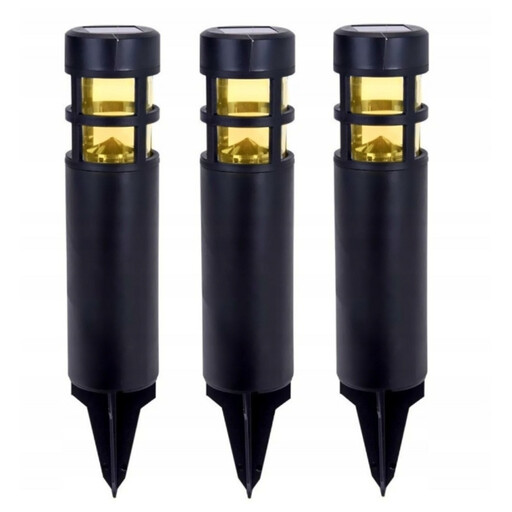
Why this product suits this profile: The set of three is an easy starting point when you want to illuminate several points along a flower bed, lawn or short path.
The number of lights is clearly stated, making it easier to plan the desired spacing before ordering.
Three lights, solar charging and automatic switching on and off at dusk and dawn.
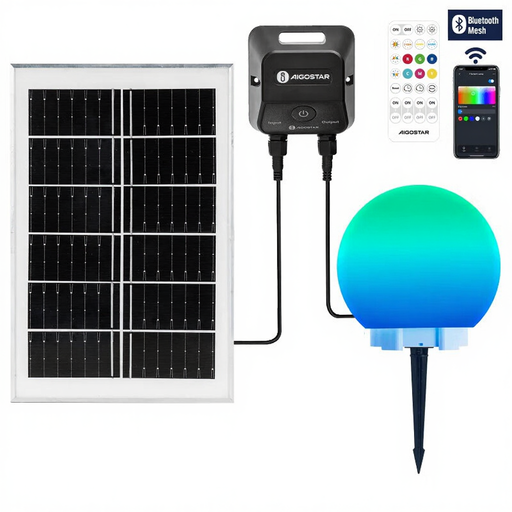
Why this product suits this profile: App control and adjustable light colour are ideal for users who want to configure several lights precisely.
The description specifies the control method, colour range and different IP ratings. Before buying, check these details against the intended installation location.
RGB+CCT light from 2700 K to 6500 K, Bluetooth Mesh connectivity and a lithium battery according to the product description.
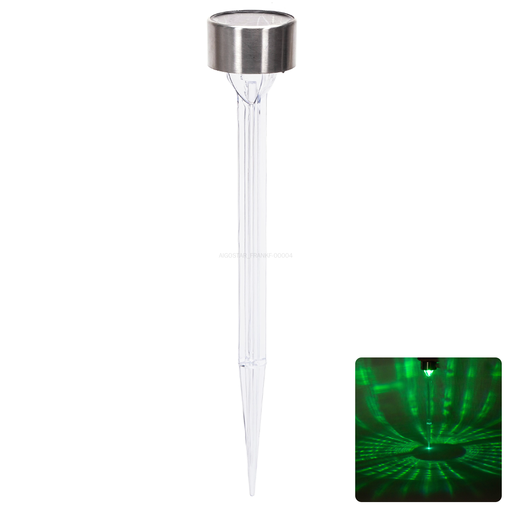
Why this product suits this profile: The colour-changing design can be positioned conveniently for recurring decorative use along paths, lawns or flower beds.
The IP44 rating indicates that the light can withstand splashing water, but permanently wet or flooded locations should be avoided.
RGB light, ground-spike installation, a stated charging time of 4 to 6 hours and runtime of 8 to 12 hours under suitable conditions.
Place solar lights for flower beds and paths where the panel can receive several hours of direct daylight whenever possible. Trees, walls and tall shrubs can significantly reduce charging performance. Before securing the lights in place permanently, it is worth testing them at the planned location.
Along paths, the lights should not be positioned so close to the walking surface that they get in the way when mowing, sweeping or walking. Even spacing usually looks tidier than a large number of closely positioned lights. After installation, check that the ground spike is firmly in place.
Clean the surface of the solar panel with a soft, slightly damp cloth. Do not use abrasive products. At the end of their service life, batteries and electronic components must be disposed of separately in accordance with local regulations. Damaged lights should no longer be used and must not be opened yourself.
We have put together a complete, regularly updated list of products that fully meet these strict selection criteria and the safety regulations applicable in the EU.
According to many product specifications, models require around 4 to 6 hours under suitable conditions. Actual charging performance may be lower in overcast weather, shade or when the panels are dirty. The amount of available daylight is shorter in winter.
Service life depends on the LED, housing, battery, weather conditions and care. Some product descriptions, for example, state an LED lifespan of up to 15,000 hours. This does not automatically mean that the entire product will last just as long, as batteries are consumable components.
During operation, solar lights draw their energy from the battery charged during the day and do not need to be connected to the mains electricity supply. Costs may still arise from replacing batteries or individual lights. The battery type, accessibility and manufacturer’s specifications are therefore relevant when choosing a product.