
Lieferung heute & morgen

Qualitätsgarantie

Willkommens-Angebote freischalten: KOSTENLOSE Lieferung | Bis zu 80 % RABATT | Kostenlose 30-Tage-JoyPlus-Testphase
App herunterladen
Solar lights for the garden do not require a fixed power connection and can usually be installed without complicated wiring. However, not every model is suitable for every outdoor area. A small pathway light with a low light output serves a different purpose from an outdoor solar floodlight for a driveway or a permanently recessed solar ground light.
Before buying, you should therefore consider more than just the design and lumen rating. Important factors include the location, the actual IP rating, the position of the solar panel and the battery capacity.
With LED solar lights, the wattage is sometimes given particular prominence in advertising. However, the actual light output depends mainly on lumens, the number and quality of the LEDs, and the way the light is distributed. A light with focused optics can illuminate a path more precisely than a decorative model with a similar wattage.
You should therefore check:
The term “waterproof” does not precisely describe the weather conditions a light can withstand. The IP rating under IEC 60529 is more informative. The first digit indicates protection against solid foreign objects, while the second indicates protection against water.
Solar lights for the garden may, for example, have IP44, IP65 or IP67 ratings. These ratings do not mean the same thing:
Even a light with a high IP rating should not be left permanently in standing water unless the manufacturer expressly permits this. Solar ground lights also need to be installed correctly, with a properly functioning seal.
Claims such as “up to twelve hours” or “up to 24 hours” refer to suitable charging conditions. In shade, with limited sunlight or if the solar panel is dirty, the operating time may be shorter. Less stored energy should also be expected, particularly in winter.
For reliable solar garden lighting, the panel should ideally be positioned without shade, facing upwards or towards the sunniest side. Trees, house walls, canopies and tall shrubs can significantly reduce charging performance.
Solar lights with warm white light of around 2700 to 3000 Kelvin are often suitable for patios, seating areas and decorative applications. The light feels less technical and can subtly highlight flower beds or paths.
Neutral or cool white light provides more functional illumination. For driveways, larger areas or an outdoor solar floodlight, a focused, brighter light distribution may be useful. For residential areas, you should also check whether the beam could dazzle neighbours or passing pedestrians and drivers.
Pay attention to:
A larger battery may provide a longer operating time, but on its own it says nothing about the actual brightness. Smart models may also offer app compatibility, Bluetooth range and control of multiple lights.
Solar pathway lights with ground stakes are suitable for lawns, loose flower beds or soft ground. On hard surfaces, you will instead need a model designed to stand on a surface or be mounted. Solar ground lights must be installed flush and securely to prevent trip hazards.
Aluminium, glass, ABS and plastic have different characteristics in terms of weight, appearance and durability. Check the dimensions and temperature range before buying. For freestanding lights, it is also important that the ground stake sits securely enough in the soil.
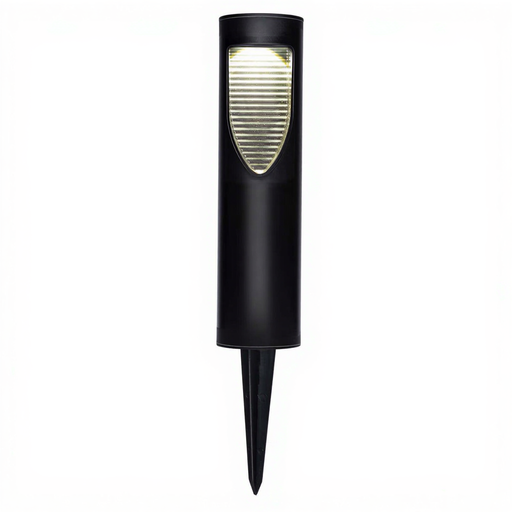
Why this product suits this profile: This freestanding light is designed for simple paths, flower beds or small patio areas and does not require a fixed electrical installation.
The warm white light and technical information about the battery and solar operation make its suitability for decorative guidance clearer than a simple advertising claim about brightness.
SMD LED, warm white light, integrated 600-mAh Ni-MH battery and automatic dusk activation.
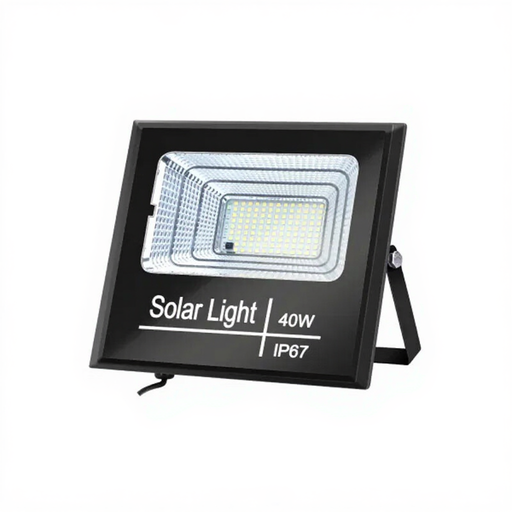
Why this product suits this profile: The separate panel allows more flexible positioning when the intended lighting location is not directly reached by sunlight.
The stated IP65 rating and separate-panel design provide specific points to check when planning outdoor installation and positioning.
Separate solar panel, 10,000-mAh battery and, according to the product information, up to twelve hours of operating time under suitable charging conditions.
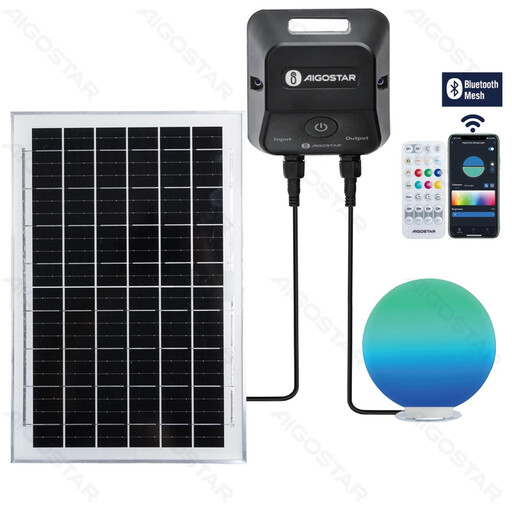
Why this product suits this profile: The recessed design and app control are suitable for users planning multiple light points or changing lighting scenes.
The IP67 rating, temperature range from -10 °C to 50 °C, and specific information about the battery and panel help with assessing the installation location.
RGBCCT from 2700 to 6500 Kelvin, Bluetooth Mesh control, 10-W monocrystalline panel and 8-Ah lithium iron phosphate battery.
Another decorative option is the Aigostar Solar Garden Light Bubble Stick Warm White 2700K IP44. Measuring 36.7 cm in height, with a ground stake and warm white light, it is suitable for lawns and flower beds. The IP44 rating indicates that it should be positioned away from persistent moisture or standing water. For a simple path, the Grundig Solar Light 6.5x34cm 2 LED 1 PC with two LEDs and an AAA battery may also be worth considering.
We have put together a complete, regularly updated list of products that fully meet these strict selection criteria and the safety regulations applicable in the EU.
Choose a location that is as sunny and free from shade as possible. The panel should not be placed beneath trees, canopies or directly beside tall walls. Ground stakes should be inserted into sufficiently firm soil; solar ground lights must be recessed level with the surface and installed securely.
Their lifespan depends on the LED module, battery, seals, temperature and care. Clean the solar panel regularly with a soft cloth and check the battery and housing for visible damage. The specific lifespan should be stated in the manufacturer’s information and should not be confused with the daily operating time.
During operation, solar-powered outdoor lights draw their energy from daylight and do not require a mains connection. However, ongoing costs may arise from replacement batteries or damaged components. Before buying, check whether the battery can be replaced according to the manufacturer’s instructions and how disposal is handled.