
Lieferung heute & morgen

Qualitätsgarantie

Willkommens-Angebote freischalten: KOSTENLOSE Lieferung | Bis zu 80 % RABATT | Kostenlose 30-Tage-JoyPlus-Testphase
App herunterladen
Solar lights for the garden are practical because they usually require neither a power cable nor permanent installation. However, not every model is suitable for every outdoor area. A small decorative light for a flower bed serves a different purpose from solar-powered path lighting or a smart solar light controlled via an app.
If you only consider colour, shape or the longest possible operating time, you can easily overlook important details. Three common buying misconceptions are particularly relevant:
For outdoor LED solar lights, the IP rating should be stated in the product description. A model with IP44 is protected against splashing water from various directions, but should not be placed in water or fully immersed. IP54 also provides limited protection against dust. A model with IP65, such as the string lights mentioned below, is protected against dust and water jets; even so, it is not designed for permanent underwater use.
For flower beds, lawns and paths, it is also important that the ground spike is firmly secured in the soil. Very soft or waterlogged ground can cause the light to tip over.
Manufacturer specifications such as “4 to 6 hours’ charging time” or “8 to 12 hours of illumination” should be understood as guide values under suitable conditions. In winter, in overcast weather or where the panel is partly shaded, the actual operating time may be shorter.
The panel should be positioned as far as possible from shade cast by buildings, trees or parasols. Regular cleaning with a soft cloth helps prevent dust and pollen from affecting charging performance. The products use, among other things, Ni-MH batteries or lithium batteries. Do not open the battery yourself or replace it with a model that is not specified for the product.
Warm white solar lights, with a generally neutral, yellowish light effect, are often suitable for gentle ambient lighting on patios, house walls or garden paths. RGB models, by contrast, change colour and are primarily intended for decorative settings.
Also consider the intended use:
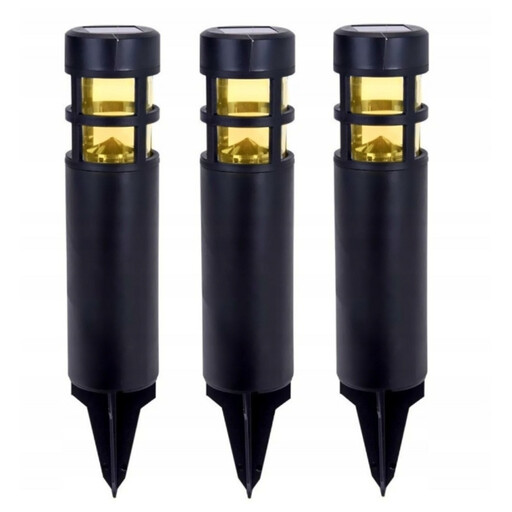
Why this product suits this profile: This set of three is designed for simple marking along paths, flower beds or property boundaries, and can be installed without tools.
The number of lights is clearly stated. Nevertheless, before buying, check that the IP rating, battery specifications and actual light output meet your requirements.
Three lights in one set; according to the product description, they switch on automatically at dusk and off in daylight.
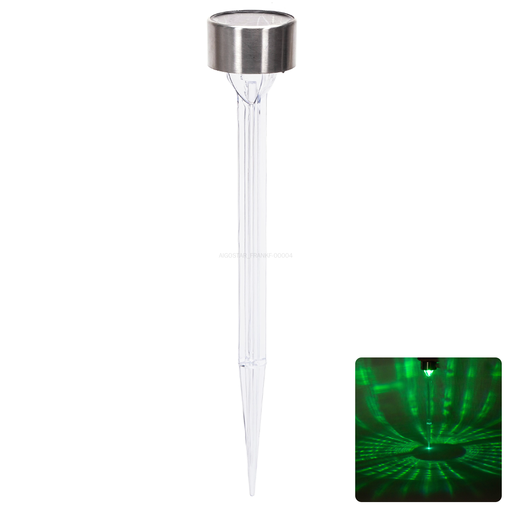
Why this product suits this profile: The stainless steel look, RGB lighting and compact design combine clearly specified materials and functions with decorative path lighting.
The product data specifies a charging time of 4 to 6 hours, 8 to 12 hours of illumination and IP44. This gives you a more realistic assessment of its suitability than the term “weatherproof” alone.
RGB lighting, ground spike installation, a polysilicon panel and a stated battery capacity of 200 mAh.
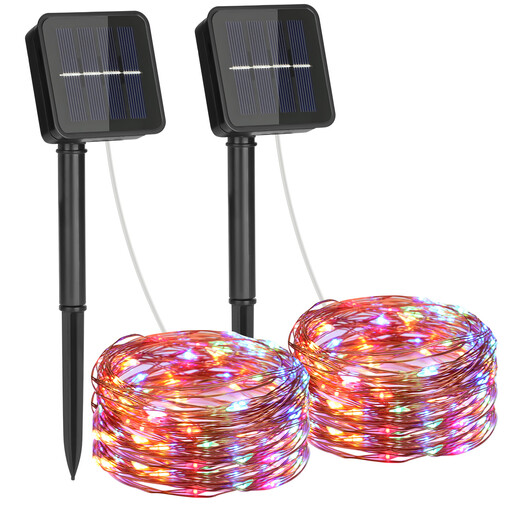
Why this product suits this profile: Two 12-metre solar string lights with 120 LEDs each are ideal for balconies, patios, pergolas or seasonal decorations.
The IP65 rating is clearly specified. However, the panel must not be immersed; direct sunlight is required for reliable charging.
12 metres per string, 120 LEDs, eight lighting modes with memory function and a stated operating time of 8 to 14 hours.
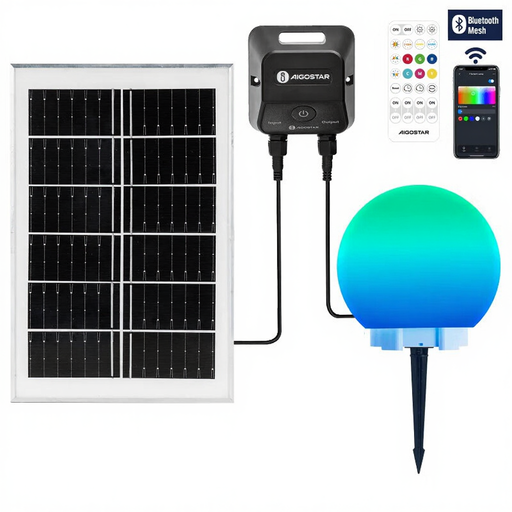
Why this product suits this profile: Bluetooth Mesh, app control and RGB+CCT from 2700 to 6500 K are aimed at users who want to group multiple lights and plan their lighting colours.
The description specifies the app, Bluetooth Mesh and IP54/IP44 ratings. Before buying, therefore, check which rating applies to your particular installation situation.
Adjustable colour temperature from 2700 to 6500 K, RGB colours, schedules and group control via the AigoSmart app.
We have put together a complete, regularly updated list of products that fully meet these strict selection criteria and the safety regulations applicable in the EU.
For consistent performance, solar garden lights should be placed where the panel receives several hours of direct daylight. Pay attention to the following points:
In rented accommodation, models with ground spikes or flexible solar string lights are often easier to use than permanently screwed-in lights. For balconies and small patios, position the panel so that it is not permanently shaded by railings or awnings.
Operating time depends on sunlight intensity, charging time, battery capacity, temperature and lighting mode. Product specifications may state, for example, 8 to 12 hours or 8 to 14 hours. These figures are not a guarantee for every weather condition. In winter or after several dull days, the operating time may be shorter.
This depends on the IP rating and the specific design. IP44 is suitable for splashing water, while IP65 offers greater protection against dust and water jets. Neither of these ratings automatically means that the light may be left permanently underwater. In particular, the solar panel should not be immersed.
During operation, energy is supplied by the solar panel and battery, so no mains connection is required. Potential ongoing costs may arise from replacement batteries or replacing the light itself. Actual service life depends on use, weather conditions, battery quality and care.