
Lieferung heute & morgen

Qualitätsgarantie

Willkommens-Angebote freischalten: KOSTENLOSE Lieferung | Bis zu 80 % RABATT | Kostenlose 30-Tage-JoyPlus-Testphase
App herunterladen
Solar lights for the garden don't need a fixed mains connection, and many models switch on automatically at dusk. This makes them ideal for garden paths, lawns, flower beds, patios and driveways. However, solar garden lights vary considerably in colour temperature, battery capacity, ingress protection rating and installation method.
Claims such as "up to 8–12 hours" usually apply under ideal charging conditions. In shade, during short days or in cloudy weather, the actual run time can be much shorter. What really matters isn't just the hours stated, but also:
The level of protection is described by the IP rating. A product with IP44 is protected against solid objects larger than 1 millimetre and against splashing water from any direction. However, it should not be left standing in water or submerged. Solar ground lights for areas prone to waterlogging therefore need to be installed in a raised position or with suitable drainage.
RGB solar lights or colour-changing solar lights are best for accent effects. For solar lights along garden paths, a constant colour temperature is often more practical. Warm white light is subtle and suits seating areas or flower beds. Cool white light can emphasise contours more strongly, but can look more conspicuous depending on the surroundings.
Check the IP rating matches the installation location. Covered patios have different requirements from open lawns. The IP rating stated in the product specifications is a technical guide, but doesn't replace proper installation. Among the models featured here you'll find IP44 and, for the smart variant, ratings of IP54/IP44.
Colour temperature is measured in Kelvin:
The wattage alone doesn't describe the perceived brightness. Also look at the number of LEDs, luminous flux in lumens, beam angle and the intended use. For decorative solar lights, a low power consumption may be sufficient, whereas a driveway has different requirements.
Solar lights with a ground spike can be placed in soft soil or lawn without any electrical installation. The spike should sit firmly without being forced into stony ground. The solar panel needs as much direct sunlight as possible and should be cleaned regularly with a soft cloth.
Solar ground lights are an alternative for solid paths or patios. Here you should pay attention to the installation height, load capacity and drainage. A set of solar lights with multiple units can be more practical for achieving even spacing along paths or flower bed edges than buying individual models.
The following recommendations group products by use case and verifiable technical specifications. Product data such as run time and charging time depend on location, weather and maintenance.
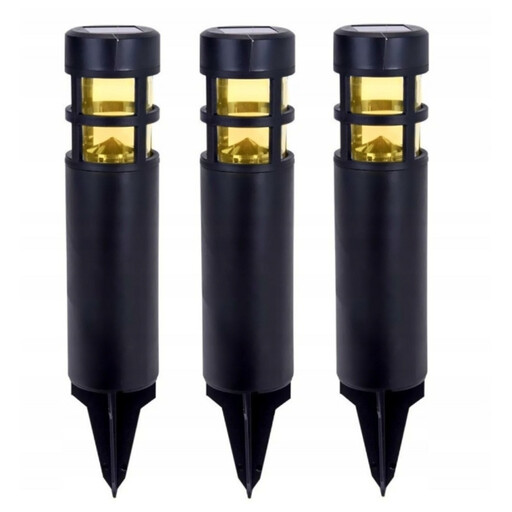
Why this product suits the profile: This set of three solar lights is ideal for buyers who want to illuminate several areas – such as a short garden path, a flower bed edge or a lawn border – without buying each light separately.
The product description explicitly mentions the automatic switch-on at dusk and the need to place it in direct sunlight. This allows you to plan the location carefully before installation.
Three lights in one set, wireless installation and automatic dusk sensor.
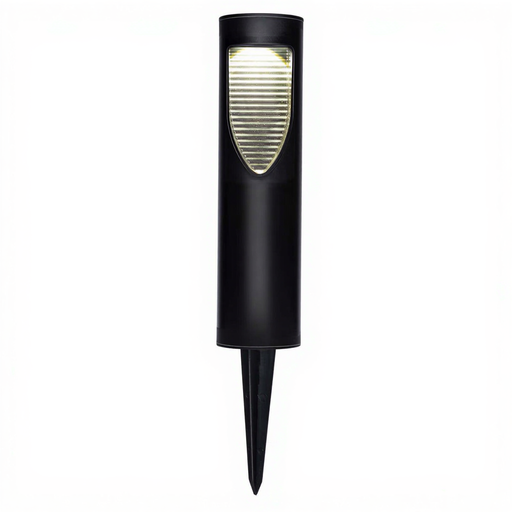
Why this product suits the profile: The warm white SMD LED and the contemporary black plastic design are a good match for entrances, patios and classically styled garden paths.
The specifications state an integrated 600 mAh Ni-MH battery and note that the light should not be left standing in water or submerged.
Warm white SMD light, 600 mAh Ni-MH battery and freestanding use without professional electrical installation.
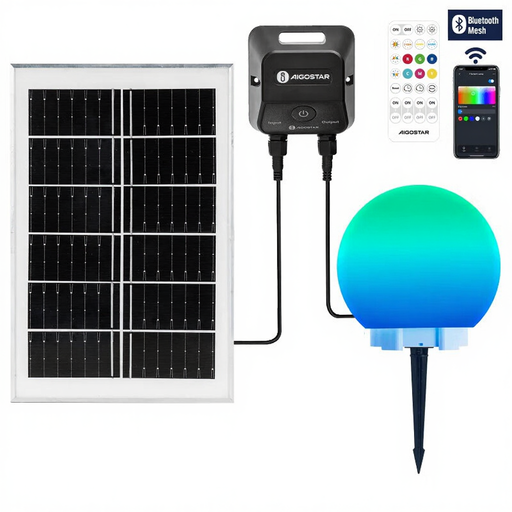
Why this product suits the profile: This smart light is aimed at users who want to group, dim or schedule multiple light points via the AigoSmart app.
The product data mentions Bluetooth Mesh, app control and RGB+CCT from 2700 to 6500 K. It also notes that the light must not be submerged.
RGB+CCT light, Bluetooth Mesh connection and app control for groups, brightness and schedules.
We've put together a full, regularly updated list of products that fully meet these strict selection criteria and the safety regulations in force in the EU.
The charging time depends on the solar panel, battery capacity, time of year and shading. For the Aigostar models mentioned, a charging time of around 4 to 6 hours is stated under suitable conditions. Before first use, the product should be fully charged according to the instructions.
The lifespan depends on the LED, battery, housing, weather and maintenance. Individual product data for certain Aigostar lights states an LED lifespan of up to 15,000 hours. This figure doesn't automatically describe the usable life of the entire product. The battery may lose capacity sooner, depending on charge cycles and temperature.
Solar lights charge their integrated battery via the solar panel and don't need a mains socket during normal operation. This means no fixed wiring is required for installation. However, the light output and run time still depend on the available sunlight and the battery's state of charge.