
Lieferung heute & morgen

Qualitätsgarantie

Willkommens-Angebote freischalten: KOSTENLOSE Lieferung | Bis zu 80 % RABATT | Kostenlose 30-Tage-JoyPlus-Testphase
App herunterladen
Solar lights for the garden can be installed without mains cables, and suitable models switch on automatically at dusk. However, not every solar garden light is right for every outdoor space. Key factors include the amount of sunlight available, the type of light you want and protection against moisture.
If you focus only on design, RGB colours or a low price, it’s easy to overlook important technical details. The following points will help you avoid a disappointing purchase and find the right solar-powered outdoor lighting for your garden.
The term ‘weather-resistant’ isn’t a technical rating in itself. Check the IP rating. IP44 lights are protected against solid objects larger than 1 millimetre and splashing water from different directions. However, they shouldn’t be placed in a dip that is constantly flooded or submerged completely in water.
The Aigostar models featured here are rated IP44. This is useful to know if you’re placing them along paths, on lawns or in flower beds exposed to normal weather conditions. Areas where water tends to collect may need additional drainage or other measures.
Charging performance depends on whether the solar panel gets several hours of direct sunlight. Shade from walls, trees or canopies reduces the energy available. Cloudy days, low sun and dirty panels can also affect how long the lights stay on.
Some models specify a 4 to 6-hour charging time and an 8 to 12-hour lighting time. These are manufacturer specifications, not a guarantee for every season or location.
RGB solar lights change colour or create coloured accents. They can work well in flower beds, on lawns or on the patio. For safely finding your way along a path, however, the actual light output matters more. Check whether the lumen rating, light distribution and beam angle are specified. A low power rating doesn’t automatically mean a particular level of brightness.
Panels made from monocrystalline, polycrystalline or amorphous silicon can perform differently depending on their design and the conditions they’re used in. More important than the panel type alone is its position: it should face upwards and remain as unshaded as possible.
The ground also matters for solar lights with stakes. Soft soil or a lawn makes them easier to install. Very hard or stony ground can damage the stake. Don’t open the built-in Ni-MH batteries yourself or replace them with unsuitable batteries.
For outdoor use, it’s helpful to check details such as the IP44 rating, permitted operating temperature and materials. According to the product specifications, the stainless-steel-effect model is made mainly from plastic with a stainless-steel finish. This isn’t the same as a light made entirely from stainless steel.
Clean the panel with a soft cloth. Harsh or abrasive cleaning products can damage the surface. When you no longer need the lights, dispose of the electronic components and batteries through the appropriate take-back or recycling schemes.
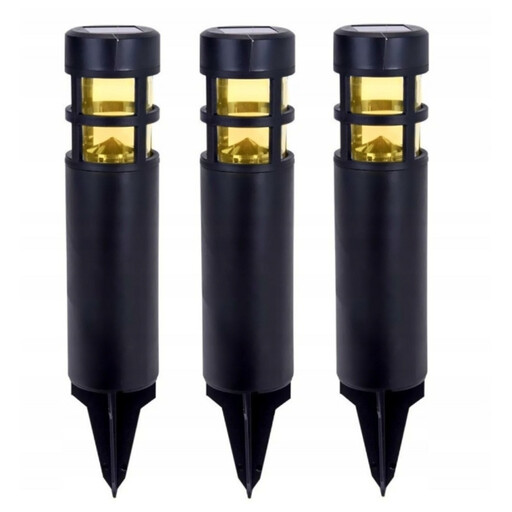
Why this product suits this profile: This set of three gives you an easy way to get started lighting flower beds, paths or lawn edges, without having to choose several individual products.
The number of lights is clearly stated, making it easier to plan your layout and avoid having to buy several individual lights later.
Three lights, no need for professional electrical installation, and automatic switching on at dusk according to the product description.

Why this product suits this profile: The stated colour temperature of 6500 K, IP44 rating and stainless-steel look give you clear technical and design criteria to consider for paths and flower beds.
The product specifications state the charging time, lighting time, IP44 rating and temperature range of -10 °C to 50 °C. This lets you check key operating conditions before buying.
Polycrystalline solar panel, NiMH battery, 6500 K light and a stated LED lifespan of 15,000 hours.
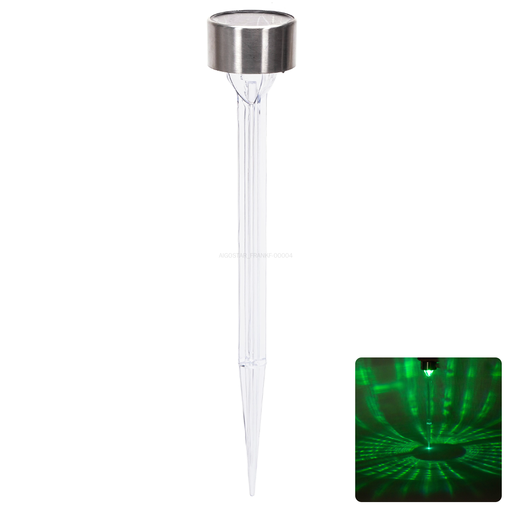
Why this product suits this profile: The RGB feature is ideal if you want to add decorative accents to areas of your garden, lawn or patio.
The product description specifically identifies RGB as the light colour and notes the limitations of IP44. This helps you avoid mistaking decorative accent lighting for a fully waterproof light.
200 mAh Ni-MH battery, automatic dusk switching, a 4 to 6-hour charging time and a stated lighting time of 8 to 12 hours.
We’ve put together a complete, regularly updated list of products that meet these strict selection criteria and fully comply with the safety regulations in force in the EU.
Choose a spot that gets as much direct sunlight as possible. The panel shouldn’t be shaded by buildings, walls, trees or parasols. Lights with stakes are best placed in firm, soft ground. Before using a light for the first time, charge it as instructed in the product manual.
Their lifespan depends on the battery, LED, weather, care and charging conditions. Some models state an LED lifespan of up to 15,000 hours. This doesn’t mean the entire light or its battery will last for the same length of time.
Solar lights draw power from their built-in battery while in use, and the battery is charged by the solar panel. So they don’t incur ongoing mains electricity costs during normal operation. However, how well they work depends on whether the location gets enough sunlight and the battery charges reliably.