
Lieferung heute & morgen

Qualitätsgarantie

Willkommens-Angebote freischalten: KOSTENLOSE Lieferung | Bis zu 80 % RABATT | Kostenlose 30-Tage-JoyPlus-Testphase
App herunterladen
Solar lights for the garden are designed to mark out pathways, highlight flower beds, or create a pleasant ambience on balconies and patios. The range extends from small stake lights and solar garden lanterns to decorative table lamps. To ensure your purchase doesn’t disappoint after a short time, it’s worth looking at the technical specifications rather than relying solely on product images and marketing claims.
The lighting duration depends on several factors: battery capacity, charging time, sunlight levels, shading and light output. A lamp may switch on automatically at dusk, but if it receives little direct sunlight, it could shine for significantly less time. Claims such as “lights up all night” should therefore be compared against concrete figures for battery type, capacity and operating time.
Not every solar outdoor light is suitable for all weather conditions. A protection rating such as IP44 means protection against solid foreign objects larger than 1 millimetre and against splashing water from any direction. However, it is not a guarantee against permanent submersion, standing water, or an unprotected location in all weather. If an IP rating is missing, you should be especially cautious when assessing where to use it.
Solar-powered lights need a suitable location with as much direct sunlight as possible. Dust, leaves or dirt on the solar panel reduce the amount of light absorbed. Additionally, batteries can lose capacity after extended use. An accessible design and clear instructions on battery replacement or disposal are therefore practical selection criteria.
For pathways and flower bed edges, solar LED garden lights with directional or downward-facing illumination are commonly used. Warm white light generally feels more subtle outdoors than cool white light. If you prefer a calm atmosphere on your patio or balcony, you can specifically look for solar lights with warm white light.
Light output is measured in lumens. A higher lumen value means a greater amount of light emitted, but on its own it doesn’t tell you anything about the range or light distribution. A 90-lumen table lamp, for example, is better suited to a small seating area than to evenly lighting a long garden path.
Pay attention to:
In cloudy weather or in the shade, the charging time increases, or the available lighting duration may decrease. Solar pathway lights should therefore not be installed directly under trees, close to tall walls, or in permanently shaded spots.
Stake lights need a firm surface. Hard, compacted soil can make inserting the ground spike difficult; using force can damage plastic parts or connections. Also check the height and diameter before buying. A light that is 34 centimetres tall creates a different effect to a compact flower bed light.
For outdoor areas, information on material and protection rating is important. Plastic is lightweight and low-maintenance, while metal or wooden elements depend more on the specific location and care. Solar lamps should be cleaned regularly with a soft cloth. For products not explicitly rated for permanent exposure to moisture, a sheltered location is advisable.
The following selection groups products by specific usage scenarios. The technical details refer to the respective product information.
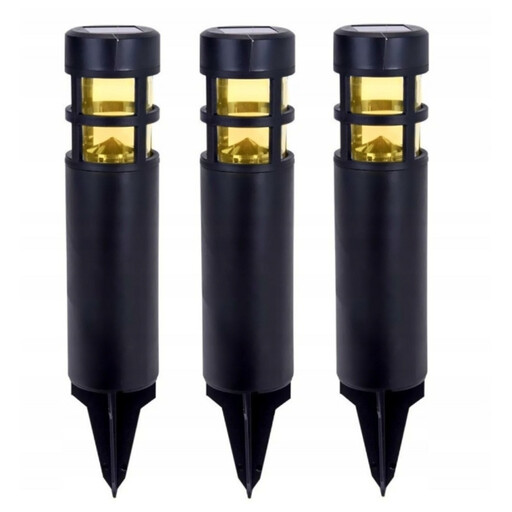
Why this product suits the profile: The set of three lights is ideal for buyers who want to equip several areas – such as a path, flower bed edge or small patio – with a matching model. According to the product description, installation is straightforward.
The number of pieces is clearly stated. However, before purchasing, you should still check the battery data, protection rating and specific lighting duration on the product page, as these values are not mentioned in the description provided here.
Three lights in one set; automatic switch-on at dusk according to the product description.
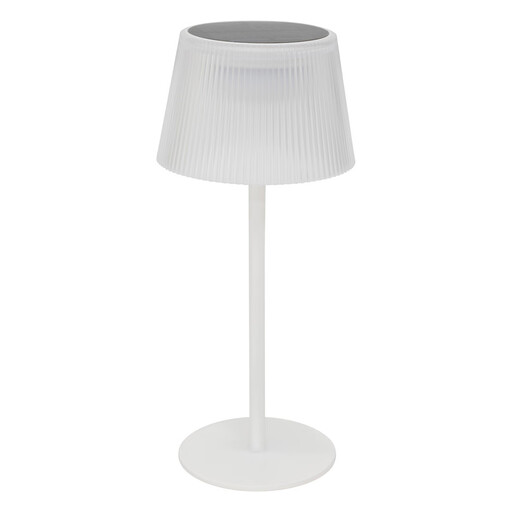
Why this product suits the profile: The 30-centimetre-high table lamp is designed for a balcony, patio or garden table. It offers warm white light, 12 LEDs and a stated light output of 90 lumens.
The product data lists charging time, lighting duration, light output and protection rating IP44. Important: despite the name Solar LED Table Lamp, the information provided here describes a connection to a mains socket.
90 lumens; warm white light; stated lighting duration of 6 hours; 2-year warranty according to the product information.
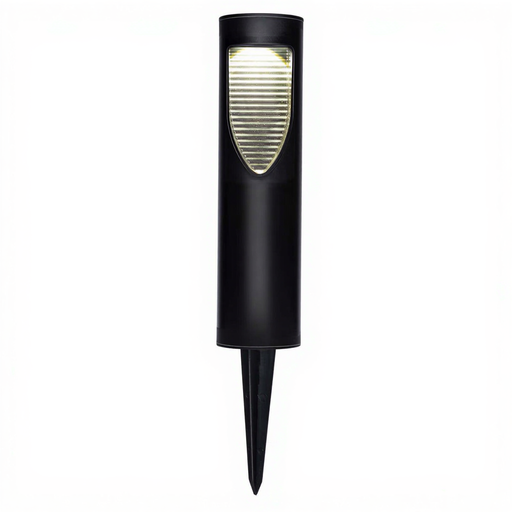
Why this product suits the profile: This freestanding solar garden lantern is intended for paths, lawn edges and flower beds. The black plastic housing and height of 31 centimetres suit a discreet outdoor lighting scheme.
The product description mentions the Ni-MH battery with 600 mAh, automatic on/off switching, and a note not to submerge the light permanently.
Warm white SMD LED; 600 mAh Ni-MH battery; no wall mounting or professional electrical installation required.
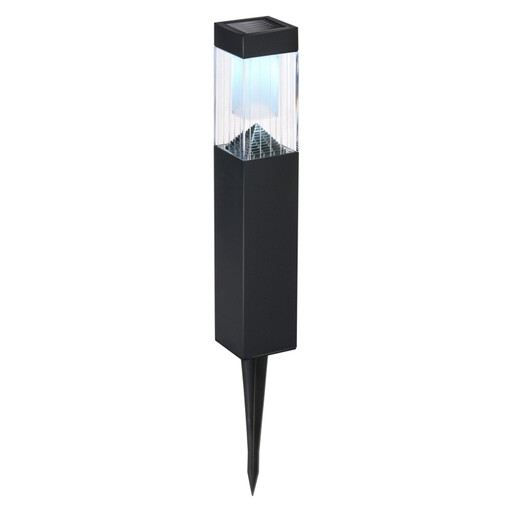
Why this product suits the profile: The 34-centimetre-high stake light is designed for garden paths, driveways and walkways. The format suits users who want to place individual points of light along a route.
The dimensions, the number of two LEDs and the power supply via an integrated solar panel are stated. Before installation, check that the ground offers a firm hold.
Wireless stake installation; two LEDs; automatic switch-on in darkness according to the product description.
For solar lights with a dusk sensor, a nearby direct light source is unfavourable. Street lighting or a bright patio lamp can affect the sensor and delay the switch-on.
We have compiled a complete, regularly updated list of products that fully meet these strict selection criteria and the safety regulations in force in the EU.
That depends on the solar panel, battery, weather and location. As a concrete example, the Katy Solar LED Table Lamp states a charging time of at least 5 to a maximum of 6 hours and a stated lighting duration of 6 hours. These values are product-specific and do not apply to all solar lights.
Possible causes include a dirty or shaded panel, several cloudy days, an old battery, or an unfavourable sensor setting. First check the location and clean the surface. If the lighting duration remains significantly reduced, the battery may no longer be able to fully store the energy.
During operation, solar lights draw their energy from the previously charged battery. Normally, no mains connection is required for use. However, the actual energy yield depends on the sunlight and the technical design. When choosing, you should therefore consider battery capacity, charging time and lighting duration together.