
Lieferung heute & morgen

Qualitätsgarantie

Willkommens-Angebote freischalten: KOSTENLOSE Lieferung | Bis zu 80 % RABATT | Kostenlose 30-Tage-JoyPlus-Testphase
App herunterladen
Solar lights for the garden offer wireless outdoor lighting without a fixed mains connection. They are ideal for garden paths, borders, patios, driveways and areas where running a cable would be disproportionately difficult. However, to avoid disappointment shortly after purchase, buyers should consider more than just the design and the stated wattage.
A high wattage does not automatically mean high light output with LED lights. More meaningful specifications are lumens, light distribution and illumination duration. A decorative solar garden light requires significantly less light than an outdoor solar floodlight for a driveway.
If the lumen rating is missing entirely, it is difficult to assess the actual brightness. For paths and borders, subtle orientation lighting is usually sufficient. For security areas, the light should provide more targeted and powerful illumination.
The term "weatherproof" is of little value without a specific IP rating. The first digit indicates protection against solid objects, the second against water. A light with IP65, for example, is protected against dust and pressurised water jets. IP67 additionally offers protection against temporary immersion under the specified test conditions.
This does not mean that every waterproof solar light can be permanently submerged. Even with a higher IP classification, you should avoid water pooling, flooding and incorrectly sealed cable connections.
A solar panel needs sufficient direct light during the day. Shade from house walls, trees or overhangs reduces charging performance. A solar light with a motion sensor places different demands on the battery compared to a light that remains permanently switched on for many hours.
Therefore, pay attention to:
A warm white solar light typically creates a cosier, less technical-looking illumination. It suits seating areas, patios, house entrances and decorative garden zones. Cool white light can emphasise contours more strongly and is better suited to work or security areas.
If you want even orientation lighting along a path, you can combine several solar path lights with a similar light colour and design. For borders and edge areas, smaller solar ground lights or decorative spike lights are sufficient, provided strong illumination is not required.
An LED solar light consumes less energy than older light sources and can be built compactly. However, the balance between LED output, battery capacity and operating mode remains crucial.
A solar light set with several smaller lights distributes illumination along a path or border edge. A single solar floodlight with a separate panel can, on the other hand, illuminate a specific area more precisely. A solar light with a motion sensor reduces operating time by activating only when movement is detected. Check whether the detection angle, range and afterglow duration suit your property.
For outdoor use, the material, seals and fixings should feel robust and match the intended application. Plastic is lightweight and corrosion-free, while aluminium and glass enable a different construction for more powerful floodlights. The solar panel should be adjustable so that it receives direct sunlight for as long as possible.
When mounting, bear the following in mind:

Why this product fits the profile: This compact solar path light is designed for simple orientation along garden paths, driveways and border edges. The ground spike allows installation without a mains connection.
The product description specifies two LEDs, an integrated solar solution and an included AAA battery. This makes key information about the power supply transparent.
Two LEDs, 34 cm height, black housing and wireless installation via ground spike.
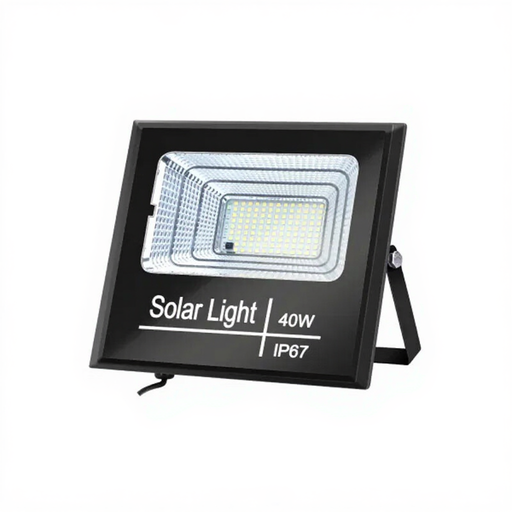
Why this product fits the profile: The floodlight with a separate solar panel offers more flexibility for placement. According to the manufacturer's specifications, it features an aluminium and glass housing, IP67 protection and a 10,000 mAh battery.
The product specifications provide concrete battery, protection rating and material data rather than just general terms like "weatherproof".
Separate panel, 10,000 mAh battery as stated by the supplier and IP67 rating; suitable for targeted outdoor lighting without a mains cable.
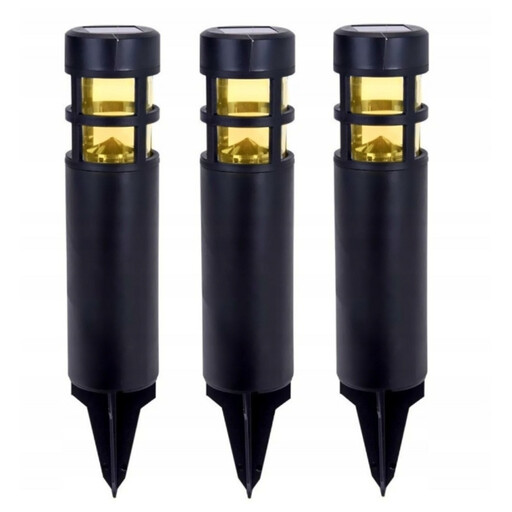
Why this product fits the profile: The set of three lights is ideal for users who want to illuminate multiple points along a path, border edge or patio.
The quantity is clearly stated. Buyers can plan the number they need rather than having to combine individual lights afterwards.
Three lights per set, automatic activation at dusk according to the product description and simple placement outdoors.
For subtle garden lighting without mains power, warm white lights along paths and seating areas are often a good choice. They mark edges without strongly illuminating the entire garden. An outdoor solar floodlight, on the other hand, is more suitable when you want to target a façade, driveway or larger area.
If you want to detect movement and only switch on the light when needed, choose a solar light with a motion sensor. In this case, range, detection angle and adjustable illumination duration are more important than a generally advertised brightness.
We have compiled a complete, regularly updated list of products that fully meet these strict selection criteria and the safety regulations applicable in the EU.
The panel should receive as much direct sunlight as possible and not be permanently shaded by trees, walls or roofs. Ground spikes require firm ground. Before final installation, it is advisable to observe the position over a charging and evening cycle.
The service life depends on the housing, seals, battery, charge cycles and weather conditions. The battery is often the component that wears out. Therefore, check whether a replacement is possible and whether the manufacturer provides information on a suitable replacement battery. Permanent moisture, frost and heavy soiling can impair function.
During operation, there is no electricity consumption from the household mains, as the light uses solar energy. Potential ongoing costs arise from replacement batteries, damaged housing parts or replacing complete lights. A realistic assessment should therefore consider not only the purchase price but also accessibility, battery replacement and the operating conditions at the location.