
Lieferung heute & morgen

Qualitätsgarantie

Willkommens-Angebote freischalten: KOSTENLOSE Lieferung | Bis zu 80 % RABATT | Kostenlose 30-Tage-JoyPlus-Testphase
App herunterladen
Solar lights for the garden provide illumination without the need for fixed wiring. Even so, not every model is right for every outdoor space. A quick look at the design isn’t enough when you’re choosing what to buy: important factors include IP rating, charging conditions, light colour, run time and mounting type.
If you focus only on a high number of LEDs or eye-catching RGB effects, you could miss important details. Many common buying problems stem from three typical pitfalls:
The IP rating describes protection against solid objects and water. For solar garden lighting, the difference between IP44 and IP65 matters in practice:
Follow the manufacturer’s instructions for the solar panel, battery compartment and light unit. Even if a solar light is advertised as waterproof, check whether the IP rating applies to all components or just the string lights.
Solar lights need a spot with as much direct sunlight as possible. Shade from trees, walls or balcony railings reduces the energy available for charging. Figures such as 4–6 hours’ charging time or 8–12 hours’ run time should therefore be treated as guidelines for suitable conditions.
Before installing your lights, it’s worth carrying out a simple location check:
For solar lights along paths and in flower beds, the spacing between individual lights is also important. If they’re too far apart, they won’t provide consistent guidance, while too many lights in a small area can look cluttered.
Warm white solar lights at around 2700 Kelvin create a subtle, yellowish glow. They’re well suited to patios, seating areas, entrances and decorative flower beds. RGB solar lights, on the other hand, change colour and are better suited to garden parties, celebrations or seasonal decorations.
There are several mounting options:
Choose a design that suits the surface. A stake light can’t easily be secured in very compacted soil. String lights, meanwhile, need a suitable fixing point to prevent the wire from becoming a trip hazard.
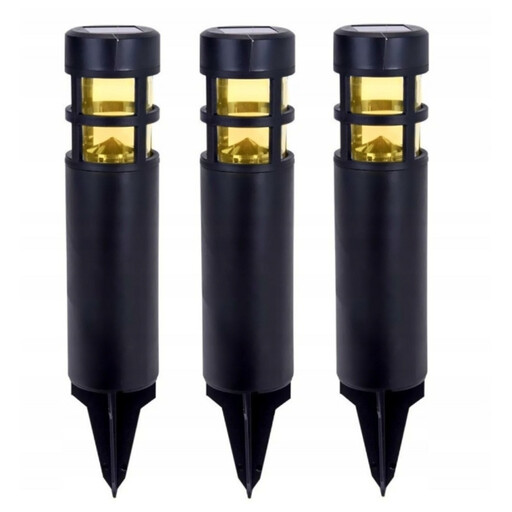
Why this product suits this profile: This set of three solar lights is a good choice if you want to add several small points of light around flower beds, paths or borders without laying cables.
The pack size is clearly stated, so you can spread the lights across your chosen area rather than relying on a single light to cover too much ground.
Three lights per set, automatic dusk activation and cable-free positioning, according to the product description.
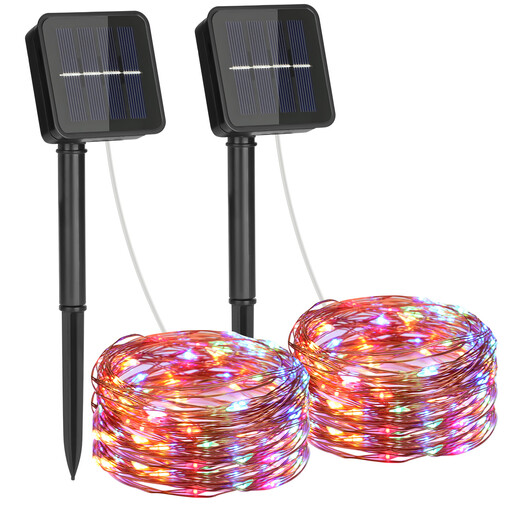
Why this product suits this profile: The two 12-metre string lights are ideal for larger patios, balconies, trees or festive displays, with flexible copper wire for easy styling.
The product details specify 120 LEDs per string, eight lighting modes, a memory function and IP65 protection. This makes it easier to check the key details before you buy.
According to the product details, you can expect 8–14 hours of light after charging under suitable conditions, automatic on/off and two strings per set.
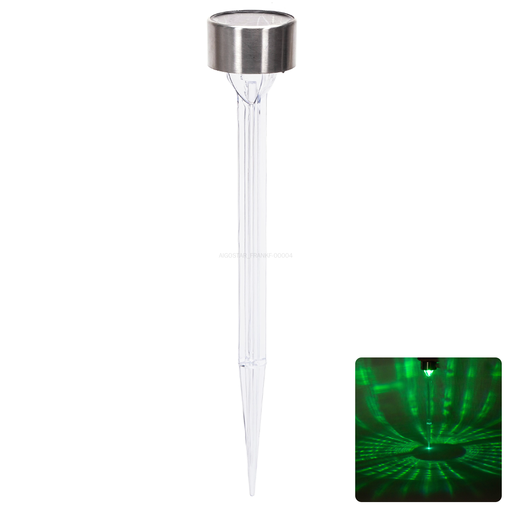
Why this product suits this profile: This RGB stake light is designed to add colourful accents along paths, across lawns and around flower beds. It can be placed in soft soil without tools.
The IP44 rating is clearly stated, so you won’t mistakenly assume the light can be left submerged.
RGB lighting, a charging time of 4–6 hours and, according to the product details, 8–12 hours of run time in suitable conditions.
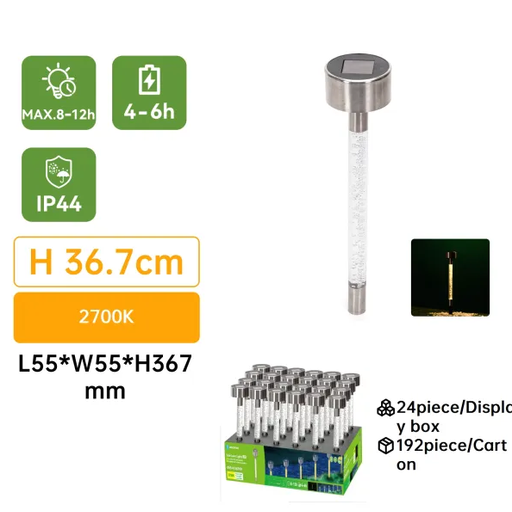
Why this product suits this profile: The warm white 2700 Kelvin version is a good match if you prefer subtle decorative lighting for flower beds, lawns or paths.
The light colour is clearly specified as 2700K, making it easier to judge the effect you can expect before buying.
Warm white light, stake mounting, IP44 protection and, according to the product details, 8–12 hours of run time after charging under suitable conditions.
We’ve put together a complete, regularly updated list of products that meet these strict selection criteria and fully comply with the safety regulations in force in the EU.
How long they stay lit each night depends on sunlight, battery capacity, temperature and battery age. Manufacturer claims such as 8–12 or 8–14 hours are therefore guidelines. Individual LEDs may last longer overall than the integrated battery. Keeping the solar panel clean and choosing a dry, suitable location will help the lights work as intended.
You can only judge this by checking the stated IP rating. IP44 protects against splashes, while IP65 also protects against water jets and dust. Neither rating allows for permanent submersion. So don’t leave the solar panel or battery compartment in puddles, or clean them with a pressure washer.
They don’t need to be connected to the mains while they’re in use. During the day, the solar panel charges the integrated battery. This means there are no ongoing mains electricity costs, though you should factor in the purchase price, possible replacement batteries and the proper disposal of electrical components.