
Lieferung heute & morgen

Qualitätsgarantie

Willkommens-Angebote freischalten: KOSTENLOSE Lieferung | Bis zu 80 % RABATT | Kostenlose 30-Tage-JoyPlus-Testphase
App herunterladen
Solar lights for the garden offer cord-free illumination without a fixed mains connection. Depending on their design, they are suitable for paths, lawns, borders, driveways or the patio. However, to ensure your purchase remains worthwhile in the British outdoor environment over the long term, you should look beyond just design and light colour. Key factors include the ingress protection rating, location, battery capacity and the light's actual function.
With solar lights, the wattage is often used as a selling point. For visible brightness, however, lumens, light distribution and illumination duration are far more relevant. A light with a high nominal power output can still produce little light if it is poorly positioned. So, check whether the manufacturer provides details on luminous flux, colour temperature or beam angle.
The term "weatherproof" does not replace a specific ingress protection rating. An IP44 solar light, for example, is protected against solid foreign objects and splashing water from any direction, but it should not stand in water or be submerged. For exposed areas that regularly face rain, solar lights with IP65 or IP67 may be more suitable. The installation and safety instructions from the respective manufacturer remain the definitive guide.
The run time of 8 to 12 hours quoted in product specifications usually applies under suitable charging conditions. Shade from house walls, trees or an unfavourable angle of the solar panel reduces the available energy. In winter or after several overcast days, the lighting may also last for a shorter period. Therefore, you should not choose a solar light based solely on its maximum stated illumination duration.
For outdoor LED solar lights, the IP rating is an important benchmark for comparison. IP44 is typically suitable for decorative lights in sheltered spots, while higher protection ratings can offer additional resilience in more exposed weather conditions. Also pay attention to the material specification: plastic is lightweight and easy to move, whereas stainless steel or aluminium can differ in both appearance and construction.
Compare the battery type, capacity, charging time and stated operating duration. NiMH batteries are common in many compact solar garden lights; larger models sometimes use lithium batteries. A separate solar panel can be positioned more flexibly than one integrated into the light. It is important that the panel receives as much direct sunlight as possible during the day.
Solar lights with warm white light around 2700 K create a subtle, decorative glow for seating areas or flower beds. Neutral or cool white light around 6500 K has a more functional feel and can be suitable for paths or larger outdoor spaces. RGB solar lights offer changing colours, but are not always the first choice for consistent orientation lighting.
With smart solar lights, you should also check whether an app, a hub or a Bluetooth connection is required. Range, grouping and voice control can work differently depending on the system.
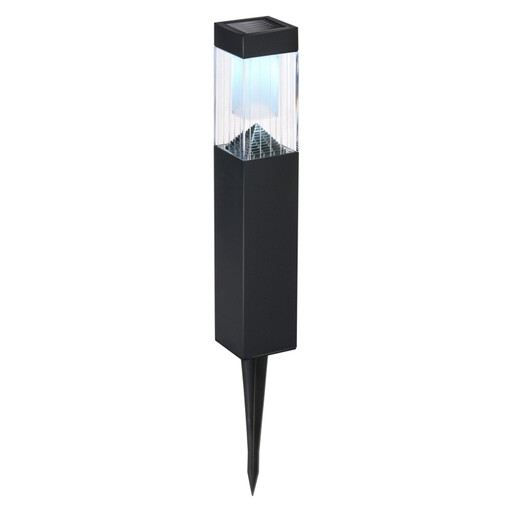
Why this product fits the profile: This compact solar light with two LEDs and a ground spike is designed for simple paths, small borders or the entrance area. No hardwiring is required.
The straightforward design does away with unnecessary extra features. However, before buying, you should still check whether the ingress protection rating and battery data are sufficient for your intended location.
Two LEDs, integrated solar panel, includes AAA battery and simple installation via ground spike.
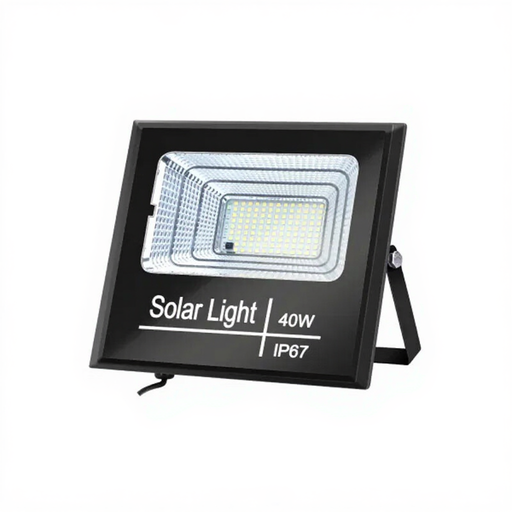
Why this product fits the profile: This floodlight with a separate solar panel is aimed at homeowners who want to illuminate larger garden areas, sections of a facade or driveways without a mains connection.
The separate panel makes it easier to angle towards the sun. With IP67, the ingress protection rating is clearly stated; the floodlight should still be installed according to the instructions and checked regularly.
10,000 mAh battery, up to 12 hours of illumination according to the product specification, aluminium and glass construction, plus a separate solar panel.
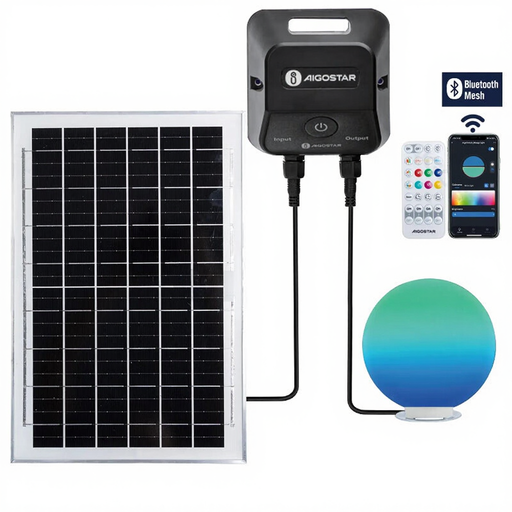
Why this product fits the profile: This floor lamp is suitable for larger outdoor areas where you want to group several lights together or set different lighting moods via Bluetooth Mesh.
The product data specifies Bluetooth Mesh, RGB+CCT, IP65, battery capacity and charging time. Before buying, you should clarify whether the desired app or hub control is compatible with your household.
RGB+CCT from 2700 to 6500 K, Bluetooth Mesh control for up to 200 devices according to the product specification, and an 8,000 mAh lithium battery.
We have put together a complete, regularly updated list of products that fully meet these strict selection criteria and the safety regulations in force in the EU.
For solar ground lights, solar path lights and solar spike lights, a sunny spot that is not permanently shaded is crucial. Only insert ground spikes into sufficiently soft soil, without driving them in with excessive force. On hard ground, the spike can be damaged.
Clean the solar panel regularly with a soft, damp cloth. Dirt from dust, pollen or leaves can reduce charging performance. Also check the housing, cables and battery compartment for cracks or moisture. Damaged lights should not be used further. Batteries and electronic components must be disposed of in accordance with local regulations.
The lifespan depends on the LED, battery, housing, weather conditions and maintenance. Some product specifications state, for example, an LED lifespan of up to 15,000 or 30,000 hours. This is not a guarantee for the entire light: the battery can lose capacity sooner and, depending on the model, must be replaceable or available as a spare part.
During operation, solar lights do not require a mains connection and therefore incur no ongoing mains electricity costs. However, the purchase price, possible battery replacement and disposal remain cost factors. The actual illumination duration depends on sunlight, the season, panel size and battery condition.
This depends on the luminous flux, beam angle and desired lighting effect. For an evenly lit path, you should not simply space the lights according to the size of your property. Check the manufacturer's specifications and initially place a few lights on a trial basis. With decorative solar lights that have a low light output, a shorter distance is required than with a more powerful floodlight.