
Lieferung heute & morgen

Qualitätsgarantie

Willkommens-Angebote freischalten: KOSTENLOSE Lieferung | Bis zu 80 % RABATT | Kostenlose 30-Tage-JoyPlus-Testphase
App herunterladen
A dark entryway, an unlit driveway, or a poorly visible garden can compromise your sense of security and make navigating at night difficult. A solar light with a motion sensor offers a practical and cost-effective solution, as it operates independently of the power grid and only provides light when it's truly needed.
However, the market is vast, and technical specifications can be overwhelming. This article serves as a guide. It presents objective criteria to help you select the right lighting solution for your property and showcases a selection of models for various applications.
Before you decide on a model, several technical features should be considered to ensure the light meets your requirements.
The brightness of a light is measured in lumens (lm). A higher lumen count means brighter light. For simple orientation along a garden path or on a staircase, models with 300 to 500 lumens are often sufficient. If the light is intended to serve as an outdoor security light and illuminate larger areas like a driveway or yard, values of 700 lumens and above are recommended. A wide illumination angle, often achieved with adjustable light heads, ensures that a larger area is covered.
Since a solar outdoor lamp is permanently exposed to the elements, its IP rating is a crucial quality indicator. The rating is indicated by two digits: the first represents protection against solid objects (e.g., dust), and the second represents protection against water.
Most models are purely solar spotlights that draw their energy exclusively from an integrated or separate solar panel. An alternative can be an outdoor wall light with a battery, which is charged via USB, offering more flexibility in placement. Useful additional features include various lighting modes (e.g., continuous low-brightness light that brightens upon motion detection) or a solar light with a remote control for convenient operation.
Based on the criteria mentioned, we have compiled three models for different needs.
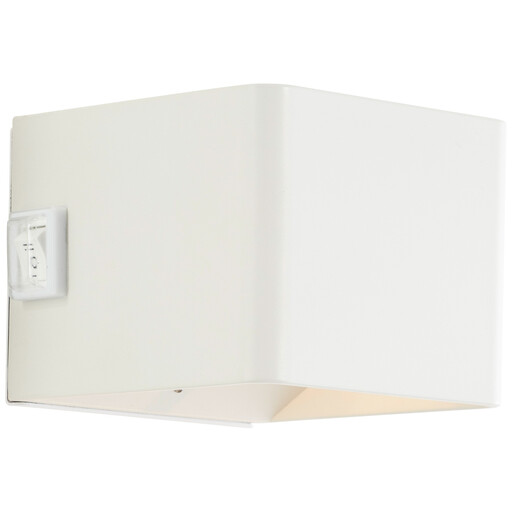
Why it stands out: Its high flexibility, thanks to the integrated battery and magnetic mount. It doesn't rely on constant sunlight and can be used in various locations.
Advantages:
Best suited for: Users who need a mobile and versatile light source for changing locations such as a balcony, garden shed, camping, or as a temporary work light.
View details for the Brilliant LED Wall Light
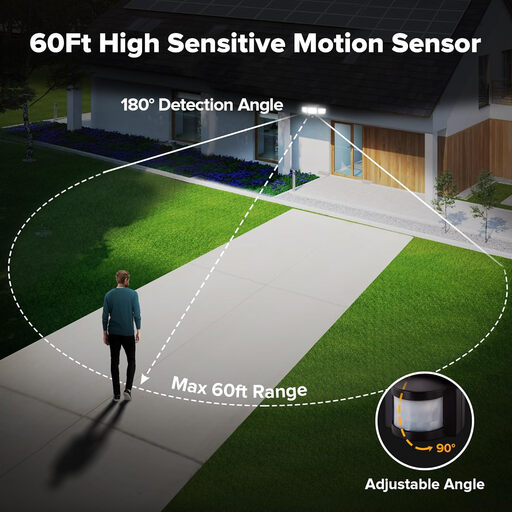
Why it stands out: The high light output of 3000 lumens per light and the wide detection range make this set a powerful security solution.
Advantages:
Best suited for: Property owners who want to brightly illuminate large areas such as driveways, yards, or the entire front of the house for deterrence and maximum security.
View details for the UME Solar Spotlights
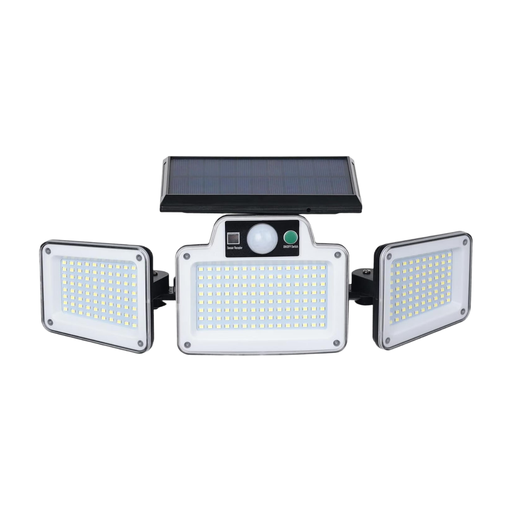
Why it stands out: The separate solar panel, which is connected to the light via a long cable. This allows for optimal alignment of the panel towards the sun, even if the light itself is mounted in the shade.
Advantages:
Best suited for: Installations where the light needs to be mounted in a shaded area (e.g., under an eave or on a north-facing wall), but the solar panel can be positioned in a sunny spot.
View details for the Grifema Security Light
Every property has different lighting requirements. If the models presented here don't exactly match your needs, you may find a more suitable solution in our broader selection. Discover more models with different brightness levels, designs, and features.
Discover More Outdoor Sensor LED Lights
This depends on the application. For basic path lighting and orientation, 300–500 lumens are often sufficient. For security purposes, to illuminate driveways or dark corners of the property, models with 700 to 1500 lumens or more are a good choice.
The IP (Ingress Protection) rating indicates how well an electrical device is protected against the intrusion of foreign objects (first digit) and water (second digit). For outdoor use, a minimum of IP44 (protection against splashing water) is recommended. For unprotected areas exposed to heavy rain, IP65 or higher offers better protection.
The performance of solar lights depends directly on the amount of sunlight hitting the panel. During the winter months, with fewer hours of sunshine and a lower sun angle, charging performance can be reduced, leading to a shorter illumination time. However, modern solar panels are increasingly efficient and can generate energy even in diffuse light. A south-facing orientation of the panel and regular removal of snow or dirt can improve performance in winter.