
Lieferung heute & morgen

Qualitätsgarantie

Willkommens-Angebote freischalten: KOSTENLOSE Lieferung | Bis zu 80 % RABATT | Kostenlose 30-Tage-JoyPlus-Testphase
App herunterladen
Solar lights for outdoor spaces let you illuminate your home without installing fixed power cables. Whether you’re lighting a front entrance, garden path, balcony or patio, the right choice depends on more than just wattage or the number of LEDs. The key factors are where you’ll use the light, the conditions for charging, its IP rating, battery capacity and the effect you want to create.
A “40 W” rating may sound impressive at first, but it doesn’t automatically tell you how bright the light will look. You should also consider the luminous flux in lumens, light distribution, colour temperature and mounting height. A 40 W solar floodlight is better suited to focused illumination than to providing even, general lighting across a large area.
With decorative products such as colourful solar string lights, maximum brightness is less important. The number of LEDs, cable length, lighting modes and spacing between the lights matter more.
Outdoor lights advertised as “waterproof” should come with a specific IP rating. IP65 typically protects against dust and water jets. An IP67 solar light also offers protection against temporary immersion, under the conditions specified for the product.
That doesn’t mean every solar light can be used underwater for extended periods. For example, the product information for solar string lights may state that the solar panel must not be submerged. So when choosing a light, consider not only its IP rating but also where the panel, battery housing and lights will be positioned.
Claims such as “up to 12 hours” or “8–14 hours” depend on direct sunlight, the time of year, the solar panel’s position and the lighting mode selected. A shaded balcony, north-facing wall or panel placed beneath a tree will reduce charging performance.
For more reliable use, position the panel somewhere as unobstructed as possible, following the installation instructions. With a solar floodlight with a separate solar panel, for example, you can install the light in a suitable spot and place the panel somewhere sunnier.
For solar-powered outdoor lighting that will be installed permanently, the IP rating and housing material are key things to check. Depending on the product, aluminium, glass, ABS and PE can differ in weight, durability and care requirements. Also look for:
IP65 waterproof garden lighting is suitable for rain and splashes, but not automatically for full immersion. For products with an IP67 rating, you should also follow the manufacturer’s specific instructions.
Battery capacity is usually given in mAh. A higher capacity may mean more stored energy, but it doesn’t tell you on its own how long the light will stay on. LED output, operating mode and ambient temperature also play a part.
An automatic dusk-to-dawn sensor is handy. If you’re looking for garden lighting without a mains connection, also check whether you need to switch the light on before first use and whether its battery can be replaced.
Neutral white or cool white is often a good choice for paths, driveways and security lighting. Warm white creates a softer feel on patios and balconies. An RGB solar wall light or a smart solar light with Bluetooth, on the other hand, offers colour options and control features.
For Bluetooth products, check the range, app compatibility and whether a continuous connection is needed. RGB is particularly useful for decorative lighting and isn’t automatically a substitute for bright lighting to help you find your way.
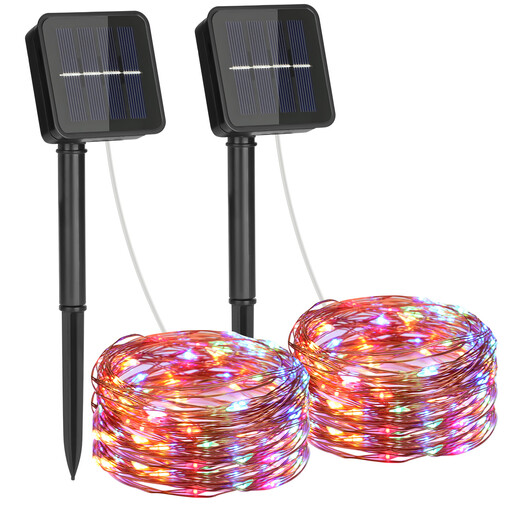
Why this product suits this type of buyer: This set is designed for decorative lighting on balconies, patios and in gardens, as well as for seasonal occasions. The two 12-metre string lights can be used in a variety of ways, with no tools or mains connection required.
The product information gives details of charging time, lighting time, IP65 protection and eight lighting modes. This makes it easier to understand how the lights can be used decoratively and what their weather limits are.
120 LEDs per 12-metre string light, eight lighting modes with a memory function, and a stated lighting time of 8–14 hours, depending on the weather.
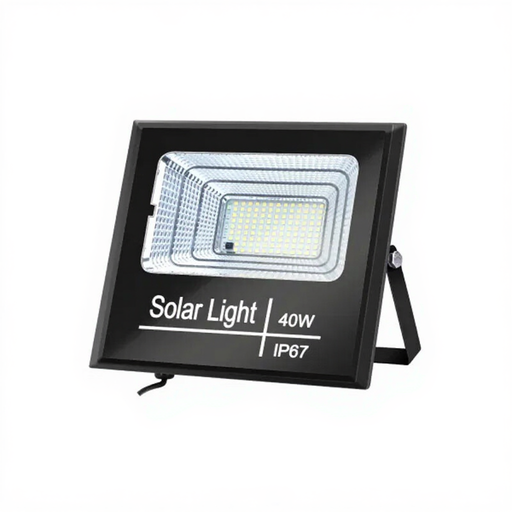
Why this product suits this type of buyer: This floodlight is designed to provide focused lighting for gardens, paths, courtyards or exterior walls. Its separate panel lets you position the light and charging unit independently.
The product details specify a 10.000 mAh battery, a separate panel and an IP67 rating. This makes key details for installation and outdoor use clear.
Aluminium and glass construction, 6500 K colour temperature, 10.000-mAh battery and a lighting time of up to 12 hours, according to the product information.

Why this product suits this type of buyer: This solar wall light is designed for anyone looking to combine RGB colours, adjustable white light and control of multiple lights.
The product information distinguishes decorative RGB lighting from white light, and specifies Bluetooth Mesh and a 5-metre cable to the solar panel. This makes it easier to plan where to install the light.
RGB plus adjustable white light from 2700–6500 K, a 4000-mAh battery and Bluetooth Mesh control for multiple devices, according to the product description.
We’ve put together a complete, regularly updated list of products that meet these strict selection criteria and fully comply with the safety regulations in force in the EU.
This depends on sunlight, battery capacity, LED output and operating mode. Manufacturer claims such as 8–14 hours or up to 12 hours are guidelines based on particular charging conditions. Lighting time may be shorter in winter or after several overcast days.
Yes, as long as the solar panel gets enough direct daylight and the light is suitable for the outdoor space where you plan to use it. A panel that can be positioned separately may be more practical for a covered balcony. Before buying, check the cable length, fixing method and IP rating.
Solar lights charge their batteries using daylight and don’t need mains electricity to operate. However, you may incur ongoing costs for battery replacements, spare parts or repairs. How long the battery lasts in use depends on its charge cycles, temperatures and product design.