
Lieferung heute & morgen

Qualitätsgarantie

Willkommens-Angebote freischalten: KOSTENLOSE Lieferung | Bis zu 80 % RABATT | Kostenlose 30-Tage-JoyPlus-Testphase
App herunterladen
A well-lit driveway, a safe garden path, or an illuminated patio not only create comfort but also significantly contribute to your home's security. A solar light with a motion sensor seems like the ideal solution: energy-independent, low-maintenance, and easy to install. However, the market is flooded with products whose performance claims often don't hold up in practice. Before you make a decision, you should be aware of the common pitfalls that lead to disappointment and unnecessary expenses.
The 3 Most Common Mistakes When Buying Solar Outdoor Lights:
To make an informed decision that meets your needs, you should focus on objective technical parameters rather than marketing promises.
The brightness of a light is measured in lumens (lm). The higher the value, the brighter the light. For orientation on a garden path, 300 lm may be sufficient. For illuminating a driveway or as an outdoor security light, models with 1,500 lm or more, often described as outdoor solar floodlights or LED floodlights with sensors, are a more sensible choice.
The light colour, measured in Kelvin (K), influences the atmosphere.
The IP (Ingress Protection) rating indicates how well an electrical device is protected against the intrusion of foreign objects and water. For an outdoor wall light with a motion sensor in a region with varied weather, a standard of IP65 waterproof is a solid foundation.
A light with IP65 certification is therefore robust enough to withstand rain, snow, and dust, ensuring a long service life.
A good motion sensor is the heart of any automatic outdoor LED light with a motion sensor. Pay attention to two key metrics:
Instead of making a blanket recommendation, we have identified products tailored to specific needs and locations.
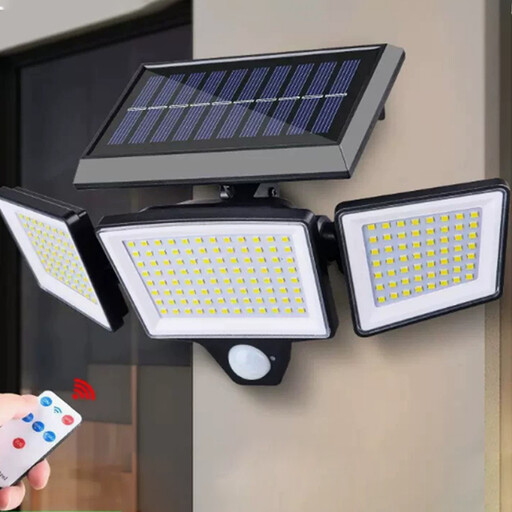
Why This Fits Their Persona: Ideal for illuminating large areas like driveways, yards, or garages where maximum brightness and a wide detection range are required for deterrence and safety. The three adjustable heads allow for flexible customisation of the light beam.
The IP65 certification ensures robustness against harsh weather. The high brightness of 3000 lumens and the wide 180° detection angle are clear, verifiable performance metrics that go beyond vague advertising claims.
High light output (3000 lm) for maximum visibility. Three individually adjustable light heads for 270° coverage.
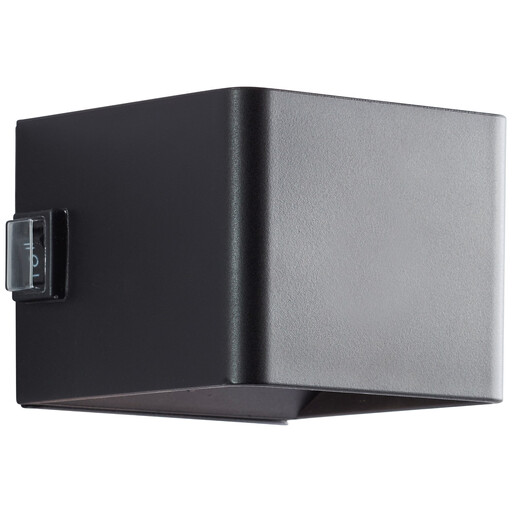
Why This Fits Their Persona: Perfect for renters or homeowners looking for flexible, non-permanent lighting for balconies, patios, or garden sheds. As a rechargeable outdoor light that can be charged via USB, it doesn't require sunlight for power.
This model bypasses the weak solar performance trap by featuring an integrated battery that is charged via USB. This guarantees reliable operation regardless of the weather. The IP44 rating is sufficient for sheltered outdoor areas like covered balconies.
High flexibility due to battery operation and magnetic mounting. Pleasant, warm white light (3000 K) for a cosy atmosphere.
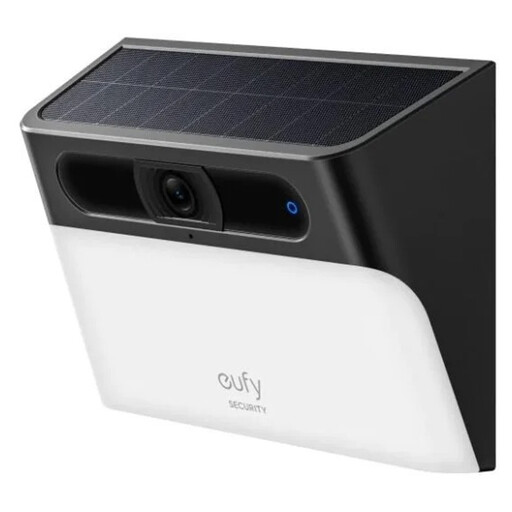
Why This Fits Their Persona: For users seeking an integrated light and surveillance solution. This device combines a solar-powered wall light with a security camera that is controlled via an app and sends smart notifications.
This product offers clear added value that goes beyond simple illumination. The AI-powered person detection and app control are concrete features that justify its utility, not just relying on exaggerated brightness values. The IP66 rating is also even more robust than the IP65 standard.
Combination of light and 2K security camera in one device. Local storage with no monthly fees and intelligent AI detection.
We've compiled a complete, up-to-date list of products that fully meet these strict selection criteria and safety regulations.
The battery life in winter heavily depends on sun exposure, battery capacity, and the selected mode. On short, cloudy days, the battery may not charge completely. Models with an efficient solar panel and a high-capacity battery (e.g., over 2000 mAh) are better suited for winter use. Many lights also feature a dim mode that saves energy and only activates full brightness upon detecting motion.
For optimal charging performance, the solar panel should receive as much direct sunlight as possible, ideally with a south-facing orientation. Some models offer a separate solar panel connected to the light via a cable. This allows for flexible installation: the light can be placed in the shade (e.g., under an eave) while the panel is mounted in a sunny spot.
For unprotected outdoor use, an IP rating of at least IP65 is recommended. This ensures the light is dust-tight and can withstand strong water jets, protecting it against most weather conditions like heavy rain and snow. For sheltered areas such as covered balconies or entryways, IP44 may also be sufficient.