
Lieferung heute & morgen

Qualitätsgarantie

Willkommens-Angebote freischalten: KOSTENLOSE Lieferung | Bis zu 80 % RABATT | Kostenlose 30-Tage-JoyPlus-Testphase
App herunterladen
Thoughtful outdoor lighting not only enhances a home's aesthetic but also increases the safety and usability of your garden, patio, or entryway. However, finding the right light can be complex: you need to weigh energy efficiency, weather resistance, installation effort, and smart features. The smart LED solar outdoor wall light is becoming particularly popular, as it combines modern technology with independence from the power grid.
This article serves as a guide. We'll explain the key criteria for selecting an outdoor wall light and present a selection of models with different specialities to provide you with a solid basis for making an informed decision.
Choosing the right lighting depends on your specific needs. You should consider three key aspects in your decision.
Outdoor lights are constantly exposed to the elements. The IP (Ingress Protection) rating is therefore a crucial quality indicator. It consists of two digits: the first indicates protection against foreign objects (like dust), and the second indicates protection against water.
Look for a high IP rating to ensure the longevity of your solar garden lighting.
Modern outdoor lights offer more than just light at the push of a button. Their functionality significantly determines convenience and purpose.
The light fixture itself is a design element. Materials like cast aluminium in colours such as anthracite outdoor wall light offer a modern and durable look. At the same time, the way the light is cast shapes the facade's appearance after dark. A popular choice is the up-and-down light effect, where cones of light are cast both upwards and downwards. This creates an indirect, architectural illumination that adds depth and structure.
Here is a selection of models that cover different requirements for design, functionality, and power source.
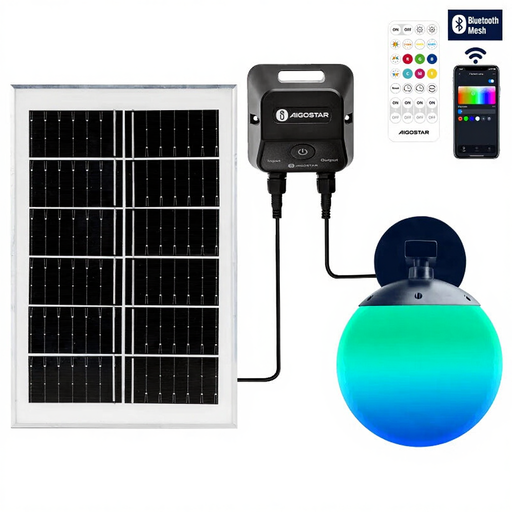
Why it stands out: This model combines all the features of a modern, smart solar light. It's energy-autonomous, controllable via an app, and offers full flexibility in lighting design.
Advantages:
Who it's for: Tech-savvy users looking for a flexible, eco-friendly, and easy-to-install all-in-one solution for their facade, patio, or balcony.
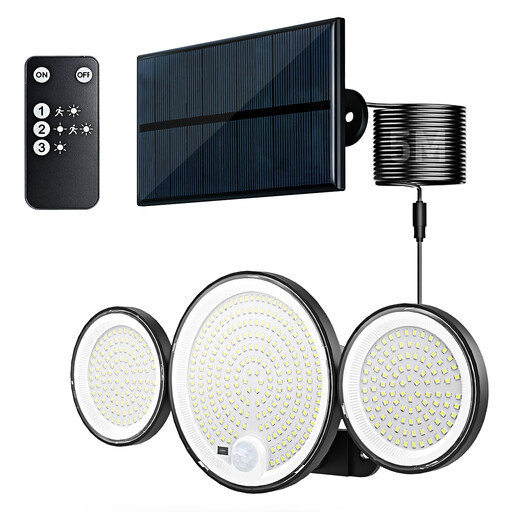
Why it stands out: This light is designed for maximum brightness and wide illumination for security purposes. The three adjustable heads allow for flexible adaptation of the light field.
Advantages:
Who it's for: Homeowners who want to reliably and brightly illuminate driveways, garages, or remote garden areas to enhance security.
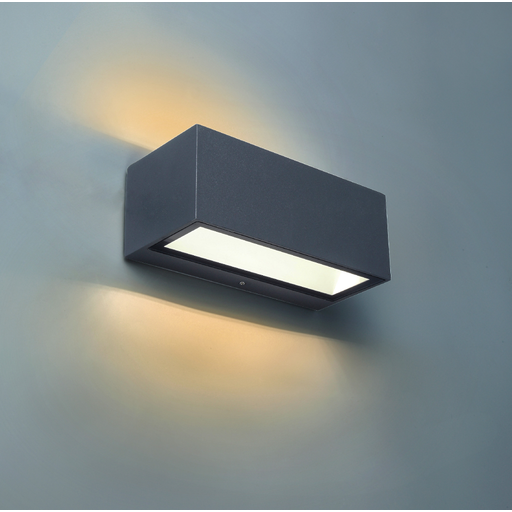
Why it stands out: This model focuses on design and material quality. As a wired light, it offers consistently high light output and a sophisticated look for modern facades.
Advantages:
Who it's for: Design-conscious individuals with an existing power connection who prefer a permanently powerful and architecturally appealing lighting solution for their entryway or house facade.
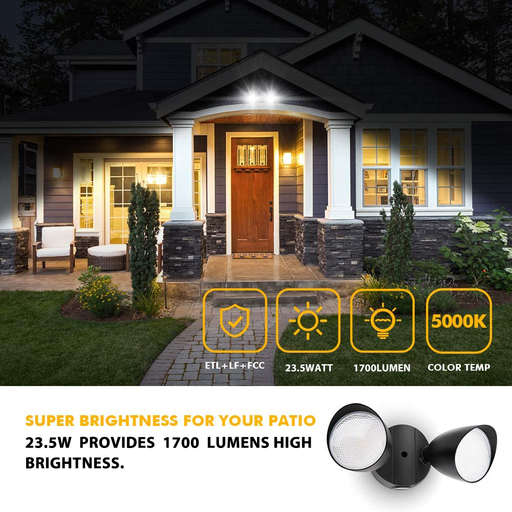
Why it stands out: This wired outdoor LED spotlight is designed as a functional security light. With two pivoting heads, it allows for targeted and bright illumination of security-critical zones.
Advantages:
Who it's for: Users who need a reliable, wired, and powerful security light with flexible adjustment options.
The requirements for outdoor lighting are diverse. If the models presented here don't exactly match your needs, there are many other options to discover.
? Discover our entire selection of modern outdoor lighting.
1. What does IP65 mean for outdoor lights? The IP65 rating means that the light is dust-tight (first digit 6) and protected against water jets from all directions (second digit 5). Such lights are suitable for use in areas exposed to direct rain or cleaning with a garden hose.
2. Can solar lights be used in winter? Yes, solar lights also work in winter. However, solar radiation is lower and the days are shorter. This means the battery will not charge as much, and the illumination time per night may be shorter than in summer. Models with high-quality solar panels and efficient batteries are better suited for year-round operation.
3. How long does a solar outdoor light last? The lifespan of a solar light depends on several components. The LEDs themselves have a very long life, often 30,000 hours or more. The limiting factor is usually the battery, whose capacity can diminish after a few years. On many high-quality models, the battery can be replaced. The lifespan of the housing depends on the material and the IP rating.