
Lieferung heute & morgen

Qualitätsgarantie

Willkommens-Angebote freischalten: KOSTENLOSE Lieferung | Bis zu 80 % RABATT | Kostenlose 30-Tage-JoyPlus-Testphase
App herunterladen
A solar robot kit is an excellent way to get children excited about technology and renewable energy. It promises hours of building fun and a fascinating learning experience. But the reality after the purchase often looks different: instead of delighted children, there's frustration because the model doesn't work or breaks quickly.
As your Joybuy Product Recommendation Officer, I'll help you recognise the common pitfalls. Before you make a purchase decision, you should know the three most frequent issues that can turn a promising gift into a short-lived annoyance.
To avoid these problems, you should look for a few fundamental quality features when making your selection. These parameters determine whether the robotics experiment kit becomes a durable educational toy.
A good engineering kit for kids should be designed for more than just a one-time build. Look for models made from robust ABS plastic. This material is resilient and flexible enough to withstand repeated assembly and disassembly. An intelligent snap-together system is just as important. So-called "easy-click systems" allow children to securely connect and disconnect parts without excessive force. This promotes independence and ensures the kit provides long-lasting enjoyment.
The solar panel is the heart of the kit. A high-quality solar module must supply enough energy to power the motor not only in bright sunshine but also in normal daylight. Some manufacturers, such as KOSMOS, provide a practical tip in their instructions: if the sunlight is insufficient, a strong halogen lamp (approx. 100 watts) can be used as an alternative light source. This flexibility ensures that the fun isn't dependent on the weather.
A pedagogically valuable physics educational toy offers more than just building instructions. A good manual is clearly structured, richly illustrated, and guides children step-by-step through the assembly process. Furthermore, it explains the scientific principles behind the technology: How does a solar cell convert light into energy? What is renewable energy? When a kit answers these questions in a child-friendly way, a simple toy becomes a true STEM toy for ages 8 and up that sparks curiosity and embeds knowledge for the long term.
Not every kit is right for every child. Here are three recommendations tailored to different interests and experience levels.
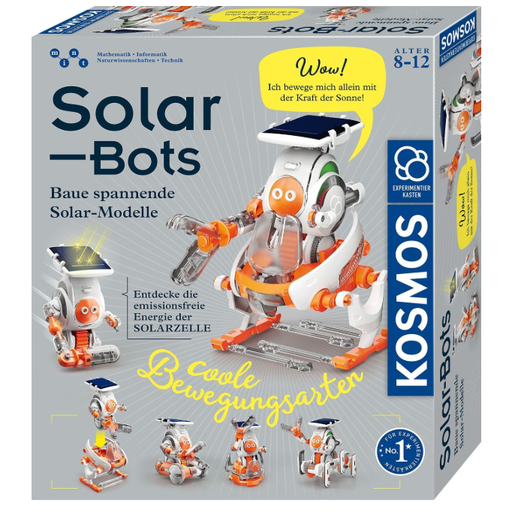
Why This Fits Their Persona: Ideal for children who want to get their first hands-on experience with renewable energy. As a product from an established brand of educational toys, this set offers a reliable and understandable introduction to the world of solar technology and makes a suitable gift for boys and girls ages 10 and up.
The kit uses a child-friendly snap-together system for a stable build that can be reassembled multiple times. The instructions also provide a tip to operate the robot with a halogen lamp in poor weather, bypassing the frustration of an underpowered solar panel.
Offers 8 different models in one kit, ensuring long-lasting fun. The manual clearly explains how a solar cell works and introduces the topic of renewable energy.
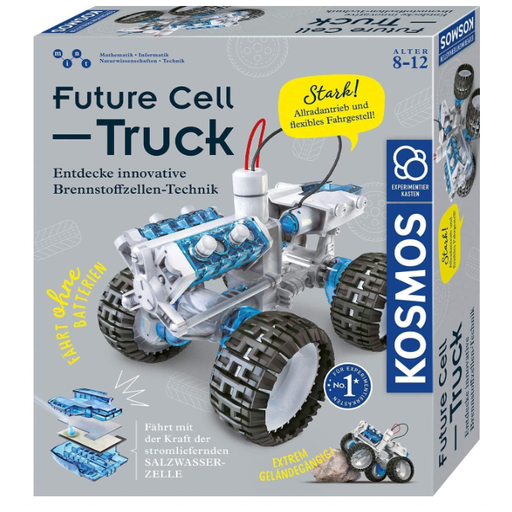
Why This Fits Their Persona: Perfect for kids who already have some building experience and want to explore an alternative, innovative power technology beyond traditional solar energy.
This kit completely bypasses dependency on sunlight by using a saltwater fuel cell. This guarantees operation in any weather and introduces a forward-thinking technology concept without relying on complex electronics.
Teaches the principles of fuel cell technology in a tangible way. The all-terrain chassis with four-wheel drive adds extra play value on various surfaces.

Why This Fits Their Persona: Suitable for children who want to not only build but also remote-control and program their creations. It combines a classic engineering kit for kids with modern RC and app functionalities.
Instead of a solar panel, this kit uses a rechargeable battery, ensuring a consistent and weather-independent power supply. Control via app and remote offers an immediate, interactive reward after building.
With 5-in-1 models, an LED light, and dual control (app/remote), it offers high functional density and promotes initial programming skills alongside mechanical ones.
We've compiled a complete, up-to-date list of products that fully meet these strict selection criteria and all relevant safety regulations.
Performance heavily depends on the quality of the solar panel. High-quality models can function in bright daylight without direct sun exposure. For indoor use or on cloudy days, some manufacturers, like KOSMOS, recommend using a strong halogen lamp (e.g., 100 watts) at a close distance as an alternative light source. This is an effective method to ensure the robot's functionality regardless of the weather.
Most manufacturers provide an age recommendation based on the complexity of the components and the instructions. A STEM toy for ages 8 and up is generally suitable, as children at this age are developing the motor skills and patience required to assemble smaller parts. It's important to follow the manufacturer's recommendation to avoid frustration or boredom and to ensure a fun experience.
Typically, these kits are designed so that no additional tools are required. The parts are connected using snap-together systems. Some sets may include small, safe tools like a plastic lever for separating parts or a small screwdriver for battery compartments. Any necessary specialised parts are usually included in the box.