
Lieferung heute & morgen

Qualitätsgarantie

Willkommens-Angebote freischalten: KOSTENLOSE Lieferung | Bis zu 80 % RABATT | Kostenlose 30-Tage-JoyPlus-Testphase
App herunterladen
The freedom of wireless lighting, powered by the sun, is an attractive concept for any balcony, garden, or camping trip. But the market for solar table lamps is crowded, and not every product delivers on its promise. As your Joybuy Product Recommendation Officer, I'll help you identify objective criteria for your selection and sidestep common marketing traps.
Before you make a decision, you should be aware of three common pitfalls that often lead to disappointment in real-world use:
To avoid buyer's remorse, it's wise to focus on measurable technical specifications rather than marketing claims. The following three parameters are crucial for the functionality and longevity of a wireless table lamp.
The core of any cordless battery lamp is its battery. The capacity, specified in milliampere-hours (mAh), provides a benchmark for potential runtime. A value of 1800 mAh or higher is recommended for solid baseline performance.
However, a solar lamp only becomes truly practical with a dual charging option. An integrated USB-C port is the current standard. It allows for fast, reliable charging on days with little sun and ensures the lamp is always ready for use—whether as a camping lamp or as emergency lighting during a power outage.
For a garden table lamp or a light that will be regularly used on the patio, resistance to the elements is a must-have. Pay attention to two aspects:
Modern LED technology allows for flexible light adjustment to suit different situations. A good dimmable LED table lamp should offer more than just fixed brightness levels.
Instead of making a one-size-fits-all recommendation, we have identified products tailored to specific use cases and requirements.
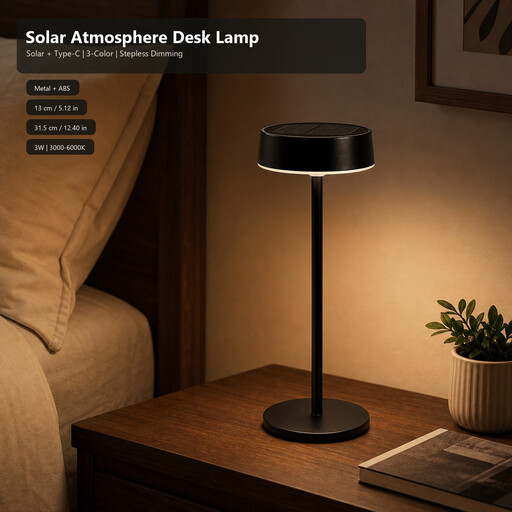
Why This Fits Their Persona: Ideal for users who want a single, versatile lamp for the balcony, patio, camping table, and as flexible auxiliary lighting indoors. The design is functional and suits various environments.
The dual charging capability via solar and USB-C bypasses the inefficient solar technology trap. The 1800mAh battery provides a solid foundation, and the stated runtime of 10-60 hours is realistically tied to the brightness level.
The combination of stepless dimming, three colour temperatures (3000K/4000K/6000K), and a memory function offers a high degree of flexibility and user convenience.
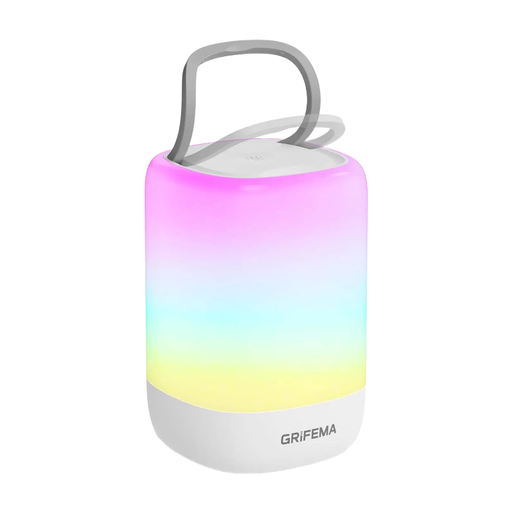
Why This Fits Their Persona: Perfect as a cordless bedside lamp in a child's room or bedroom. The RGB colour-changing modes create a pleasant atmosphere, and its portable design allows for use throughout the house.
This product forgoes an unreliable solar feature, focusing instead on stable performance via its 1500mAh battery and reliable USB-C charging. It makes no claims of weather resistance, as it is designed for indoor use.
The intuitive touch controls, 30-minute timer function, and multiple RGB colour modes make it especially user-friendly and versatile for ambient lighting.

Why This Fits Their Persona: For campers and drivers, practical equipment is just as crucial as light. This device adds a vital function to their mobile kit: inflating tyres, air mattresses, or balls without an external power source.
Instead of vague promises, this product delivers clear performance metrics: a 4000mAh battery, an inflation rate of 35 L/min, and an automatic shut-off feature when the target pressure is reached. It's a tool whose function is objectively measurable.
Multifunctionality is its greatest advantage. It combines five preset modes, a digital display, and an integrated LED light with an SOS function in a compact, lightweight body (<500 g).
We have compiled a complete, up-to-date list of products that fully meet these strict selection criteria and relevant safety regulations.
1. How long does it take to fully charge a solar table lamp? The charging time heavily depends on the intensity of the sunlight and the size of the solar panel. According to manufacturer specifications, a full solar charge can take between 8 and 10 hours in direct, strong sunlight. On cloudy days or in the shade, this time is significantly longer. Charging via the USB-C port is much faster, typically taking 5 to 6 hours.
2. Can I use a solar table lamp in the winter? Yes, winter use is possible, but with limitations on the solar function. The fewer hours of sunlight and lower solar intensity mean that solar charging is often insufficient to fully replenish the battery. For reliable operation in winter, it is advisable to primarily charge the lamp via its USB-C port.
3. What does the IP rating mean for an outdoor lamp? The IP (Ingress Protection) rating consists of two digits. The first digit (0-6) describes the protection against solid foreign objects (e.g., dust), and the second digit (0-9) describes the protection against water. A lamp with an IP44 rating is protected against solid objects larger than 1 mm (first digit: 4) and against splashing water from all directions (second digit: 4). This is a common minimum standard for lights that are used outdoors and need to withstand a rain shower.