
Lieferung heute & morgen

Qualitätsgarantie

Willkommens-Angebote freischalten: KOSTENLOSE Lieferung | Bis zu 80 % RABATT | Kostenlose 30-Tage-JoyPlus-Testphase
App herunterladen
The right outdoor lighting not only enhances the visual appeal of your home and garden but also increases security. A solar wall light promises a simple, cost-effective, and eco-friendly solution without complex wiring. However, the market is flooded with products whose promises evaporate after the first downpour or a cloudy winter. Before you invest, it's crucial to understand the common pitfalls that often lead to disappointment and unnecessary expense.
This guide will help you separate the wheat from the chaff. We focus on the three most common flaws in solar lights and show you which technical features to look for to find durable and reliable lighting for your outdoor space.
Many buyers find that their new solar light loses performance or fails completely after just a short time. This is often due to three fundamental weaknesses that are frequently omitted from product descriptions.
To avoid a bad purchase, you should be guided not by marketing promises, but by verifiable technical specifications. Three parameters are of central importance here.
The IP Code (Ingress Protection) indicates how well an electrical device is protected against the intrusion of foreign objects (first digit) and water (second digit). For a solar outdoor light that is exposed to the elements year-round, a high protection rating is essential.
The performance of a solar light depends directly on the interplay between the battery and the solar panel.
These two values determine the brightness and the atmosphere your lighting creates.
Based on these objective criteria, we have selected products that offer a suitable solution for specific user profiles and their requirements.
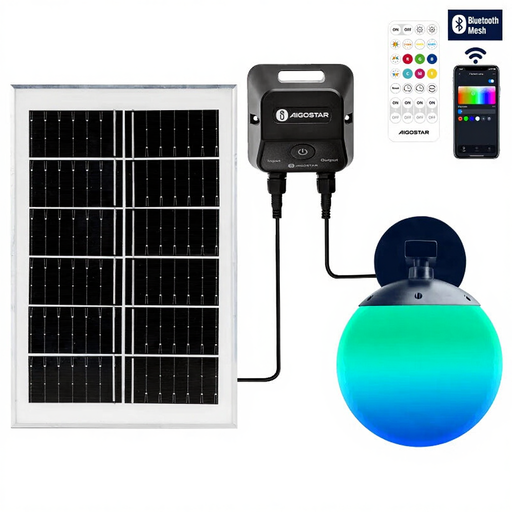
Why it's a match: Ideal for users who want to control their lighting via an app and create custom light scenes. The Bluetooth Mesh technology allows for the control of over 200 devices and adjustment of colours (RGB) and white tones (2700K-6500K). Perfect for setting architectural accents with an up-and-down light.
The efficient 5W monocrystalline solar panel and 4000mAh battery ensure a reliable power supply that sustains smart functions overnight. The IP65 certification guarantees durability in all weather.
Complete control over light colour and temperature via the app. A scalable system for a comprehensive, smart solar light solution throughout your entire outdoor area.
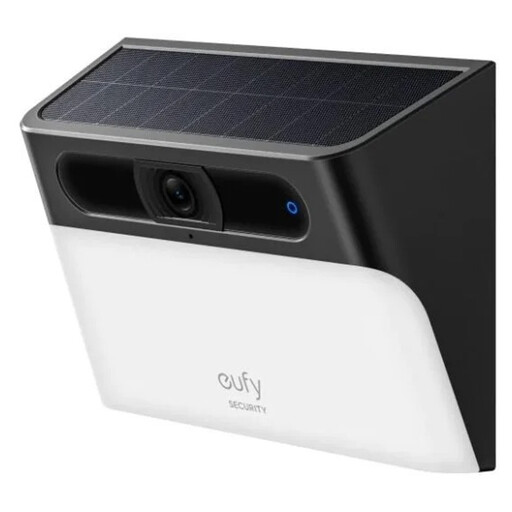
Why it's a match: This solar outdoor light with a camera combines lighting and surveillance in one device. It is ideal for anyone looking to secure entrances, driveways, or remote areas of their property without relying on an external power source.
With an IP66 protection rating, this device is built for the harshest weather conditions. AI-powered person detection activates the light and recording only for relevant events, which conserves the battery and maximises runtime.
No monthly fees thanks to local storage. The combination of a solar wall light with motion sensor and an intelligent camera provides a high level of security and deterrence.
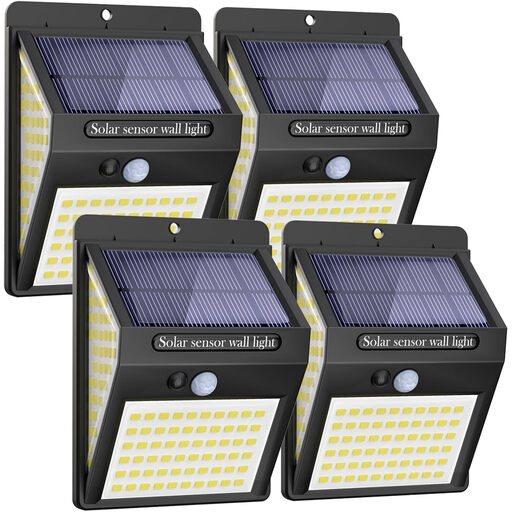
Why it's a match: This set is an economical choice for illuminating paths, fences, or the entire garden with solar lights. It provides functional and bright illumination where it's needed for safety and orientation, without breaking the bank.
Three adjustable modes, including a smart brightness mode, allow for energy use tailored to your needs and extend the runtime. The IP65 certification ensures operation even in bad weather.
Excellent value for money in a 4-pack. The wide 270° illumination angle provides broad coverage and increases the efficiency of each individual light.
We've compiled a complete, up-to-date list of products that fully meet these strict selection criteria and relevant safety standards.
1. How long does a good solar wall light last? The lifespan depends on several components. The LEDs themselves often have a lifespan of 30,000 hours or more. The battery is typically the component that loses capacity first; in high-quality models, it can last for several years and is sometimes replaceable. The durability of the housing is determined by the material (e.g., robust ABS) and the IP rating. A light with IP65 or higher is better protected against weather-related wear and tear.
2. Do solar lights work in winter or on cloudy days? Yes, but with reduced performance. Modern monocrystalline solar panels can generate energy even in diffuse light, though significantly less than in direct sunlight. On short, heavily overcast winter days, the battery may not fully charge, and the light might not stay on all night. Models with smart dimming modes or motion sensors have an advantage here as they conserve energy.
3. Do I need to hire an electrician for installation? No, this is one of the biggest advantages of solar wall lights. Since they are self-sufficiently powered by the solar panel, no wiring to the mains electricity is required. Installation is usually limited to drilling two holes and mounting the light with the included screws and wall plugs. This makes the installation simple, safe, and cost-effective.