
Lieferung heute & morgen

Qualitätsgarantie

Willkommens-Angebote freischalten: KOSTENLOSE Lieferung | Bis zu 80 % RABATT | Kostenlose 30-Tage-JoyPlus-Testphase
App herunterladen
Solar garden lighting is ideal for paths, beds, balconies, patios and seasonal decoration when you don’t want to run a mains cable. But not every solar light suits every spot. What really counts isn’t marketing jargon but IP rating, charging conditions, run time and the mounting concept.
Ratings such as IP44 or IP65 describe protection against the ingress of solid objects and water. They don’t automatically mean a light is permanently protected under all conditions.
With a solar light you should also consider the solar panel, battery housing, switch and cable connections separately. A string light might be IP65, while the solar panel isn’t intended to be submerged.
Run time depends on sunlight, season, the panel’s orientation, shading and battery condition. A quoted operating time is therefore guidance for certain charging conditions.
Outdoors in Germany, several overcast days in a row can reduce charging performance. For even lighting in the evening, keep the panel as free as possible from shadows cast by walls, trees or railings. Dirt on the surface can also reduce energy intake.
An outdoor solar string light usually creates an atmospheric effect, but it won’t automatically replace bright path or security lighting. For a seating area, warm white garden lighting at around 2700 K feels pleasant. For wayfinding on paths, spacing, light distribution and mounting height matter more than a high LED count.
Before buying, check whether the light at the intended spot is exposed to rain, splashes or harsher weather. IP44 may be sufficient for sheltered zones. For more open areas, a higher rating such as IP65 is often a better fit, provided all relevant components are marked accordingly.
Wattage alone doesn’t tell you how bright a light will appear. For meaningful comparison, also consider luminous flux, beam angle and mounting position. With decorative solar lights, the lighting effect often matters more than maximum brightness.
Pay attention to the battery type, capacity and the quoted charging time. Even a solar light with a short charging time still needs sufficient direct sunlight. For integrated batteries, also check the product details for the option to replace the battery later.
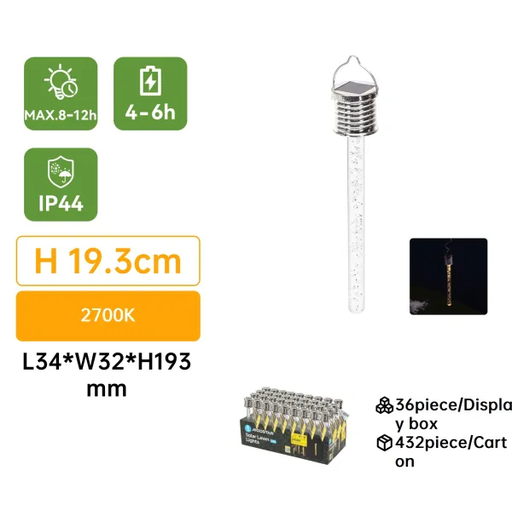
Why this product suits the profile: This compact solar light is ideal for small gardens, balconies or sheltered patios where you want a decorative light source without a mains connection.
The specifications clearly state the IP44 rating, a charging time of around 4–6 hours and a potential run time of 8–12 hours depending on conditions. This helps align the location and your expectations.
Warm white light at 2700 K, integrated 40 mAh Ni-MH battery and a low weight of 40 g.
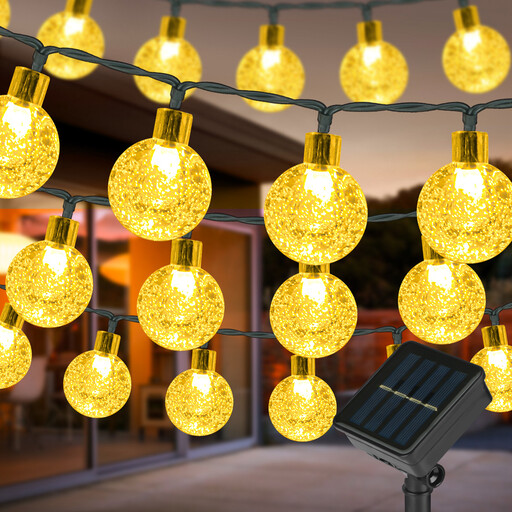
Why this product suits the profile: The 7-metre string is designed for larger balconies, pergolas, bed borders and dressed seating areas where you want to spread lots of points of light.
The product details distinguish between the IP65-rated string and the solar panel, which should not be submerged. This differentiation prevents a false assessment of the unit as a whole.
50 warm white bubble LEDs, eight lighting modes, and stated charge and run times of 6–8 and 8–14 hours respectively, depending on the weather.
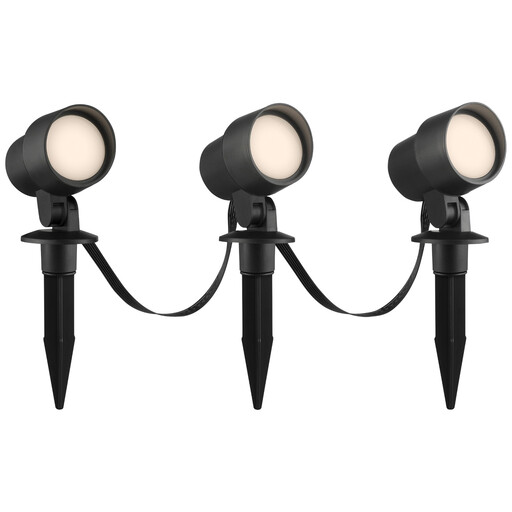
Why this product suits the profile: If you want to style paths, beds or the patio regularly with adjustable colours and app control, this three-piece set offers Tuya Smart compatibility. These are mains-powered LED garden lights, not solar lights.
The power supply isn’t confused with solar energy. Before buying, check the connection, any required low-voltage transformer and the range of the smart control.
Three lights with CCT, RGB and dimming functions, Tuya app support and an IP44 rating.
We’ve compiled a complete, continuously updated list of products that fully meet these strict selection criteria and the safety regulations in force in the EU.
For reliable operation, the solar panel should face south or another sun-rich direction wherever possible. The exact orientation depends on location and shading. Avoid placing lights directly under dense foliage or where they can be easily knocked over in the evening.
With an outdoor solar string light, it’s best to position the panel first. You can then distribute the cable length sensibly. With solar globe lights and pendant lights, also consider ground conditions, fixings and potential trip hazards.
Clean the solar panel regularly with a soft, dry or slightly damp cloth. Don’t use aggressive cleaning agents, and follow the storage instructions for frost or longer periods of non-use.
Service life depends on the LED, battery, housing, weather exposure and care. Manufacturer LED lifetime data isn’t the same thing as battery life. Check whether the battery is designed to be replaced and whether spare parts are available.
In normal operation, solar lights draw their energy from the integrated battery, which is charged during the day via the solar panel. Ongoing mains power consumption is therefore not comparable to a wired light with these models. For mains-powered smart garden lights, the stated power figures and operating times apply.
“Waterproof” isn’t a sufficient technical description in everyday language. What matters is the specific IP rating and which product parts it covers. IP44 protects against splashes; IP65 adds dust-tightness and protection against water jets. Always check the product label and the manufacturer’s guidance before installation.