
Lieferung heute & morgen

Qualitätsgarantie

Willkommens-Angebote freischalten: KOSTENLOSE Lieferung | Bis zu 80 % RABATT | Kostenlose 30-Tage-JoyPlus-Testphase
App herunterladen
A good wooden cutting board is the cornerstone of any kitchen. It not only protects your knives but also serves as a durable and hygienic workspace. However, the market is flooded with products of widely varying quality. Many boards warp after just a few weeks, dull high-quality knives, or prove to be impractical.
As your Joybuy Product Recommendation Officer, I'll help you identify the crucial features. We'll focus on the facts so you can make an informed decision and avoid the three most common purchasing pitfalls:
Before you decide on a model, you should check three core aspects. These determine the longevity, functionality, and protection of your knives.
The choice of wood is fundamental. Each type of wood has a specific hardness (measured on the Janka scale) that determines its suitability as a cutting surface.
Practical details make all the difference in daily kitchen life.
The dimensions of the board should match your workspace and your habits. A board that is too small is impractical for preparing larger meals, while an oversized board is difficult to handle and store. A thickness of at least 2 cm (approx. 0.8 inches) ensures stability and prevents the board from warping under normal use. A cutting board set with various sizes can be a flexible solution for different tasks.
Here are some recommendations tailored to specific user profiles that meet the quality criteria mentioned above.

Why it's a great fit: This set offers three different sizes, making it equipped for almost any task in the kitchen—from chopping herbs to carving a roast. Ideal for households that value flexibility and organisation.
According to the manufacturer, the high-temperature carbonisation process is designed to reduce moisture absorption, thus counteracting the risk of warping and cracking.
A complete cutting board set with integrated juice grooves and handles offers high functionality for various foods and preparation methods.
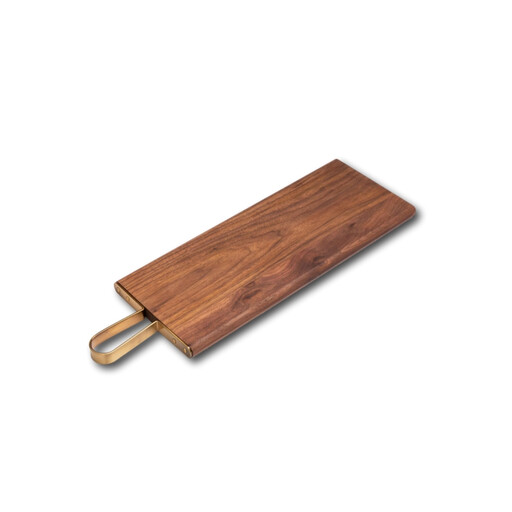
Why it's a great fit: The elegant walnut wood and long handle make this board a real eye-catcher. It's perfectly suited as a combined cutting and wooden serving board for cheese, cold cuts, or antipasti.
Walnut wood offers a good balance of hardness and give. It is resilient while also being gentle on high-quality knife blades, thus avoiding the "knife-killer" trap.
The combination of functional design and aesthetically pleasing material makes it a versatile tool for both preparing and presenting food.
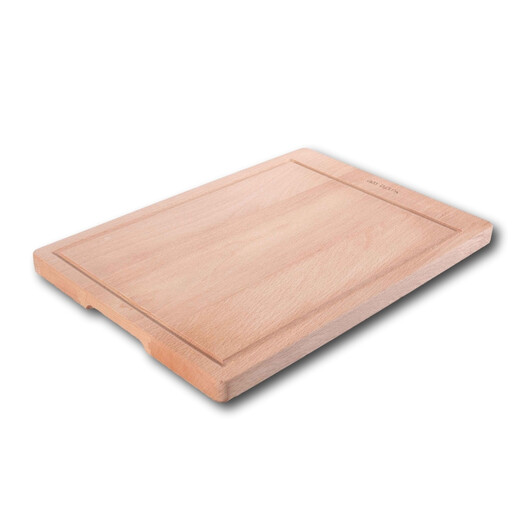
Why it's a great fit: Beechwood is the European classic for cutting boards. This board focuses on the essentials: a solid, blade-friendly, and durable material for everyday use.
Beechwood has a dense, fine grain that, with proper care, ensures a hygienic surface and minimises the formation of deep grooves where bacteria could settle.
A proven, robust material offering excellent value for money. The 2.2 cm thickness ensures high stability and longevity.
We have compiled a complete, up-to-date list of products that fully meet these strict selection criteria and German safety regulations.
1. How do you properly care for a wooden cutting board? Clean the board after each use with warm water and a small amount of mild dish soap. Rinse it thoroughly and dry it immediately with a cloth. Stand it upright to dry completely. Important: Wooden cutting boards should never be cleaned in the dishwasher or left to soak in water, as this will cause them to warp and crack.
2. What kind of oil is suitable for wooden cutting boards? Use food-safe, neutral oils for maintenance and conditioning. Refined rapeseed oil, linseed oil, or a special wood conditioning oil for kitchenware are all good options. Apply a thin layer of oil, let it soak in for a few hours, and then wipe off any excess. This process should be repeated every few weeks, depending on frequency of use, to protect the wood from drying out and absorbing moisture.
3. Is a bamboo cutting board really better for knives? There is no one-size-fits-all answer to this question. Bamboo is very hard and resistant to cuts, which can have hygienic advantages. However, this hardness also means that knife blades can lose their sharpness more quickly with intensive use than on medium-hard woods like beech or walnut. The choice therefore depends on your personal priority: maximum board durability or maximum blade protection.