Home bakers making buttercream and cakes
When you’re creaming butter and sugar, the butter needs to be soft but still hold its shape. King Arthur Baking describes it as yielding when pressed, but still offering resistance and not feeling greasy.


If you have a separate oven, a solo microwave with a selectable low power setting is a sensible starting point for gently warming butter. You’ll still need to check it frequently: none of the available product information guarantees a particular result for butter. If your microwave will also be your only oven, consider a combination model with a convection function – and check the space it needs, its capacity and whether your baking tins will fit.
When you’re creaming butter and sugar, the butter needs to be soft but still hold its shape. King Arthur Baking describes it as yielding when pressed, but still offering resistance and not feeling greasy.
Specifications from Severin and CASO Design show why it’s important to consider not just the cooking capacity, but also the appliance’s external dimensions, clearance requirements and the space you’ll need for bowls or baking tins.
If your microwave will also be your only oven, the convection function is key. Samsung Germany lists this feature for its MC32DB7746KDE1 combination microwave.
Best if: you already bake elsewhere and mainly want to warm ingredients or food in this spot.
The trade-off: The solo models described don’t list a convection baking function, and power settings alone can’t guarantee a particular consistency for butter.
Best if: you’re warming delicate ingredients and would rather have a selectable low power setting than an oven function.
The trade-off: Panasonic lists a 100 W setting for the NN-SD38. The more even heating described by the manufacturer isn’t evidence of how it performs with butter. It’s also larger than the 20-litre solo microwaves reviewed.
Best if: you want your only appliance to do more than warm ingredients – you also want to bake cakes and other treats.
The trade-off: The convection function, cooking capacity and suitable baking tins all take up space. If you only need to soften butter, the extra baking function isn’t necessary.
King Arthur Baking describes butter for creaming with sugar as soft, but still resistant and not greasy. When choosing an appliance, also consider the adjustable power, the space it needs and – if you want to bake in the same appliance – the convection function.
| Buying priority | What to look for | Who is it important for? |
|---|---|---|
| Soft butter, not melted | Selectable power settings and controls that let you stop the process easily. | If I want to cream butter and sugar, I need the butter to be soft but still hold its shape. Around 36% of consumers prioritise this exact consistency. |
| Space in the cooking area | Check the external dimensions and installation instructions. Also make sure the usable cooking capacity and turntable suit your own dishes. | If my cooking area is small, the appliance needs to fit with the required clearance and leave room for my bowl. Around 29% of consumers put fitting the appliance into their only cooking space first. |
| Baking in the same appliance | Check specifically for a convection function, and make sure the cooking capacity will fit your baking tins. Don’t assume a grill is the same as convection. | If I don’t have a separate oven, I want the same appliance to work for cakes and other bakes too. Around 21% of consumers prioritise baking in the same appliance. |
| Easy to use and ongoing costs | Compare the controls and removable parts. Check the difference between your statutory rights, a voluntary guarantee and any extra cover. | If I mainly warm ingredients, I want straightforward controls and manageable ongoing costs. Around 14% of consumers put these priorities first. |
For recipes that call for butter to be creamed with sugar, butter that’s too warm or melted can affect the texture of the mixture. A high maximum power rating doesn’t tell you how butter will behave in a particular appliance.
Choose a suitable power setting and warm the butter in short bursts, checking it each time rather than relying on the maximum power.
A grill doesn’t automatically replace the convection function listed for baking in the combination models described here. A solo microwave won’t cover this type of baking either.
If you want to bake in your only cooking space, check specifically for a convection function and make sure your baking tin will fit inside.
The stated cooking capacity alone won’t tell you how much worktop space the appliance needs or whether a particular bowl or baking tin will fit inside.
Measure your available space and your dishes, then compare them with the specific model’s external dimensions, usable interior and installation instructions.
Your statutory rights and a voluntary guarantee have different terms and conditions. You don’t automatically need to pay for extra cover just because it’s offered.
Check the terms of any extra cover and compare what it actually offers beyond your statutory rights.
The MW 7790 is an example of a compact solo microwave for warming and defrosting.
The M 20 Ecostyle is another 20-litre solo model you can assess for worktop space, controls and cooking capacity.
The NN-SD38 is an example of a solo microwave with inverter technology and a selectable low power setting.
The MC32DB7746KDE1 is an example of a combination microwave for a cooking space where you also want to bake.
The CMSN 20 Wh is an example of a solo microwave with mechanical controls.
The Joybuy models below include solo microwaves with selectable power settings, as well as combination models with convection for a cooking space where you also want to bake.
 Image unavailable
An option if you want to warm butter and bake in the same cooking space. You’ll still need to check the butter while it warms, whatever power setting you choose.
10 microwave power settings; convection up to 230 °C; baking tray included according to the product description.
 Image unavailable
A solo option if you want a selectable power setting for delicate ingredients and don’t need a convection function.
19 l capacity; 700 W; six power settings; inverter technology, according to the product name.
 Image unavailable
A solo option if you want to choose between several microwave power settings for gentle heating.
20 l capacity; 700 W; six power settings; defrost function and 30-minute timer, according to the product description.
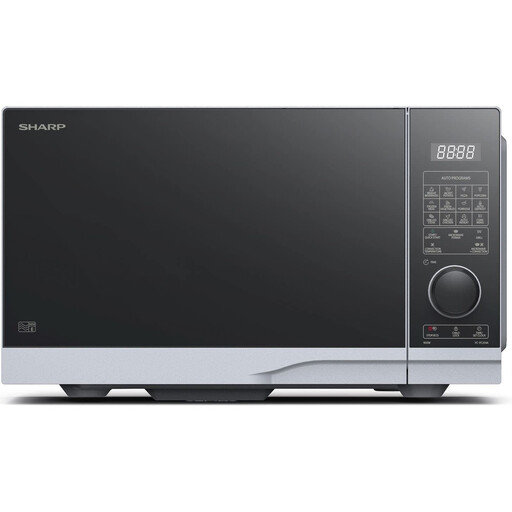 Image unavailable
A combination option if you want to warm food and use convection to bake in the same cooking space. Check that your baking tins will fit inside.
25 l capacity; 10 microwave power settings; microwave, grill and convection, according to the product description.
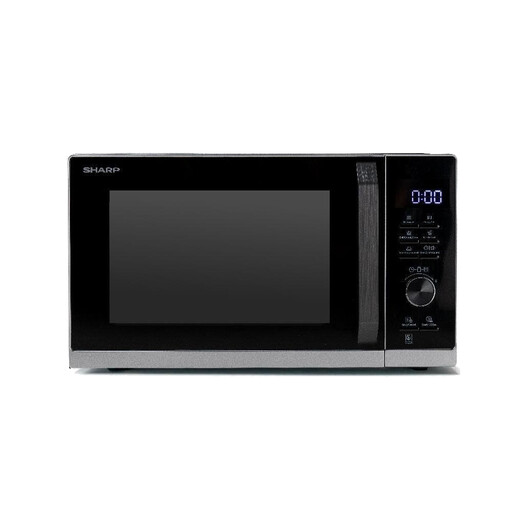 Image unavailable
A combination option for a cooking space where you want to warm food and use the listed convection function for baking.
27 l capacity; 900 W microwave power; six microwave power settings; 1000 W grill and 2100 W convection, according to the product description.
For recipes that call for softened butter, King Arthur Baking describes butter that yields to a gentle press but still offers some resistance and isn’t greasy or melted. Always follow the recipe: some bakes specifically call for cold butter.
Use a microwave-safe container and follow its temperature and wattage limits. The Verbraucherzentrale (German consumer advice centre) warns that foods high in fat can become unexpectedly hot. You can’t tell whether a general-purpose wrapper or container is microwave-safe just from its appearance.
Follow the instructions for the model you buy, including the specified ventilation clearances. According to the manufacturer, the turntable in the Severin MW 7790 can be removed for cleaning; don’t assume this feature applies to other models.
No. Your statutory rights cover claims against the seller if goods are faulty, while a manufacturer’s guarantee is an additional voluntary offer with its own terms. The Verbraucherzentrale recommends checking exactly what any extra cover includes.
The European Union explains that the CE mark is the manufacturer’s declaration that a product complies with the relevant EU product rules; it isn’t an independent EU quality mark. According to the Umweltbundesamt (German Environment Agency), electrical appliances at the end of their life must not go in household waste. Take them to a designated collection point instead.