
Lieferung heute & morgen

Qualitätsgarantie

Willkommens-Angebote freischalten: KOSTENLOSE Lieferung | Bis zu 80 % RABATT | Kostenlose 30-Tage-JoyPlus-Testphase
App herunterladen
Modern TVs offer brilliant picture quality, but their sound often falls short. A TV soundbar promises a solution, but the market is filled with marketing promises and technical terms that confuse more than they clarify. As your Joybuy Product Recommendation Officer, I'll help you distinguish the important features from the trivial ones and make an informed decision.
Many buyers invest in devices that fail to meet their expectations. This is often due to three common pitfalls:
To avoid these pitfalls, you should focus on a few crucial technical parameters. These will determine whether a soundbar is a genuine upgrade for your living room.
The number combination in the product description (e.g., 2.1, 3.1.2) isn't just a marketing gimmick; it describes the speaker system's configuration.
The way you connect the soundbar to your TV directly impacts audio quality and ease of use.
The subwoofer is responsible for the tangible bass foundation that truly brings explosions and music to life.
Based on these objective criteria, we have identified several models that offer a suitable solution for different user profiles.
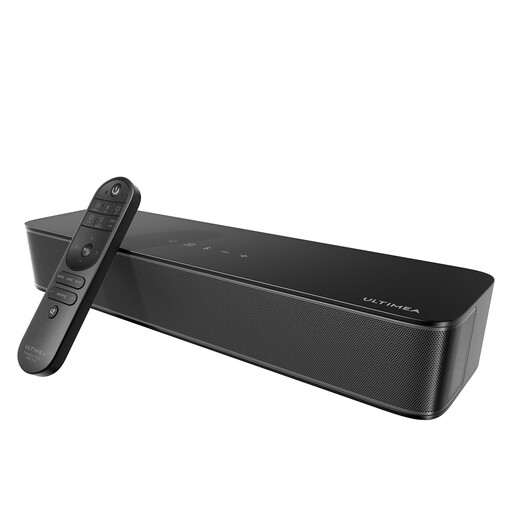
Why it's a good fit: Ideal for anyone looking to significantly upgrade their flat TV sound with minimal effort and budget. The compact all-in-one design fits into any living room without taking up much space.
The device is clearly advertised as a 2.1 system with an integrated subwoofer, setting no false expectations for complex surround sound. Its connections (Optical, AUX, Bluetooth) are appropriate for this price range.
The compact all-in-one design with an integrated subwoofer and app control offers a straightforward, space-saving solution.
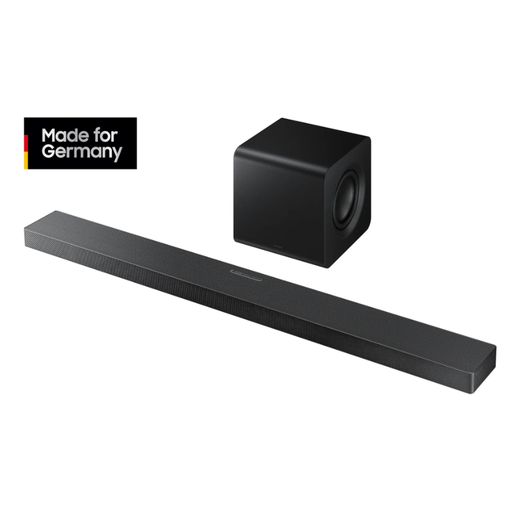
Why it's a good fit: For film and series fans seeking an immersive 3D audio experience. Thanks to its dedicated channels and support for modern audio formats, this system delivers room-filling, precise cinema sound.
This is a true 3.1.2 channel system. It delivers authentic 3D sound via upward-firing speakers for Dolby Atmos, rather than just simulating virtual sound. An HDMI eARC port is included.
Supports wireless Dolby Atmos and DTS:X. According to the manufacturer, its Q-Symphony technology enables synchronised playback through the soundbar and compatible Samsung TV speakers.
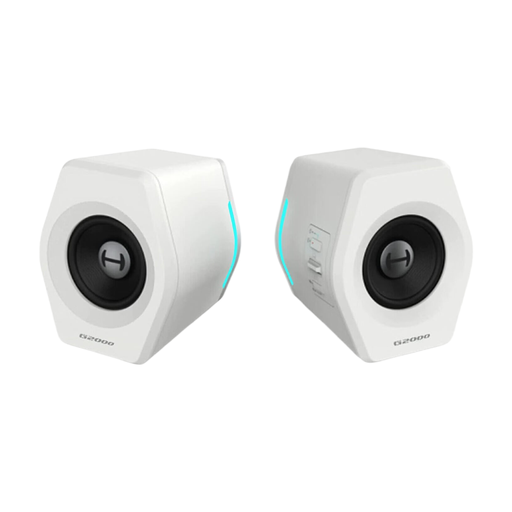
Why it's a good fit: These compact speakers are designed for desktop use. They offer gamers precise near-field sound, customisable RGB lighting, and versatile connectivity options for PC, Mac, or consoles.
The product is clearly positioned as PC gaming speakers, not a living room soundbar. This sets clear expectations regarding performance and use case.
Features three EQ modes (Game, Music, Movie) and versatile inputs (Bluetooth, USB, 3.5mm AUX) for broad compatibility. The RGB lighting is an added feature for gaming setups.
While the models featured here provide excellent guidance, other solutions exist for specific needs. Discover more audio products selected based on objective criteria.
Not necessarily for the soundbar to work. However, for the full, uncompressed Dolby Atmos experience, a TV with an HDMI eARC port is recommended. This connection has the necessary bandwidth to transmit the high-quality audio signal losslessly. Older TVs with standard HDMI ARC or an optical output can still play the audio, but often only in a compressed format.
For most users, the answer is yes. A wireless subwoofer delivers significantly deeper and richer bass than speakers integrated into the soundbar itself. This is crucial for the impact of movie effects and the fullness of music. The wireless connection also allows for flexible placement in the room to achieve optimal bass response without visible cable clutter.
Yes, modern soundbars are versatile audio devices. Most include Bluetooth, allowing for easy music streaming from your smartphone. For gaming, models with low latency and special "Game" modes offer an advantage by precisely reproducing important in-game audio cues. Some compact models are even suitable as high-quality PC gaming speakers for your desktop.