
Lieferung heute & morgen

Qualitätsgarantie

Willkommens-Angebote freischalten: KOSTENLOSE Lieferung | Bis zu 80 % RABATT | Kostenlose 30-Tage-JoyPlus-Testphase
App herunterladen
Slim TVs often leave little room for larger speakers. The result can be thin-sounding voices, limited bass and a soundstage that quickly loses its sense of space when you’re watching films or playing games. A soundbar with a subwoofer can help address these shortcomings, provided its connections, room size and speaker setup suit the way you plan to use it.
Before you buy, watch out for three common marketing traps:
For a soundbar for your TV, HDMI ARC is usually the most convenient connection. With compatible devices, you can adjust the volume using your TV remote. HDMI eARC offers greater bandwidth and is particularly useful for uncompressed multichannel formats and Dolby Atmos.
If you want to connect a games console, Blu-ray player or streaming receiver directly, check for an HDMI input or HDMI passthrough too. Optical inputs are a useful alternative for older TVs, but they don’t support every modern multichannel format.
The 2.1 designation usually means two main channels and a subwoofer. A 3.1 soundbar adds a centre channel, which is especially useful for dialogue in the middle of the soundstage. A 5.1 soundbar or 7.1 soundbar adds more surround channels, either through separate speakers or virtual signal processing.
A Dolby Atmos soundbar with a specification such as 5.1.2 uses additional upward-firing speakers. The final number refers to the height channels. For the best effect, your ceiling shouldn’t be unusually sloped or very high.
A subwoofer extends the bass range, but it needs space and a mains socket. Wireless connectivity reduces the audio cabling between the soundbar and subwoofer, but not the power cable. A compact subwoofer may be enough for a small room; in a larger living room, the cabinet size and stated frequency range are useful points of comparison.
The soundbar shouldn’t block your TV and should ideally sit centrally in front of the screen. If you’re wall-mounting it, check the dimensions, bracket and position of the speaker openings. A very low unit or an obstructed top panel can affect upward-firing Atmos speakers.

Why this product suits this profile: This 2.1 system is designed for anyone looking to improve their TV sound without a complicated set-up. HDMI ARC, Bluetooth, an optical input, RCA, AUX and USB cover a range of common audio sources.
There’s more to the specification than a high power rating: it clearly lists a separate subwoofer, adjustable bass and treble, and several inputs.
100 W, HDMI ARC with cable included, Bluetooth and a long subwoofer cable for flexible placement.
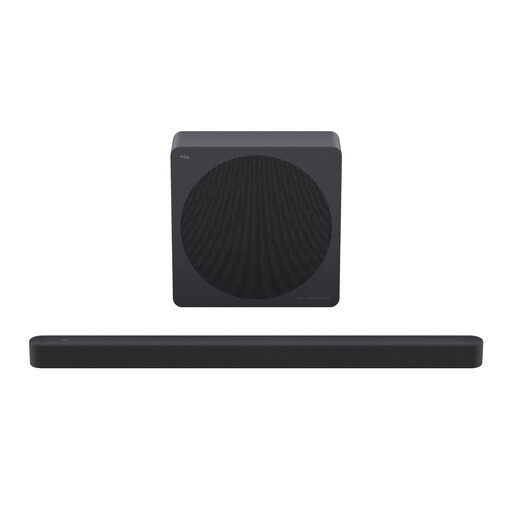
Why this product suits this profile: The 3.1.2 set-up combines a centre channel with upward-firing speakers. HDMI eARC, DTS:X, Bluetooth 5.3 and a wireless subwoofer make it a versatile choice for a home cinema set-up.
The channel layout and connections are clearly stated, making it easier to check whether your TV supports eARC and whether your room is suitable for Atmos.
3.1.2 channels, Dolby Atmos, DTS:X, 460 W maximum power and a 50 mm-thin cabinet, according to the product specifications.
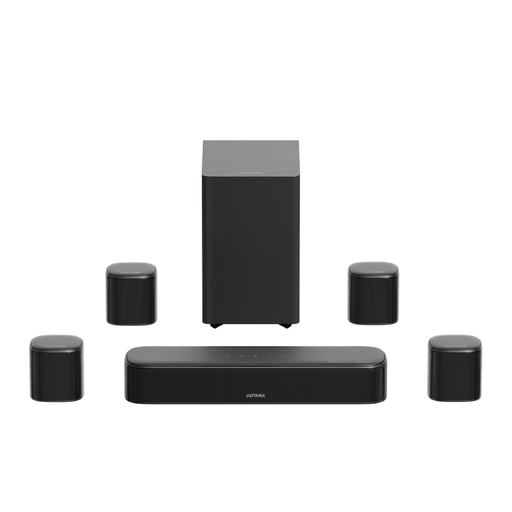
Why this product suits this profile: For film nights, gaming and larger seating areas, this system includes a soundbar, four surround speakers and a 5.25-inch subwoofer. You can adjust the equaliser in the app.
The four separate speakers provide more than just a virtual effect. Be sure to plan for the space they’ll take up and the cables you’ll need.
7.1-channel set-up, 420 W peak power, HDMI eARC, app control and six EQ bands, according to the manufacturer.
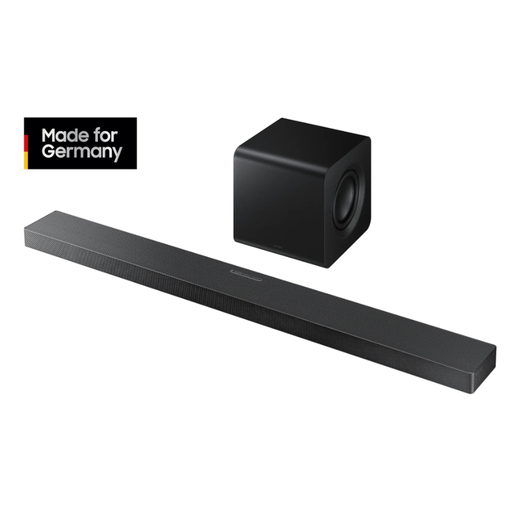
Why this product suits this profile: This model combines 3.1.2 channels with Wi-Fi, Bluetooth 5.2, AirPlay 2, Chromecast compatibility and optional rear speakers. Q-Symphony is available with compatible Samsung TVs.
Alongside HDMI ARC, it has an optical input, Wi-Fi and Bluetooth. This makes it easier to connect several sources without confusing the channel count with the subwoofer’s power output.
Dolby Atmos, DTS:X, SpaceFit Sound Pro, 4K 60 Hz passthrough and a 6.5-inch wireless subwoofer, according to the product details.
We’ve put together a complete, regularly updated list of products that meet these strict selection criteria and fully comply with the safety regulations in force in the EU.
Yes, as long as you can position the subwoofer appropriately. In a small room, you should be able to adjust the bass level to prevent it from becoming boomy. A compact 2.1 system may be more practical than a large surround sound system with several speakers.
You’ll need a compatible TV or playback device, suitable content and a connection that can carry the relevant audio format. HDMI eARC offers more bandwidth than an optical connection. Ceiling height, distance from the walls and the soundbar’s position can also affect the result.
There’s no reliable way to guarantee a specific lifespan. It depends on factors including how long it’s used, volume levels, ventilation and power supply. Keeping the soundbar well ventilated in a dry environment and using the supplied power adapters can help it run reliably. Before buying, also check the manufacturer’s information on spare parts, firmware and warranty.