What should you look for when buying?
When freezing cooled vegetable soup for family meals, focus on what matters most to you: space and freezing capacity, access to portions, energy consumption, or installation and maintenance.
| What matters to you |
What to look for |
Who will find this most important? |
| Space and freezing capacity |
Compare container dimensions with the usable internal dimensions, and check the freezing capacity in kg/24 h for freshly cooked batches. |
If you freeze several containers at once, you’ll need enough room for storage as well as sufficient stated freezing capacity. Around 36% of consumers put space and freezing capacity for a batch of food first. |
| Access to portions |
Check the internal dimensions and the layout of drawers or baskets against your filled containers. |
If you want individual portions ready for different meals, easy-to-navigate compartments and an accessible shelf are important. Around 29% of consumers prioritise access to individual portions. |
| Energy consumption |
Compare kWh/year and usable capacity together, then work out your electricity costs using your own price per kWh. |
If an additional appliance will be running regularly, you’ll want to weigh its energy consumption against the space you actually need. Around 21% of consumers focus mainly on ongoing electricity costs. |
| Where to place it and defrosting |
Check the external dimensions, clearance for the door or lid, permitted ambient temperature and defrosting method for the specific model. |
If space is limited or the appliance will be placed somewhere cool, make sure it will fit there, can be opened properly and is suitable for the environment. Around 14% of consumers give the most weight to installation and maintenance. |
Joybuy products for soup portions and food stocks
This selection from Joybuy includes drawer-style freezers and chest freezers for storing individual portions separately or keeping larger food stocks.
 No image available
Exquisit GS581-H-010E, 85 l, four-star compartment
The three drawers, including one large drawer, are handy for keeping portions separate. The listed usable capacity is 85 l, with a freezing capacity of 4.0 kg in 24 hours.
Joybuy
 No image available
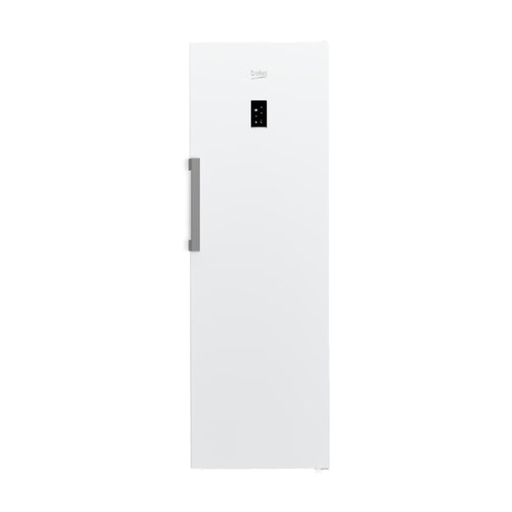
Beko B7RFNE316W, 286 l, No Frost
For larger food stocks, the product is described as having three drawers and two removable shelves. The title lists a capacity of 286 l and energy efficiency class C; the description gives a freezing capacity of 18 kg per 24 hours. Before freezing fresh food, check that the specific model has the required fast-freeze function.
Joybuy
 No image available
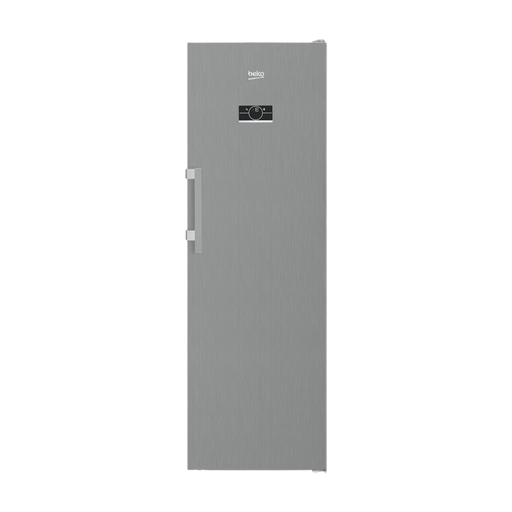
Beko B7RFNE315XP, 286 l, No Frost
The described layout of drawers, compartments and door shelves provides separate storage areas for family food stocks. The listed usable capacity is 286 l, with a freezing capacity of 17 kg per 24 hours; the title also gives energy efficiency class D.
Joybuy
 No image available
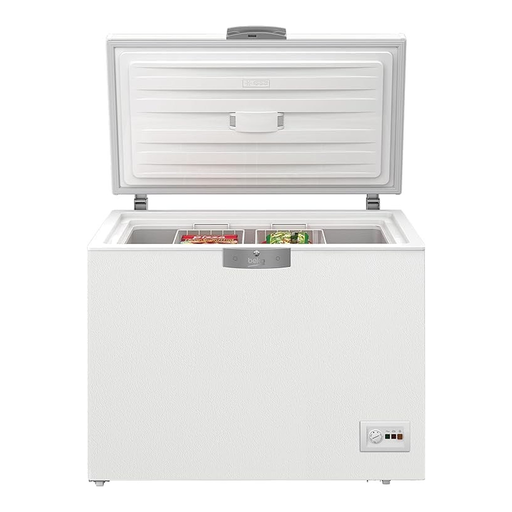
Beko HSM22340, 230 l chest freezer
The chest-style design provides space for food stocks, with two freezer baskets for organising them. The listed usable capacity is 230 l and it has a four-star freezer system. If you want to freeze freshly cooked food, check the freezing function of the specific model.
Joybuy
 No image available
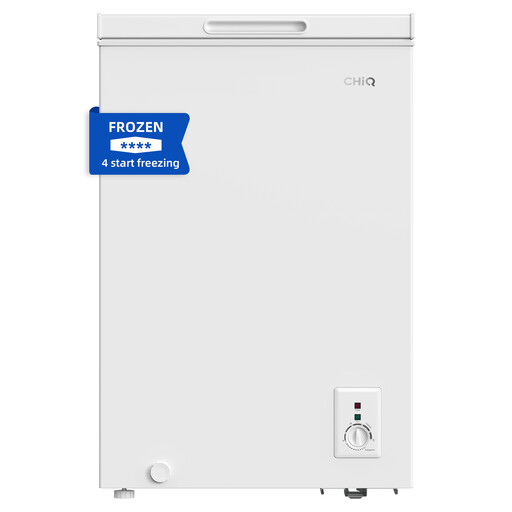
CHiQ chest freezer, 99 l, four-star freezing function
For smaller batches, the product description lists a freezing capacity of 4.5 kg per 24 hours and a capacity of 99 l. It has a wire basket for organising the interior, and a stated footprint of 0.26 m².
Joybuy
Frequently asked questions
When is it worth having a separate freezer for soup?
First, check whether your existing four-star freezer compartment has enough space and freezing capacity for the portions you’re planning. An additional appliance may be worth considering if you regularly freeze larger quantities or want to store other food stocks; the Consumer Advice Centre lists regularly freezing larger quantities as a possible reason to get a freezer.
How can I put cooked soup in the freezer safely?
To store warm food for longer, cool it quickly to below 7 °C, as recommended by the German Federal Institute for Risk Assessment. Transfer the soup to freezer-safe containers and fill them no more than three-quarters full, as advised by the Consumer Advice Centre. For longer-term storage, the freezer should be set to −18 °C or colder; this is the guideline given by the North Rhine-Westphalia Consumer Advice Centre.
What should I know about energy consumption, warranties and complaints?
Compare the stated consumption in kWh/year with the usable capacity, and work out potential electricity costs using your own tariff. An additional warranty is a voluntary offer with its own terms and conditions. If a product is faulty, you also have statutory consumer rights against the seller, which are separate from any additional warranty, as the Consumer Advice Centre explains.
What rules apply to energy labels and disposing of an old appliance?
EU energy-label requirements for refrigerators and freezers that need to carry a label also apply to online listings, as explained by the European Union’s Your Europe website. In Germany, old electrical appliances must not go in household rubbish. The Federal Environment Agency lists municipal collection points and explains that, when you buy a new appliance, a large old appliance of the same type can also be returned when your new one is delivered, including for online purchases.


