For a pot of soup that you heat one serving at a time, a portable single hob may be enough; if you want to use several pots at once, you’ll need separate cooking zones. Induction requires suitable cookware, while a radiant ceramic glass hob may be an alternative for other types of pot. The German Federal Institute for Risk Assessment (BfR) recommends keeping food hot at a minimum of 60 °C throughout – a setting on the appliance does not tell you the temperature of the soup.
Which type of hob is right for you?
Households with staggered mealtimes
If you want to keep soup hot for people who are eating one after another, or reheat individual portions, consider the temperature of the food and how many cooking zones are available. The BfR recommends keeping food hot at a minimum of 60 °C throughout.
Small kitchens with one soup pot
If you need an extra portable cooking surface, the pot size, the weight of the filled pot and the available worktop space must all be suitable for the appliance you choose. CASO Design specifies these requirements for models such as the Touch 2000 and ProChef 3500.
Households with existing cookware
If you want to keep using your existing soup pot, check before buying whether its base is suitable for induction and fits the hob. Rommelsbacher specifies that the CTS 2000/IN requires ferromagnetic cookware.
What should you look for when buying?
If there’s a long gap between servings, the temperature at the hob won’t necessarily match the temperature of the soup. The BfR recommends keeping food hot at a minimum of 60 °C throughout. As an alternative, the consumer advice centre recommends cooling food quickly, storing it in a cool place and reheating it thoroughly.
| Priority |
What to check when buying |
Who is this important to? |
| Keeping soup hot |
Check the temperature of the food; check whether the specific model has a keep-warm or timer function. |
When mealtimes are staggered, I want to know whether the soup itself stays hot enough; the appliance setting alone doesn’t tell me that. Around 33% of consumers prioritise keeping food safely hot. |
| Using an existing pot |
Check induction compatibility and the diameter of the base; for portable hobs, also check the maximum load. |
I want to keep using my soup pot, so I compare its base with the hob specifications. Around 27% of consumers prioritise pot compatibility. |
| Using two pots at once |
Check how many cooking zones can be used independently; for built-in appliances, check whether they need to be connected to an oven. |
If I want to cook soup and another dish at the same time, I need separate cooking zones. Around 20% of consumers put this feature first. |
| Space and connection |
Check the available worktop space or installation dimensions, as well as the type of connection and installation requirements. |
I want to fit the hob into my kitchen without running into problems with the space available or the existing connection. Around 20% of consumers prioritise placement and connection. |
Which buying mistakes can you avoid?
-
Assuming the keep-warm setting matches the temperature of the soup
The BfR recommendation of at least 60 °C throughout applies to the food, not the temperature set on the appliance.
Check the temperature of the soup if you want to keep it hot. Otherwise, cool it quickly, store it in a cool place and reheat it before eating.
-
Checking only the pot diameter, not the weight of the filled pot
CASO Design specifies a pot diameter of 12–24 cm and a maximum load of 6 kg for the Touch 2000.
Compare the diameter of the base and the total weight, including the soup, with the specifications for the appliance you’re considering.
If your existing pot doesn’t meet the requirements, you may need to use a different one.
-
Assuming a hob controlled by an oven can be used independently
Bosch states that the NVQ645CB6E can only be operated with a compatible built-in oven.
Before buying, check how it is operated, whether it’s compatible with your oven, and the cut-out and connection requirements.
Matching the oven, cut-out and connection may require extra planning and installation work.
-
Confusing radiant ceramic glass with induction
The Rommelsbacher CT 2200/E uses a radiant heating element and has a residual heat indicator; the CTS 2000/IN is an induction model and requires ferromagnetic cookware.
Choose based on the heating method and pot compatibility, not just the glass surface, and follow the relevant safety and usage instructions.
Which brands are worth considering?
CASO Design
Portable single induction hobs for one compatible pot; the manufacturer also specifies a keep-warm function with an appliance setting of 70 °C for the ProChef 3500.
- CASO Design specifies a pot diameter of 12–24 cm and a maximum load of 6 kg for the Touch 2000; for the ProChef 3500, it specifies 12–27 cm and a maximum load of 18 kg.
- The appliance setting doesn’t prove that the soup reaches a particular temperature throughout.
Rommelsbacher
According to the manufacturer, the range includes the portable radiant hob CT 2200/E and the induction hob CTS 2000/IN.
- The CT 2200/E has a switchable heating zone with a diameter of 140/210 mm and a residual heat indicator.
- The CTS 2000/IN requires ferromagnetic cookware; the features listed don’t demonstrate measured keep-warm or cooking performance.
SEVERIN
According to the manufacturer, SEVERIN offers portable induction hobs with one or two cooking zones; the DK 1031 is a double model.
- SEVERIN specifies two cooking zones, a connected load of 3400 W and a Schuko plug for the DK 1031.
- Your cookware and available worktop space still need to be suitable for the specific use.
Bosch
Bosch offers built-in induction hobs for kitchens where several cooking zones are needed on a permanent basis.
- Bosch specifies four cooking zones and a switch-off timer for the NVQ645CB6E.
- This model only works with a compatible built-in oven; its features can’t be assumed to apply to freestanding Bosch models.
Joybuy products for single and double hobs
The selection includes single and double induction hobs, as well as an infrared hot plate as an alternative to induction. If a model is described as a built-in hob, make sure it’s suitable for your installation.
 No image available
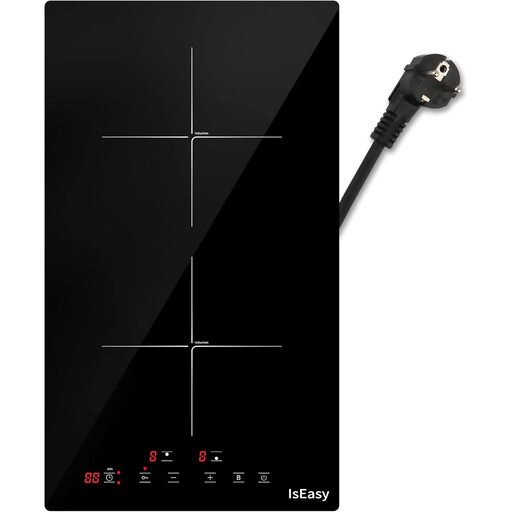
IsEasy Domino 2-zone induction hob
Its two cooking zones are suited to using two pots at once; the product description identifies it as a built-in hob.
3400 W; 29,5 cm; plug connection; timer; child lock; 9 heat settings; booster function; 220–240 V. Check the installation requirements and connection before buying.
View at Joybuy
 No image available
IsEasy Portable Induction Cooktop
Described as a single induction hob, it’s suited to cooking with one pot at a time, provided the cookware is induction-compatible.
2100 W; 28 cm; glass surface; 9 heat settings; 8-hour timer; touch controls.
View at Joybuy
 No image available
Induction hob with two cooking zones
The product description specifies two cooking zones for cooking with two pots at once; induction requires compatible cookware.
5 temperature settings.
View at Joybuy
 No image available
dtl06 infrared hot plate
Described as an infrared hot plate, it’s an alternative if you don’t want to be limited to induction; note the warning that the plate gets hot during use.
3500 W; timer; touch and rotary controls. The product name specifies use with heat-resistant pots.
View at Joybuy
 No image available
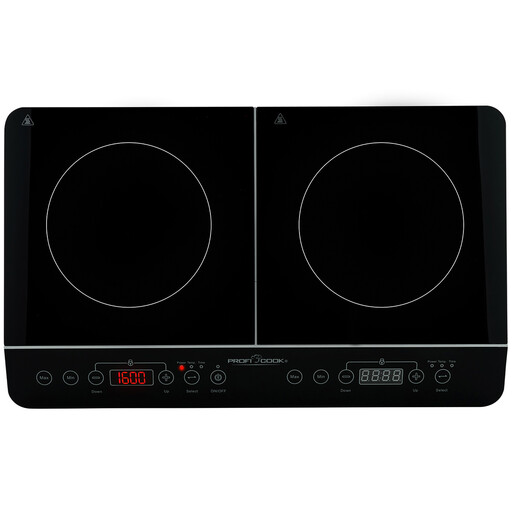
ProfiCook PC DKI 1067
The two induction cooking zones are designed for cooking two dishes at once; compatible cookware is required.
10 settings; timer; up to 240 °C.
View at Joybuy
Frequently asked questions
Is the keep-warm function enough to leave broccoli soup until the next mealtime?
Not on its own. The BfR recommends keeping hot food at a minimum of 60 °C throughout; the temperature set on the appliance doesn’t tell you the temperature of the soup in every part. If there’s a long gap, cool the soup quickly, store it in a cool place and reheat it thoroughly before eating.
How can I tell if my soup pot will work on an induction hob?
Check that the pot is suitable for induction and compare the diameter of its base with the model specifications. If you’re using a portable hob, you should also check the weight of the filled pot against the maximum load.
Can I connect a built-in hob to the electricity supply myself?
First, check the specifications for the specific model: Bosch explicitly states that the NVQ645CB6E must be connected by a qualified electrician. Where work on the electrical installation is covered by § 13 NAV, it may only be carried out by the network operator or a company listed in an installers’ register. Check the model instructions and your existing connection before buying.
What should I do with an old hob when replacing it?
Waste electrical appliances must be collected separately. The German Environment Agency lists free take-back options including local authority collection points and certain retailers; check the arrangements available locally before replacing your hob.


