Families preparing several lunch boxes
If you want to cook several portions in one batch, compare the total amount you need with the hot-soup capacity and the markings on the specific appliance.


Start by comparing the usable hot-soup capacity with the total amount you need for your lunch boxes. If it won’t all fit in one batch, you may need to cook a second. A basic soup maker is enough if you mainly make soup, while a cooking blender is a better fit if you also want to prepare other hot and cold recipes. Whatever you choose, allow time for cleaning and plan how to keep the prepared soup chilled during transport.
If you want to cook several portions in one batch, compare the total amount you need with the hot-soup capacity and the markings on the specific appliance.
If some family members prefer smooth soup and others like it chunky, check which textures the programmes on each model can make.
If you’re making soup before your visit, allow time for it to cool and make sure you have a way to keep it chilled during the journey.
First, decide whether you mainly want to make soup or prepare other recipes too. Then compare the hot-food capacity with the portions you need, and plan for cleaning and transport as separate steps.
| What matters | What to look for | Who it matters most to |
|---|---|---|
| Portions per batch | Add up the capacity of your lunch boxes and compare the total with the permitted hot-fill capacity. Philips lists a 1.2-l jug for the HR2203/80; Russell Hobbs and Krups each state a hot-food capacity of 1.4 l for models 21480-56 and KB835D11. | If I want to fill several lunch boxes without cooking a second batch, hot-fill capacity is key. Around 31% of consumers prioritise having the right capacity for their portions. |
| Smooth or chunky soup | Check whether the model offers programmes for puréed and chunky soup, or lets you blend manually. DOMO lists programmes for smooth and chunky soup for the DO498BL; Philips also lists manual blending for the HR2203/80. | If my family likes different textures, I want to be able to choose the right preparation method. Around 25% of consumers put their preferred soup texture first. |
| Cleaning | Check whether the appliance has a cleaning programme, removable parts and dishwasher-safe components. DOMO lists a cleaning function and removable blades for the DO737BL; Philips states that the parts of the HR2203/80 are not dishwasher-safe. | If I make soup regularly, I want to know which parts I’ll need to wash by hand. Around 19% of consumers prioritise ease of cleaning. |
| Other cooking uses | Compare only the programmes you’re likely to use. Russell Hobbs lists eight programmes for the 21480-56, while Krups lists ten automatic programmes for the KB835D11. Check the hot-fill capacity separately. | If I want to use the appliance for other hot or cold recipes too, useful extra programmes matter. Around 13% of consumers prioritise versatility. |
| Cooling and transport | Plan for cooling time, lunch boxes and a way to keep the soup chilled on the go. The German Federal Institute for Risk Assessment recommends cooling hot food quickly to below 7 °C for longer storage, and keeping perishable food chilled during transport. | If I’m taking soup to a family visit, I need to plan for what happens after I transfer it to the lunch boxes. Around 12% of consumers focus on preparation and transport. |
For the Russell Hobbs 21480-56 and Krups KB835D11, the manufacturers state a capacity of 1.75 l for cold ingredients, but only 1.4 l for hot food. If you plan around the larger figure, you may need to split the amount for your lunch boxes across several batches.
Compare your planned portions with the capacity stated for hot preparations on the specific model.
Cooking an extra batch may mean more preparation time.
A keep-warm function doesn’t automatically tell you what temperature the soup will be after you transfer it. The German Federal Institute for Risk Assessment has separate recommendations for cooling food and keeping it chilled during transport.
Plan cooling, packing the lunch boxes and keeping them chilled during transport as separate steps.
Cooling the soup and transporting it may take extra time and require a suitable way to keep it chilled.
A dedicated cleaning programme doesn’t mean that all the appliance’s parts can go in the dishwasher. Philips states that the parts of the HR2203/80 are not dishwasher-safe.
Check the care instructions and dishwasher guidance for the specific model separately.
If some parts aren’t dishwasher-safe, allow time to wash them by hand.
The DO498BL is designed mainly for smooth or chunky soup, while the DO737BL also has a cleaning function.
The Viva Collection SoupMaker HR2203/80 is a more compact option if 1.2 l is enough for your portions and you want to blend manually.
The Soup & Blend 21480-56 combines soup-making with cold blending.
The Perfectmix Cook KB835D11 is aimed at anyone who wants to use a range of hot and cold programmes as well as making soup.
The SVD 1400 Vera is also designed for making plant-based drinks and porridge.
The following Joybuy appliances are described as suitable for soup or other cooking uses. When planning portions, compare the stated capacity with the permitted hot-food capacity for the specific model.
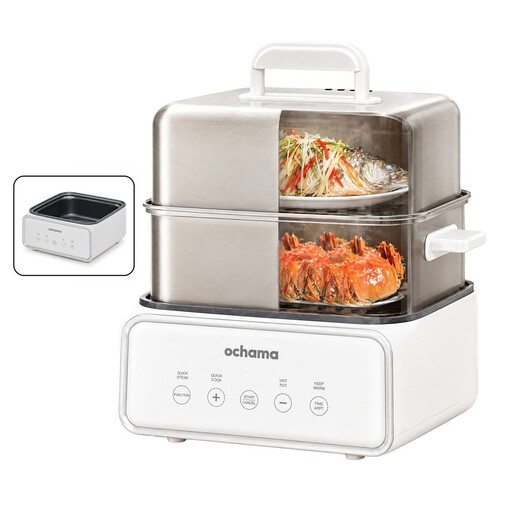 No image available
A good fit if you want to steam, braise or boil as well as make soup. The stated 12-litre capacity refers to the steaming chamber, not the amount of soup it can hold.
Features include a double-layer stainless steel steaming chamber, a removable steaming tray and a preset timer.
 No image available
An option if you want to cook soup and other dishes gently, and the stated capacity is right for your portions.
The product details list two heat settings of 500 W and 1000 W, as well as a glass lid with a steam vent. The appliance is described as being designed for gentle cooking; high-temperature frying should be avoided.
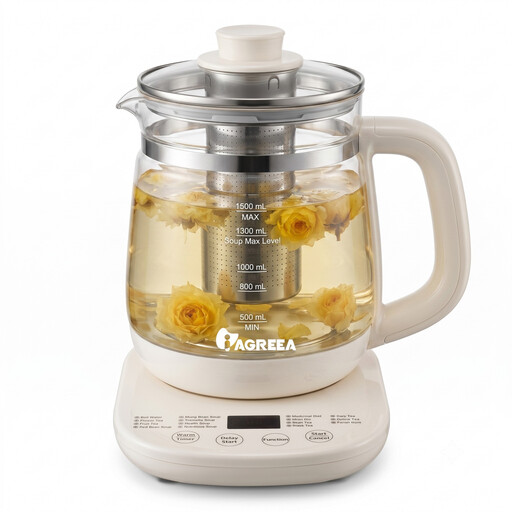 No image available
Worth considering if you want to make hot drinks or congee as well as soup. Check that the stated capacity is right for the amount of soup you plan to make.
The product details list 14 preset programmes, six temperature settings, a delayed start and a keep-warm function. The stated power is 800 W.
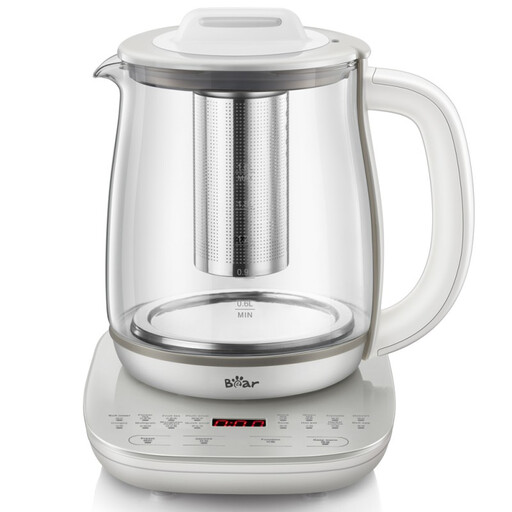 No image available
A possible choice if you want to use programmes for hot drinks and other cooking tasks as well as making soup.
The product details list 16 presets, including soup and quick soup, and a power rating of 1000–1200 W. Check the fill markings for the preparation you have in mind.
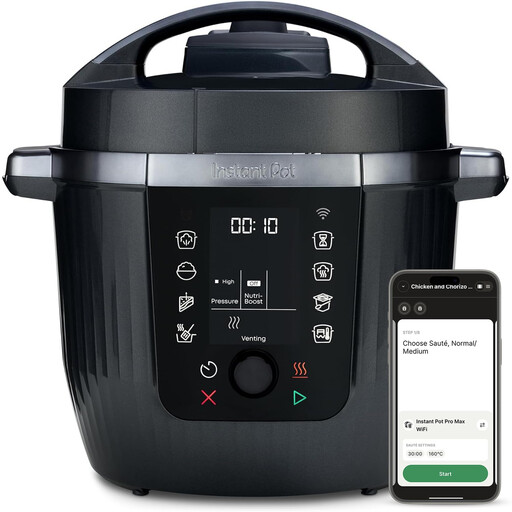 No image available
A good fit if you want to prepare several portions and use other cooking functions as well as making soup; the product description says it can serve up to six people.
The stated power is 1200 W, and functions include pressure cooking, slow cooking and steaming. When pressure cooking, let the pressure release fully before opening the appliance, and follow the instructions about steam from the release valve.
Add up the amounts you plan to put in your lunch boxes and compare the total with the permitted hot-soup capacity of the specific model. Russell Hobbs and Krups each state a hot-food capacity of 1.4 l for models 21480-56 and KB835D11, even though their cold-fill capacity is higher.
A cooking blender is a better fit if you regularly want to make other hot or cold recipes as well as soup. If you mainly make soup and programmes for smooth or chunky soup meet your needs, a basic soup maker may be enough. Either way, check that the hot-fill capacity is right for your portions.
No. A cleaning programme doesn’t mean that all the parts are dishwasher-safe. Check the care instructions and dishwasher guidance separately; Philips states that the parts of the HR2203/80 are not dishwasher-safe.
For longer storage, the German Federal Institute for Risk Assessment recommends cooling hot food quickly to below 7 °C and keeping perishable food chilled during transport. A keep-warm function on the appliance doesn’t tell you what temperature the soup will be at after you transfer it and take it with you.