If there’s only a short gap between meals, a model with a keep-warm function could be suitable, as long as you can check the soup’s temperature. The BfR recommends keeping food hot at a minimum of 60 °C throughout; for meals much later in the day, portioning, chilling and reheating thoroughly is the better approach. Choose the capacity and blending programme to suit the number of portions you’re making and the consistency you want.
Who is this choice relevant to?
Households with different mealtimes
If you make one batch but not everyone eats at the same time, the actual temperature while keeping it warm and a plan for portions eaten later both matter. The BfR recommends keeping food hot at a minimum of 60 °C throughout.
People who batch-cook several portions
Carrot soup intended for later can be portioned and chilled. When reheating it, the BfR recommends a temperature of at least 70 °C for two minutes throughout the food. Capacity and cooling should therefore be considered together.
Fans of creamy vegetable soup
If you want to serve your carrot soup smooth or with chunks, check the programmes on the specific model. Cleaning instructions for the jug, blade and lid can also matter if you use it frequently.
What should you look for when buying?
First decide whether you want to keep the soup warm for serving soon or reheat chilled portions later. Then compare the amount you need to make in one batch, your preferred consistency and how much cleaning is involved.
The German Federal Institute for Risk Assessment (BfR) recommends keeping food hot at a minimum of 60 °C throughout. For reheating, the BfR recommends at least 70 °C for two minutes throughout the food.
| Buying priority |
What to check before buying |
Who is this important to? |
| Keeping soup warm when meals are close together |
Whether the model has a keep-warm programme and how you can check the soup’s temperature. |
If I want to serve the soup to several people soon after cooking, I don’t want to rely on the programme name alone. Around 36% of consumers put keeping food warm first when mealtimes differ. |
| Storing portions for later |
Whether the soup is easy to portion after cooking; plan separately for chilling and reheating. |
If the next meal is much later, I want to chill portions and reheat them thoroughly before eating. Around 29% of consumers prioritise storing food for later meals. |
| Amount per batch |
Check the fill markings and permitted quantity for hot food against the recipe amount. |
If I want to cook several portions at once, it’s important to know whether the hot soup will fit in one batch. Around 21% of consumers focus first on choosing the right batch size. |
| Consistency and cleaning |
Check the programmes for smooth or chunky soup, as well as care instructions for the blade, jug and lid. |
If I want to choose between smooth and chunky soup and use the appliance often, cleaning time matters too. Around 14% of consumers prioritise texture and cleaning. |
Avoiding buying and usage pitfalls
-
Confusing keeping food warm with safe long-term storage
A keep-warm programme doesn’t prove that the soup reaches at least 60 °C throughout.
Check the temperature if you want to keep the soup warm for serving soon. For meals much later, chill the portions and reheat them thoroughly.
-
Assuming the jug’s total capacity is its usable capacity for hot food
For the Krups KB835D, the manufacturer states a capacity of 1.75 l for cold preparations but only 1.4 l for hot ones. A larger recipe may therefore need an extra cooking cycle.
Compare the permitted fill level for hot food with the amount of soup you’re making.
A larger recipe may need an additional cooking cycle.
-
Assuming a cleaning programme means it’s dishwasher-safe
Care instructions vary by model. According to the manufacturer, no parts of the Philips HR2203/80 are dishwasher-safe.
Before buying, read the care instructions for the jug, lid and blade, and allow for manual cleaning if needed.
Manual cleaning can take extra time after use.
Key brands to consider
The details refer to the models and product ranges named below. They are not a general assessment of each brand’s entire range.
DOMO
According to the manufacturer, the DOMO DO716BL is a soup maker with a 2.2 l capacity and programmes for different soup textures.
- Three soup textures are described, along with a cleaning function and removable blades.
- This information does not confirm a keep-warm function or a specific temperature for keeping food warm.
Philips
According to Philips, the Viva Collection SoupMaker HR2203/80 has a 1.2 l jug and programmes for both puréed and chunky soup.
- This model can also be blended manually.
- Philips says the HR2203/80 parts are not dishwasher-safe. This does not automatically apply to other HR2204 variants.
ROMMELSBACHER
According to the manufacturer, the SVD 1400 Vera combines soup and plant-based drink programmes and has a maximum capacity of 1.3 l.
- This model is described as having pulse and cleaning programmes, as well as overflow and temperature protection.
- The functions listed do not confirm a suitable keep-warm solution for later meals.
Krups
The Perfectmix Cook KB835D is a cooking blender with programmes for hot and cold preparations.
- Krups lists removable blades and a cleaning programme.
- According to the manufacturer, the permitted capacity is 1.4 l for hot dishes and 1.75 l for cold dishes.
Tescoma
According to Tescoma, the PRESIDENT 1.75 l is a cooking blender with a heating and keep-warm programme.
- Tescoma describes a programme that heats and keeps food warm for 60 minutes.
- The stated serving temperature of 55 °C is below the BfR recommendation of at least 60 °C for keeping food hot. Check the temperature and duration in use.
Joybuy models with soup programmes
This Joybuy selection includes appliances whose product details list soup programmes and a keep-warm function. Check the actual soup temperature on both models: a keep-warm mode doesn’t prove that the soup reaches at least 60 °C throughout.
 No image available
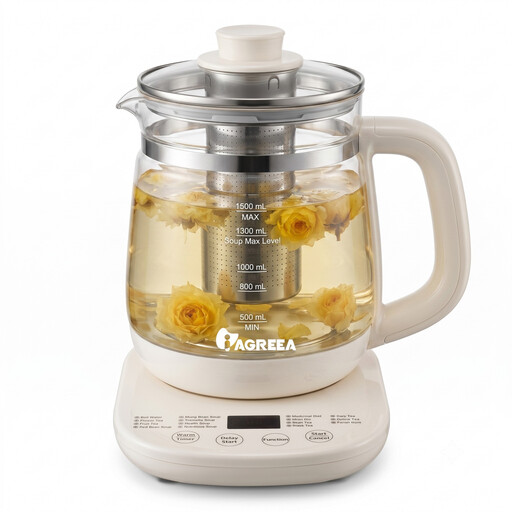
IAGREAA YSH15(69)30, 1.5 l
A good option if you’re looking for an appliance with explicitly listed soup programmes and automatic keep-warm after cooking; still check the soup’s temperature yourself.
1.5 l; 14 preset programmes including soup; 6 temperature settings from 40 to 90 °C; 800 W; borosilicate glass.
View at Joybuy
 No image available
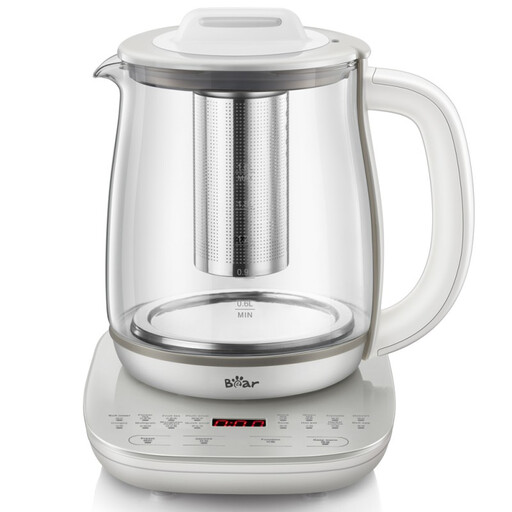
Bear Health Pot YSH-C18R6, 1.8 l
Could be a good fit if you’re looking for an appliance with explicitly listed soup programmes and a keep-warm function; the stated keep-warm duration is no substitute for checking the temperature.
1.8 l; 16 smart presets including soup and quick soup; 1000–1200 W; the product description states that it keeps food warm for up to 9.5 hours.
View at Joybuy
Frequently asked questions
Can I leave carrot and coriander soup in the soup maker until the next meal?
Only if it’s kept sufficiently hot: the BfR recommends keeping food hot at a minimum of 60 °C throughout. A keep-warm function alone doesn’t confirm that it reaches this temperature. For meals much later, chill the portions and reheat them thoroughly.
How should I store leftover soup and reheat it?
The BfR recommends dividing larger quantities between several shallow dishes to cool, then chilling them to below 7 °C within a few hours. Store leftovers in the fridge and use them within two to three days. When reheating, the BfR recommends at least 70 °C for two minutes throughout the food.
How do I clean a soup maker with a built-in blade?
Follow the instructions for your model. For the soup maker models covered in its guidance, Morphy Richards recommends switching the appliance off, unplugging it and letting it cool before cleaning by hand; electrical components must not be immersed. According to the manufacturer, no parts of the Philips HR2203/80 are dishwasher-safe.
What should I know about CE marking and consumer rights for faulty goods in Germany?
The EU’s information on CE marking explains that the manufacturer declares the product’s conformity by applying the mark; it is not a quality mark issued by a central EU body. According to the Verbraucherzentrale, the seller is generally responsible for the statutory guarantee when goods are faulty; it states that the period is two years from delivery. A voluntary manufacturer’s warranty is separate.


