For a weekend cooking class, choose a soup maker that suits the amount of hot soup you need per batch and the consistency you want. Compare the maximum hot-fill capacity with your serving plan, and allow time for cleaning and keeping the soup safely hot if you’ll be making several batches. Model specifications can help narrow down your options, but you’ll still need to check the specific product listing and make sure the appliance is suitable for your recipe.
Which appliance is right for you?
Class leaders serving everyone together
If everyone will eat together, plan the amount of soup per batch and when you’ll serve it. Manufacturers give different capacities for different models: 1.2 l for Philips, a maximum of 1.3 l for Rommelsbacher, 1.4 l for hot dishes from Krups and 1.6 l for DOMO.
Teachers demonstrating different soup textures
If you’re demonstrating both smooth and chunky leek and potato soup, the programmes available on each model matter. Philips, DOMO and Krups list functions for different soup consistencies; Philips also offers manual blending.
Class leaders running several cooking sessions
If you need to refill or clean the appliance between groups, its cleaning instructions and the time available will affect the class schedule. Rommelsbacher lists a cleaning programme for the SVD 1400; Philips states that the parts of the HR2203/80 are not dishwasher-safe.
What should you look for when buying?
First, work out how much hot soup you’ll need per sitting. Then check the consistency you want, along with the time needed for cleaning and serving.
| What matters |
What to check before buying |
Who should consider this? |
| Amount per batch |
Convert the planned number of portions into litres, then compare this with the model’s maximum hot-fill capacity and fill markings. |
If I’m cooking for everyone to eat together, one batch should cover as many planned portions as possible, so the schedule doesn’t depend on making more batches. That’s why around 36% of consumers prioritise making enough soup in each batch. |
| Consistency you want |
Check whether the model has a programme for smooth or chunky soup and, if needed, lets you blend manually afterwards. |
For a demonstration, I want to be able to serve the leek and potato soup either smooth or chunky. Around 29% of consumers put their preferred consistency first. |
| Batches and cleaning |
Check the programme duration and the cleaning instructions for the jug, blades and electrical parts of the exact model. |
If several groups are cooking one after another, I need a schedule that allows time to refill and clean the appliance. Around 21% of consumers prioritise the number of batches and cleaning time. |
| Safe serving |
If you’ll be serving at different times, check whether the appliance can keep the soup warm, and monitor the food’s temperature separately. |
If the soup won’t be served as soon as it’s cooked, I want to plan how to keep it hot and when to serve it reliably. Around 14% of consumers prioritise safe serving at the right time. |
The German Federal Institute for Risk Assessment recommends keeping heated food hot at a temperature of at least 60 °C throughout until it is eaten. A keep-warm programme alone does not prove that the soup reaches this temperature throughout.
Avoid common planning mistakes
-
Assuming the jug’s total capacity is the amount of hot soup it can hold
For the Krups Perfectmix Cook KB835D11, Krups gives a capacity of 1,75 l for cold dishes, but only 1,4 l for hot dishes. If you use the larger figure when planning your soup session, you could miscalculate how much soup you can make per batch.
For your recipe, compare the maximum hot-fill capacity with the amount you plan to serve.
A lower hot-fill capacity may mean making extra batches and allowing more time for the class.
-
Assuming a cleaning programme means the parts are dishwasher-safe
Cleaning options vary by model and component. Philips states that the parts of the HR2203/80 are not dishwasher-safe; a cleaning programme does not replace the instructions for the specific model.
Before planning your schedule, check how to clean the jug, blades and electrical parts of the appliance you’re considering.
You may need to allow extra time for hand-washing between class sessions.
-
Serving soup later without checking its temperature
The German Federal Institute for Risk Assessment warns of risks from spore-forming bacteria if food is kept warm at too low a temperature. An appliance’s programme alone does not prove that the soup is at the right temperature throughout.
Serve the soup promptly, or plan to keep it hot at a temperature of at least 60 °C throughout until it is eaten, as recommended by the BfR.
Popular brands and model ranges
Philips
The SoupMaker HR2203/80 is a compact option for cooking stations where you’ll be making smooth or chunky soup.
- Philips lists a 1,2-l jug, five preset programmes and manual blending for this model.
- Philips states that the parts of the HR2203/80 are not dishwasher-safe; this does not automatically apply to other variants.
DOMO
The DO498BL is a soup maker with programmes for larger batches and different soup consistencies.
- DOMO lists a 1,6-l capacity and programmes for smooth and chunky soup.
- The advertised claim of around six bowls does not define a set portion size for your cooking class.
Krups
The Perfectmix Cook KB835D11 is suited to classes where you’re planning to make other hot and cold recipes as well as soup.
- Krups lists programmes for creamy and chunky soups, as well as manual heating and blending functions.
- For this model, Krups gives a capacity of 1,4 l for hot dishes and 1,75 l for cold dishes; use the hot-fill capacity when planning soup.
Rommelsbacher
The SVD 1400 Vera combines soup programmes with other ways to prepare food, including plant-based drinks and porridge.
- Rommelsbacher lists a cleaning programme and a maximum capacity of 1,3 l.
- Its additional uses do not increase the amount of soup you can make per batch.
Joybuy products for making soup
This selection includes an electric kettle whose product details list soup as a preset use, as well as a slow cooker described as a soup maker. Before using either in your class, check the instructions to make sure the appliance is suitable for your recipe, the consistency you want and the batch size you need. For mains-powered appliances covered by the relevant EU rules, check that the required CE marking is present. The European Commission explains the scope of these rules and the manufacturer’s declaration.
 No image available
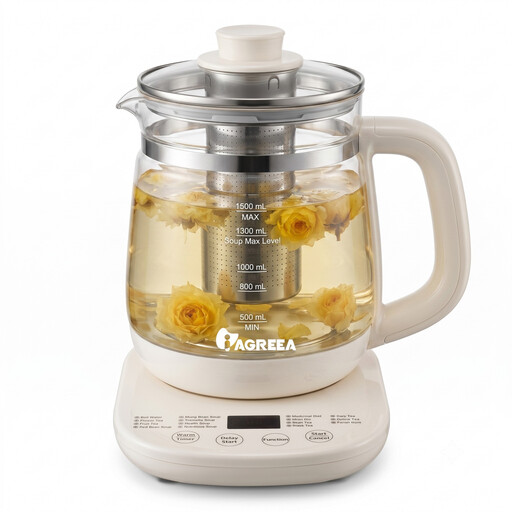
IAGREAA YSH15(69)30 1.5L Electric Health Kettle
The product details list soup as a preset use. Check the instructions to see whether you can use it to make your leek and potato soup to the consistency you want.
The product name lists a 1.5L capacity, 14 preset programmes, six adjustable temperature settings and a keep-warm function.
View at Joybuy
 No image available
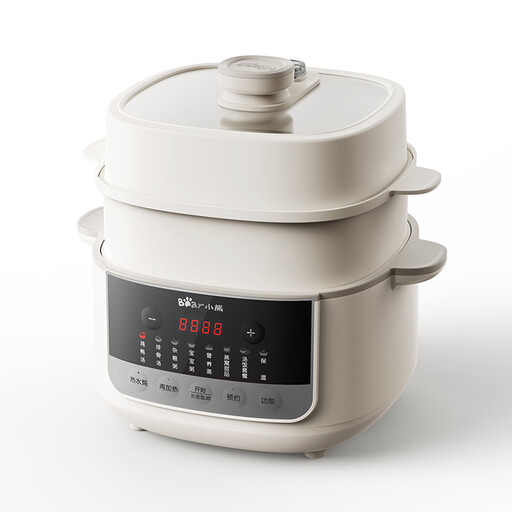
Bear DDZ-J25G2 4.1L Slow Cooker and Soup Maker with Steamer Function
The product description identifies this appliance as a slow cooker and soup maker. Check which pot is intended for soup and whether it can achieve the consistency you want.
The product name lists a capacity of 4.1L. Steam escapes during use, so wait a few minutes after cooking before opening the lid.
View at Joybuy
Frequently asked questions
Is the stated jug capacity enough for everyone in the class?
Not necessarily. For the KB835D11, Krups gives a capacity of 1,75 l for cold dishes and 1,4 l for hot dishes. Work out how much soup you need and check the hot-fill mark on the specific model.
Can I simply put a soup maker in the dishwasher between two class groups?
It depends on the model and the component. Philips states that the parts of the HR2203/80 are not dishwasher-safe; the cleaning programme Rommelsbacher lists for the SVD 1400 does not replace the relevant cleaning instructions.
What should I do if the soup won’t be served straight away?
The German Federal Institute for Risk Assessment recommends keeping heated food hot at a temperature of at least 60 °C throughout until it is eaten. An advertised keep-warm programme alone does not confirm that the food reaches this temperature.
What marking should I look for when buying a mains-powered appliance in Germany?
If a mains-powered appliance falls within the scope of the relevant EU rules, it must carry the required CE marking. The European Commission explains that the manufacturer uses this marking to declare conformity; CE is not a certification mark awarded by a central EU body. Check the details in the specific product listing.
Is a manufacturer’s guarantee the same as statutory consumer rights?
No. The Verbraucherzentrale distinguishes statutory consumer rights against the seller from a voluntary guarantee. Check the guarantee terms separately.


