For leek and potato soup at a dinner party, first choose a usable hot-fill capacity that suits your guest numbers and portion sizes, then consider the texture settings. A compact appliance may be enough for a small batch; for more guests, you’ll need a larger hot capacity or should plan additional cooking cycles in good time. Also check the cleaning instructions for the exact model and the actual temperature it reaches when keeping food hot.
Which soup maker is right for you?
Hosts catering for a larger group
If you want to make as many portions as possible in one go, compare the hot-fill capacity and base your calculations on your own portion sizes. Philips, DOMO and Krups list different capacities for their respective models.
Hosts with a particular texture in mind
If you want to serve soup that’s creamy, extra smooth or chunky, check the programmes on the specific model. Philips and DOMO offer different options for smooth and chunky soups.
Hosts working to a tight schedule
If you’ll be preparing other courses while the soup cooks, allow for extra batches and the time needed before serving. DOMO describes the DO498BL as completing a cooking and blending cycle, while the German Federal Institute for Risk Assessment provides guidance on keeping food hot.
What to look for when buying
Compact soup maker
Suitable if: You’re making a small batch and want to choose between smooth and chunky soup.
Trade-off: You may need extra cooking cycles for a larger group. Philips states that the parts of the HR2203/80 are not dishwasher-safe.
Soup maker with a larger jug
Suitable if: Making a larger quantity per cycle matters more than having a particularly compact appliance.
Trade-off: DOMO lists a capacity of 1.6 l for the DO498BL and 2.2 l for the DO716BL; the number of portions will still depend on your portion sizes.
Heating blender
Suitable if: You’re planning to make other hot and cold dishes as well as soup.
Trade-off: Krups lists a capacity of 1.4 l for hot dishes and 1.75 l for cold dishes for the KB835D. For planning soup, use the hot-fill capacity.
| What to consider |
What to look for |
Who it matters most to |
| Quantity per cycle |
Compare the hot-fill capacity of the specific model with your guest numbers and portion sizes. Krups lists a capacity of 1.4 l for hot dishes for the KB835D. |
If I don’t want to cook several batches for a group, I plan around my portion sizes. Around 36% of consumers say quantity per cycle is their top buying priority. |
| Soup texture |
Check whether the model has programmes for smooth and chunky soup. DOMO lists ‘chunky’, ‘smooth’ and ‘extra smooth’ settings for the DO716BL; Philips describes programmes for puréed and chunky soup on the HR2203/80. |
If I want to keep pieces of potato or leek in the soup, or serve a smooth soup, I choose the programme to suit the texture I’m after. Around 29% of consumers put texture first. |
| Time until serving |
Allow for the programme time and any additional batches. In its updated guidance of 19 March 2024, the German Federal Institute for Risk Assessment recommends keeping heated food hot at a minimum of 60 °C throughout until it is eaten. |
If I’m preparing other courses at the same time, I want to know when each batch will be ready and how to keep the soup safely hot until serving. Around 21% of consumers prioritise a predictable schedule. |
| Cleaning and other uses |
Compare the care instructions for each part and check whether the appliance has a cleaning programme. Philips states that no parts of the HR2203/80 are dishwasher-safe; Rommelsbacher lists a cleaning programme for the SVD 1400. |
If I don’t want to spend a long time washing up by hand after dinner, I check how to care for the parts and whether I’ll really use the extra programmes. Around 14% of consumers put cleaning and future use first. |
Avoid common planning mistakes
-
Confusing total capacity with hot-fill capacity
Krups gives different capacity figures for hot and cold dishes for the KB835D. If you plan around the higher figure, you could make your intended soup batch too large.
Check the permitted hot-fill capacity and fill mark on the specific appliance against the quantity you plan to make.
-
Planning to serve a small manufacturer’s portion as a main course
Philips describes 1.2 l in the HR2203/80 as four portions; DOMO lists 1.6 l and approximately six bowls for the DO498BL. These figures don’t determine your portion sizes.
First decide whether you’ll serve the soup as a starter or main course, then plan the quantity around your guest numbers.
-
Assuming that ‘keep warm’ means food is being kept safely hot
A keep-warm claim alone doesn’t tell you what temperature the soup actually reaches. The German Federal Institute for Risk Assessment recommends keeping heated food hot at a minimum of 60 °C throughout until it is eaten.
Check the actual temperature of the food while it’s being kept hot.
-
Assuming ‘easy to clean’ means it’s dishwasher-safe
Philips states that no parts of the HR2203/80 are dishwasher-safe. This could mean extra hand-washing after dinner.
Read the cleaning instructions and check the care advice for each part of the specific model.
Allow time for washing up by hand after your meal.
Brands and suitable model ranges
Philips
The compact SoupMaker range includes the HR2203/80, which Philips lists as having a capacity of 1.2 l, or four portions.
- Philips lists programmes for puréed and chunky soup, as well as a manual blending function, for the HR2203/80.
- Philips states that the parts of this model are not dishwasher-safe; this doesn’t apply to every Philips appliance.
DOMO
DOMO soup makers vary in jug capacity and programmes, depending on the model.
- DOMO lists a capacity of 1.6 l and three programmes for the DO498BL. The DO716BL has a manufacturer-listed capacity of 2.2 l and includes a programme for extra-smooth soup.
- The programme selection and capacity depend on the model and aren’t features shared by every DOMO appliance.
Krups
The Perfectmix Cook KB835D is a heating blender for soup and other hot or cold dishes.
- Krups lists programmes for creamy and chunky soup, as well as removable blades.
- For planning soup, Krups lists a capacity of 1.4 l for hot dishes; the capacity for cold dishes is higher and isn’t relevant here.
Rommelsbacher
The SVD 1400 Vera combines programmes for soup and plant-based drinks.
- Rommelsbacher lists a maximum capacity of 1.3 l, nine programmes and a cleaning programme for the SVD 1400.
- If you’re hosting a larger group, compare the stated capacity with the quantity of soup you’ll need.
Electric Joybuy cookers for making soup
This selection includes electric cookers described in their product information as suitable for soup. Compare the stated capacity and heat settings with the quantity you plan to make and the cooking process you have in mind.
 No image available
IAGREEA Slow Cooker 2.6L, 2 manual heat settings
For smaller gatherings when you need an electric cooker for soup and stews.
2.6 l capacity; two manual heat settings. The product description mentions slow simmering and rapid heating.
View at Joybuy
 No image available
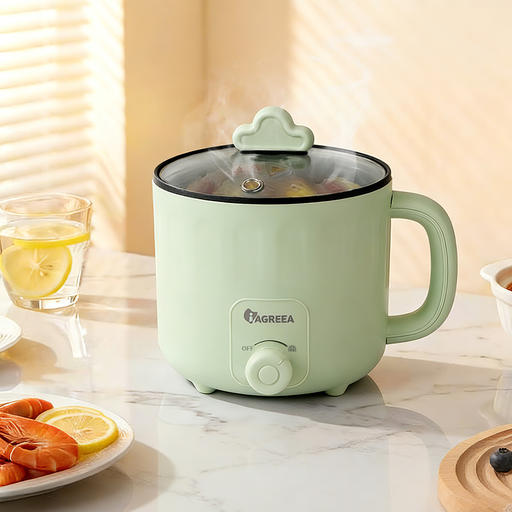
IAGREEA Portable Electric Cooker 1.6L
For a compact set-up if you’re looking for an electric cooker that, according to its description, can also make soup.
1.6 l capacity and 600 W; the product information lists a non-stick interior and automatic shut-off.
View at Joybuy
 No image available
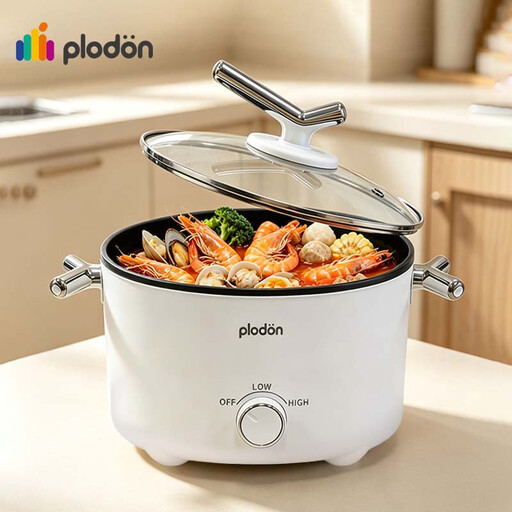
plodon Electric Hot Pot 2.0L
For making soup when you want an electric cooking pot with two heat settings for gentle simmering.
2.0 l capacity; low and high heat settings, plus a detachable power cord. The instructions state that the pot should be filled to no more than two-thirds of its capacity.
View at Joybuy
Frequently asked questions
How can I work out whether one batch will be enough for my guests?
First decide whether you’ll serve the soup as a starter or main course, then multiply your portion size by the number of guests. Compare the result with the permitted hot-fill capacity of the specific model; Krups lists different capacities for hot and cold dishes for the KB835D.
Can I keep the soup warm in the appliance until dinner?
A keep-warm claim alone doesn’t prove that food is being held at a safe temperature. The German Federal Institute for Risk Assessment recommends keeping heated food hot at a minimum of 60 °C throughout until it is eaten. Check the actual temperature of the soup.
What should I check about cleaning and care?
Check the care instructions for the parts of the specific model and see whether it has a cleaning programme. Philips states that no parts of the HR2203/80 are dishwasher-safe; Rommelsbacher lists a cleaning programme for the SVD 1400.
What does the CE marking on an electric soup maker mean?
The CE marking means that the manufacturer declares the product complies with the relevant EU product regulations. It isn’t an individual approval from a government authority; check the marking and product information for the appliance actually being offered.


