Preparing single portions
If you want to take soup with you, the minimum fill level and the portion you actually need are key. The maximum capacity alone won’t tell you whether the appliance is suitable for a single portion of lunch.


If you make soup regularly and want to cook and blend in one appliance, a soup maker with a cooking function could be a good option. However, if you’re making just one portion for lunch, check the minimum fill level for the specific model. Its stated maximum capacity won’t tell you whether it’s suitable. If you only make small batches occasionally, a saucepan and hand blender may be more practical. Whichever option you choose, plan to keep the soup safely chilled or at a verifiably hot temperature while transporting it.
If you want to take soup with you, the minimum fill level and the portion you actually need are key. The maximum capacity alone won’t tell you whether the appliance is suitable for a single portion of lunch.
If you’re making several portions at once, an appliance with cooking and blending programmes can combine different steps. Check the programmes and fill markings for the specific model against your meal plan.
As well as choosing a cooking appliance, plan for a suitable container and temperature control. The German Federal Institute for Risk Assessment (BfR) recommends cooling hot food quickly to below 7 °C for longer storage.
A good fit if: You make soup regularly and want to cook and blend in one appliance.
Things to consider: A compact appliance doesn’t necessarily have a suitable minimum fill level. According to the manufacturer, the blades on the DOMO DO727BL are not removable.
A good fit if: You’re preparing several portions or want to use cold blending programmes as well as making hot soup.
Things to consider: Capacity varies by model and contents. For the Russell Hobbs 21480-56, the manufacturer specifies 1.4 l for hot soup and 1.75 l for cold ingredients.
A good fit if: You only make soup occasionally, want to choose the quantity yourself or already have a suitable hand blender.
Things to consider: Cooking and blending remain separate steps, and you’ll need to clean the saucepan and blender afterwards.
The fill markings, cooking function and cleaning requirements for a specific model tell you more than a single maximum capacity figure. For longer storage while transporting soup, the BfR recommends cooling it quickly to below 7 °C. If keeping it hot throughout, the temperature should be at least 60 °C in every part.
| Priority | What to check before buying | Who it matters most to |
|---|---|---|
| Suitable batch size | Minimum and maximum fill markings in the instructions; the capacity of your lunch container. | If I’m only making one portion, I don’t want to cook more than I need. Around 28% of consumers put finding the right batch size first. |
| Less hands-on preparation | Whether the specific model heats food and has the cooking and blending programmes you want. | If you want to cook and purée in one appliance, check its built-in functions. Around 22% of consumers prioritise keeping preparation to a minimum. |
| Safe transport | Whether you can chill or reheat the soup at your destination; if keeping it hot, check the actual temperature of the food. | If you’re taking soup with you until your lunch break, the temperature control needs to suit your journey. Around 22% of consumers base their choice primarily on transport and storage. |
| Cleaning effort | Model-specific information on removable blades and dishwasher-safe parts; follow the cleaning instructions. | If I often cook in advance, I want to know how easy the container and blades are to clean after each batch. Around 17% of consumers put easy cleaning first. |
| Preferred soup texture | Whether the specific model offers programmes for smooth or chunky soup, and whether the recipe is suitable for the instructions. | If you prefer a particular consistency, check that the available programmes suit your recipes. Around 11% of consumers prioritise their preferred soup texture. |
A figure such as 1.2 l describes the capacity, not the minimum amount you can make. You could end up with more leftover soup than you planned when preparing a single portion.
Check the minimum fill marking in the instructions for the specific model against the batch size you have in mind.
If necessary, make room for a suitable container for any leftover soup.
Blending isn’t the same as cooking. If the appliance doesn’t have a heating function, you’ll still need to cook the soup separately.
Check the information for the exact model to see whether it has a cooking function and suitable soup programmes.
An appliance without a cooking function means you’ll need an extra saucepan and another step.
The appliance’s cooking function won’t automatically keep your soup safely stored until lunchtime.
For longer storage, the BfR recommends cooling hot food quickly to below 7 °C. If you keep food hot throughout, check the temperature in every part; the BfR recommends at least 60 °C.
Depending on your journey, you may need a suitable way to keep the soup chilled or hot.
The DO727BL soup maker is a 1.2-l model with cooking and blending functions. DOMO also makes the larger 2-l DO705BL.
According to Philips, the Viva Collection SoupMaker HR2203/80 has a 1.2-l jug and programmes for puréed and chunky soup.
The Soup & Blend 21480-56 is a heated blender. The manufacturer specifies different capacities for hot soup and cold ingredients.
The SM 3773 hand blender is an alternative if you want to cook soup in a saucepan and blend it afterwards.
Here you’ll find electric cooking pots and soup makers whose product descriptions list soup as one of the things you can prepare. If you’re making a single portion for lunch, check the minimum fill level for the model you’re considering.
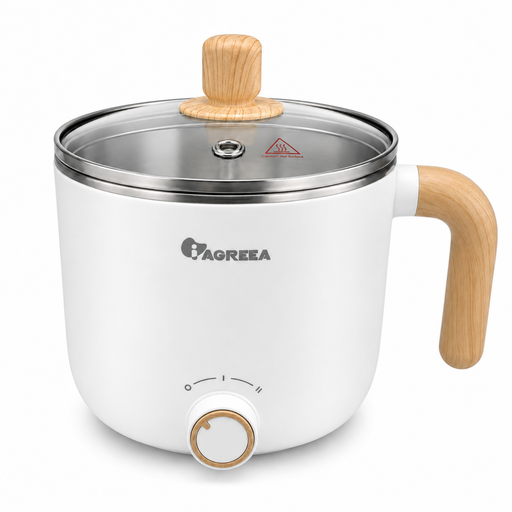 No image available
The product description lists soup as one of the things you can prepare and says the cooking pot is suitable for 1–2 people. Check the minimum fill level separately.
1.0 l; 300 W/600 W; two power settings; stainless steel inner pot.
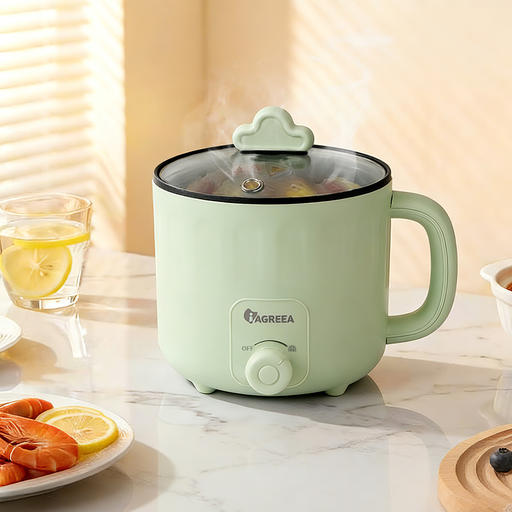 No image available
The product description lists soup as one of the possible dishes and singles out individuals as the target audience. Before buying, check that the minimum fill level suits your portion.
1.6 l; two power settings; dry-boil protection, according to the product name.
The product information says the appliance must be supervised while in use. Do not immerse the outer casing in water.
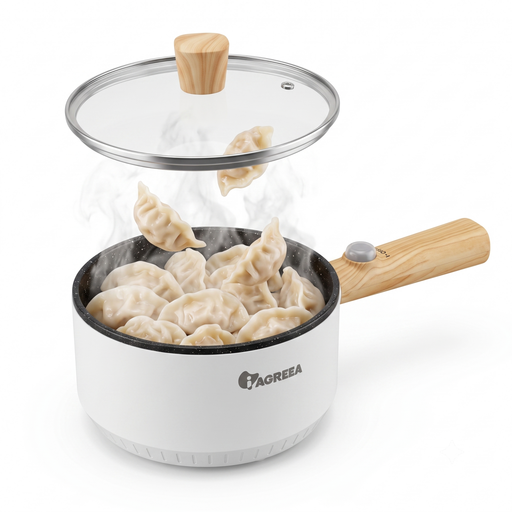 No image available
The product information lists soup as one of the things you can prepare. Check the minimum fill level against the portion you have in mind.
1.2 l; 1000 W, according to the product name; non-stick coating, wooden handle and glass lid.
To protect the coating, the product description recommends using cooking utensils made of plastic, silicone or wood.
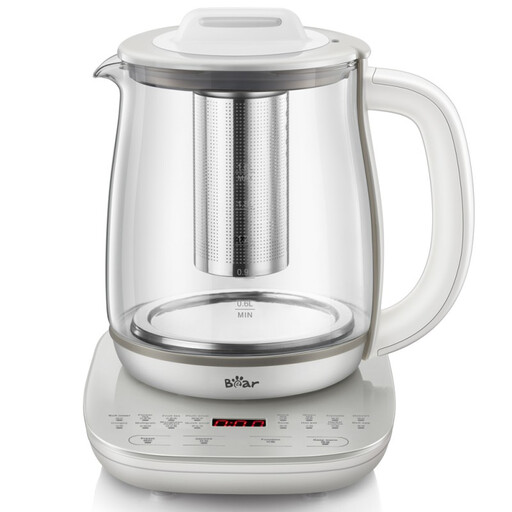 No image available
The product information lists a soup programme and a quick soup programme. Check the minimum fill level for the amount you plan to make.
1.8 l; 1000–1200 W; 16 preset programmes.
According to the product information, the appliance is designed for indoor and domestic use.
 No image available
The product information says it can make up to 10 portions, so this appliance is better suited to larger batches than a single lunch.
600–715 W; 2.5-l main pot and four inner pots, each 0.4 l; steaming function.
According to the product information, steam escapes during use. Wait a few minutes after cooking before opening the appliance.
No. For the models mentioned, this figure describes the capacity, not the minimum amount you can make. Check the minimum fill marking in the instructions and compare it with the portion you plan to prepare.
Don’t rely on the cooking function alone. For longer storage, the BfR recommends cooling hot food quickly to below 7 °C and keeping perishable food chilled while travelling. If you keep food hot throughout, the BfR recommends at least 60 °C in every part. A container alone doesn’t guarantee this temperature.
Philips says that no parts of the HR2203/80 are dishwasher-safe. Clean your chosen appliance according to its own instructions, taking care around hot surfaces and blades.
Statutory warranty rights are claims against the seller. An additional guarantee is voluntary and subject to its own terms and conditions. If a product is faulty, the first step may be to request a repair or replacement. Check the terms and conditions and the seller for your specific purchase.