Households with different mealtimes
If you’re preparing soup for several mealtimes, you’ll need to decide whether to keep it safely hot or chill it for later. The BfR recommends keeping food at a minimum of 60 °C throughout when holding it hot.


If you often want to make just the right amount of smooth vegetable soup with as few steps as possible, a soup maker with heating and blending programmes could be a good choice. If you want to choose different pan sizes and make flexible quantities, a hand blender may suit you better. But when mealtimes don’t line up, the label ‘keep warm’ isn’t what matters: Germany’s Federal Institute for Risk Assessment (BfR) recommends keeping hot food at a minimum of 60 °C throughout until it is served. If you can’t be sure that this is happening, cool later portions quickly and store them in the fridge.
If you’re preparing soup for several mealtimes, you’ll need to decide whether to keep it safely hot or chill it for later. The BfR recommends keeping food at a minimum of 60 °C throughout when holding it hot.
If you want to cook and blend in one appliance, compare the soup programme, capacity and cleaning requirements of the specific model.
If the quantities you make vary, a pan and hand blender could be an alternative to a soup maker with a fixed capacity. With a hand blender, cooking and blending are separate steps.
A good fit if: You often make smooth soup within the appliance’s capacity and want to save time and effort.
Trade-off: A limited capacity may mean making several batches; a soup programme doesn’t guarantee that food will be kept at a safe temperature afterwards.
A good fit if: You want to choose the pan size yourself or use a pan you already own.
Trade-off: Cooking and blending are separate steps. When blending hot soup, take care to avoid splashes and follow the instructions for your appliance.
When mealtimes don’t line up, don’t base your choice solely on a soup or keep-warm programme: since 2020, the BfR has recommended keeping heated food at a minimum of 60 °C throughout until it is served.
| Priority | What to check before buying | Who is it most relevant to? |
|---|---|---|
| Serving safely at different mealtimes | Check whether the temperature and duration for keeping food hot are clearly specified for the appliance in question. If not, plan to cool and refrigerate portions for later. | If meals are several hours apart, I want to know how to handle the soup safely until it’s served. Around 36% of consumers put this concern first. |
| Smooth soup without an extra blending step | Look for a programme for puréed soup and check whether you can blend manually afterwards. The manufacturer’s claims don’t replace comparing results across different recipes. | If I want smooth vegetable soup without blending it again, I compare the soup programme on offer. Around 29% of consumers prioritise this question of consistency. |
| The right quantity per batch | Compare the total quantity you plan to make with the permitted capacity of the specific model. A saucepan and hand blender offer different flexibility with quantities, but require a separate cooking step. | If I cook different portion sizes, I want to be able to match the capacity to my recipe. Around 21% of consumers put the right quantity per batch first. |
| Cleaning after regular use | Check whether a cleaning programme is different from dishwasher-safe parts, and consult the instructions for the jug, lid and blades. | If I use the appliance often, I want to know which parts need to be washed by hand after cooking. Around 14% of consumers say cleaning is their main concern. |
The name of a function doesn’t prove that all the soup will reach the temperature recommended by the BfR and stay there until serving.
Only rely on a later meal if you can verify how the temperature is maintained. Otherwise, cool portions quickly and store them in the fridge.
Philips lists a capacity of 1,2 l for the HR2203/80; Rommelsbacher gives a maximum of 1,3 l for the SVD 1400. The number of portions this makes depends on your recipe and serving size.
Compare the total quantity you need with the permitted capacity of the specific model. For varying or larger quantities, a pan and hand blender could be a better option.
If the total quantity exceeds the appliance’s capacity, you may need to cook additional batches, which takes more time.
Rommelsbacher lists a cleaning programme for the SVD 1400; Philips says the parts of the HR2203/80 are not dishwasher-safe. These details apply to the models specified.
Check the instructions for each individual part to find out how to clean the jug, lid and blades.
The Viva Collection SoupMaker HR2203/80 is designed to prepare and blend soup in a 1,2-l jug.
The SVD 1400 Vera combines a soup programme with other programmes, including one for plant-based drinks, and has a maximum capacity of 1,3 l.
The MultiQuick 5 MQ 50001 M is a hand blender option for vegetables cooked in a pan and blended afterwards.
The Kult X hand blender set is another pan-and-hand-blender option, with accessories for different types of preparation.
This selection includes hand blenders for making soup in your own pan, as well as a slow cooker described as a soup maker. If mealtimes don’t line up, you’ll need to plan how to keep the soup hot or store it chilled, whatever appliance you use.
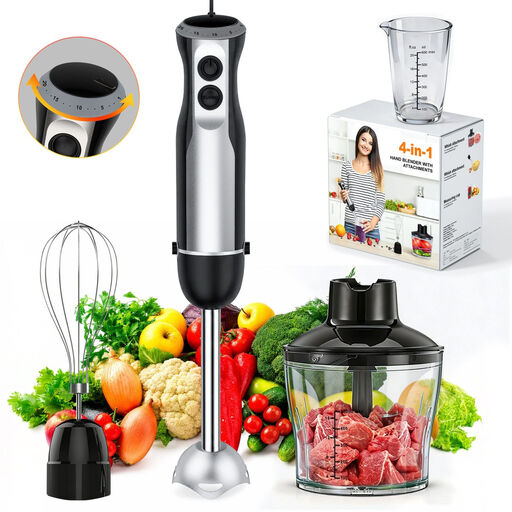 No image available
For making soup in a pan and blending it afterwards.
The product name lists 1000 W, 4-in-1, 20 speed settings and a turbo function.
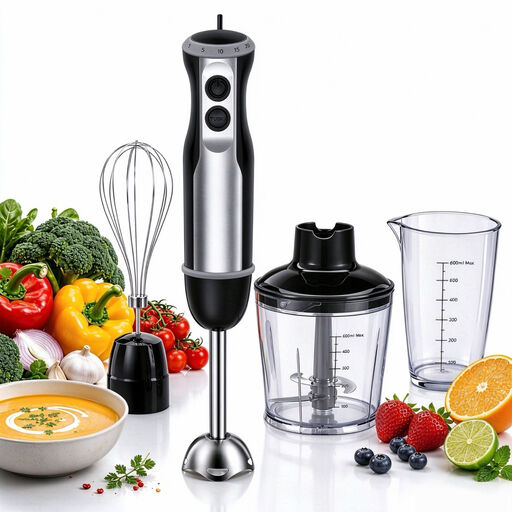 No image available
For soup cooked in a pan and blended afterwards with a hand blender.
The product name lists six speed settings and a turbo function.
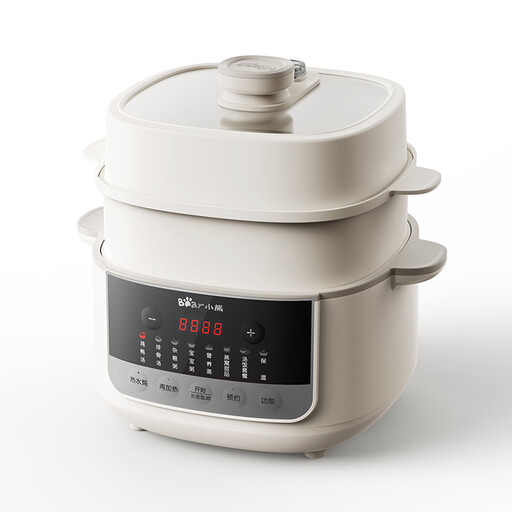 No image available
An alternative with a soup-maker function listed in the product name. If mealtimes don’t line up, you’ll still need to plan how to manage the temperature.
The product name lists a capacity of 4,1 l, a Multi-Function Steamer function and Micro-Pressure Technology.
 No image available
For making soup in a pan and blending it afterwards.
The product name lists 600 W, two speed settings, a whisk and a 500 ml chopper. An 800 ml measuring beaker is also included.
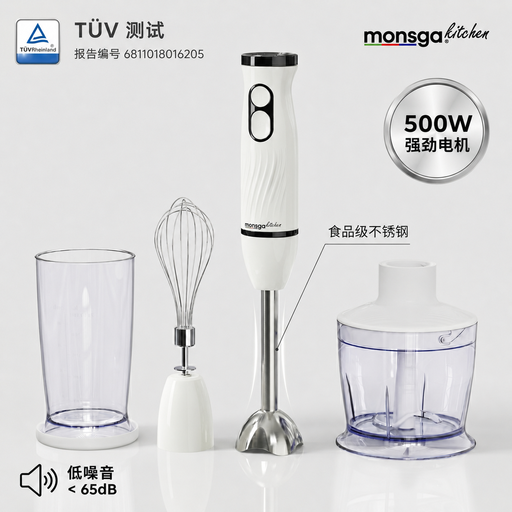 No image available
For soup cooked in a pan and blended afterwards; you choose the pan size.
The product name lists normal and turbo modes, a reach of 36,5 cm, splash guard and pan-protection features, a 500 ml chopper, a 500 ml measuring beaker and a 1,5 m cable.
Not just because it has a ‘keep warm’ function. The BfR recommends keeping hot food at a minimum of 60 °C throughout until it is served. If you can’t be sure that this is happening, cool later portions quickly and store them in the fridge. This recommendation doesn’t mean that any of the appliances listed will automatically reach that temperature.
Follow the instructions for the specific model and observe the MAX marking. For the HR2203/80, Philips lists oversized or frozen ingredients, exceeding the MAX marking and an incorrectly fitted lid as possible causes of operating problems. Philips also says that this model has no dishwasher-safe parts; this doesn’t necessarily apply to other appliances.
For your statutory rights against the seller, contact the retailer. A voluntary manufacturer’s guarantee is separate. The Verbraucherzentrale generally states that the statutory warranty period is two years. For certain purchase contracts from 31 July 2026 onwards, choosing a repair may extend it once by 12 months. The specific requirements should be checked for each case.
No. According to the European Union, the manufacturer uses the CE marking to declare that the product meets the applicable EU requirements; relevant harmonised rules may apply to electrical and electronic equipment. There is no central EU body that issues a general certificate for this. The marking doesn’t guarantee a particular soup consistency or ability to keep food hot.