Making several lunch portions at once
If you want to prepare several lunches in one go using pre-prepared ingredients, the usable capacity for hot soup is an important factor when choosing a model.


Choose a soup maker based first on its usable hot-liquid capacity, then on its programmes for smooth or chunky soup. A larger appliance may suit several lunch portions, while a compact model could be a better fit for smaller batches. An appliance is no substitute for refrigerating prepared ingredients, or for cooling and chilling soup promptly if you plan to eat it later.
If you want to prepare several lunches in one go using pre-prepared ingredients, the usable capacity for hot soup is an important factor when choosing a model.
If you’ll be storing and taking ingredients or soup with you before eating, plan how you’ll keep them cool both where they’re stored and where they’ll be eaten, as well as during transport. The German Federal Institute for Risk Assessment recommends keeping prepared perishable foods chilled and using a cool bag for transport.
If you usually cook small quantities, a compact appliance and programmes for smooth or chunky soup may matter more than a large capacity.
First, compare the permitted hot-liquid capacity with the number of portions you need. Then check the consistency programmes, cleaning requirements and how you’ll keep lunch cool.
| What matters | What to check when buying | Who is this important to? |
|---|---|---|
| Quantity per batch | Compare the hot-liquid capacity and fill markings with the number and size of your portions. DOMO lists a capacity of 2 l for the DO705BL; Russell Hobbs gives the 21480-56 a capacity of 1.4 l for hot soup and 1.75 l for cold ingredients. | If I’m batch-cooking several lunches at once, I want to know how much soup will actually fit in the hot-liquid container. Around 28% of consumers prioritise the quantity made per batch. |
| Chilling and transport | Plan space in the fridge for ingredients and prepared portions, as well as a way to keep them cool during transport and at work. The German Federal Institute for Risk Assessment recommends cooling hot food promptly to below 7 °C for longer storage. | If ingredients or prepared soup need to be stored and taken with me until lunchtime, I need to plan how I’ll keep them cool. Around 22% of consumers pay particular attention to safe preparation and transport. |
| Preferred consistency | Check the specific model for programmes for smooth and chunky soup, and, if needed, a manual blending function. Manufacturer information about features applies to the model named. | If I want creamy or chunky soup, depending on the recipe, the appliance should be able to make the consistency I’m after. Around 22% of consumers put this choice first. |
| Cleaning | Check the instruction manual to see which parts need to be washed by hand and whether there’s a cleaning function. A cleaning function doesn’t automatically mean the parts are dishwasher-safe. | If I batch-cook regularly, I want to know how much effort cleaning takes after several cooking cycles. Around 17% of consumers pay particular attention to cleaning requirements. |
| Counter space and small batches | Compare the container capacity and appliance dimensions with your usual number of portions and the space available. Philips and DOMO both list a capacity of 1.2 l for the HR2203/80 and DO727BL models. | If I usually make just a few portions and have limited space, a smaller appliance is likely to be a better fit. Around 11% of consumers prioritise small batches and a compact footprint. |
For the Russell Hobbs 21480-56, the manufacturer lists a capacity of 1.75 l for cold ingredients, but 1.4 l for hot soup. When planning lunch portions, it’s the hot-liquid capacity that matters.
Check the fill marking and work out your portions using the capacity specified for hot contents.
For larger quantities, this could mean you need to run an extra cooking cycle.
A keep-warm function doesn’t take care of chilling and transporting a lunch portion that you’ll eat later. The German Federal Institute for Risk Assessment recommends cooling hot food promptly to below 7 °C for longer storage and keeping it chilled while on the go.
Plan how you’ll keep food cool regardless of which appliance you choose, and consider the facilities available where you’ll be eating.
The KRUPS InfinyMix instruction manual describes its hot soup programme as heating and blending ingredients that have already been cooked. That’s not the same as cooking raw, pre-prepared ingredients in the appliance.
Check whether the specific model has a heating element and is designed to cook your ingredients.
According to Philips, the Viva Collection SoupMaker HR2203/80 is a 1.2-l model with programmes for smooth and chunky soup.
DOMO offers the 2-l DO705BL and the more compact 1.2-l DO727BL. Both models have programmes for smooth and chunky soup.
According to the manufacturer, the Soup & Blend 21480-56 combines heating and blending functions.
The Foodi HB150EU is described as a blender with a soup-cooking function. Joybuy product information lists a heating element for this model.
This selection includes electric cookers and soup makers whose product information mentions making soup. For each model, check that the capacity and features suit your recipes and lunch portions.
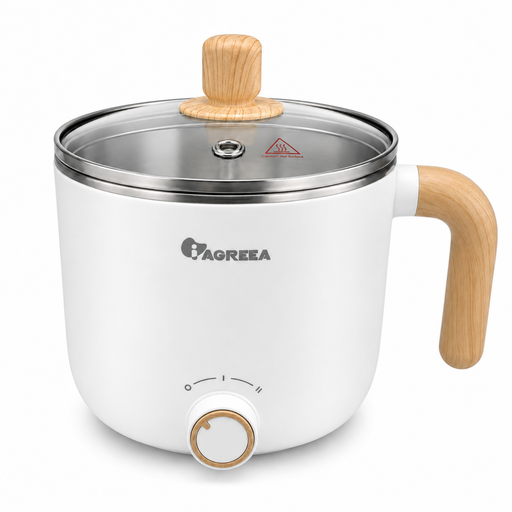 No image available
A compact option if you want to make soup for a few portions.
Joybuy product information lists a capacity of 1.0 l, two power settings of 300 W and 600 W, and a stainless steel inner pot.
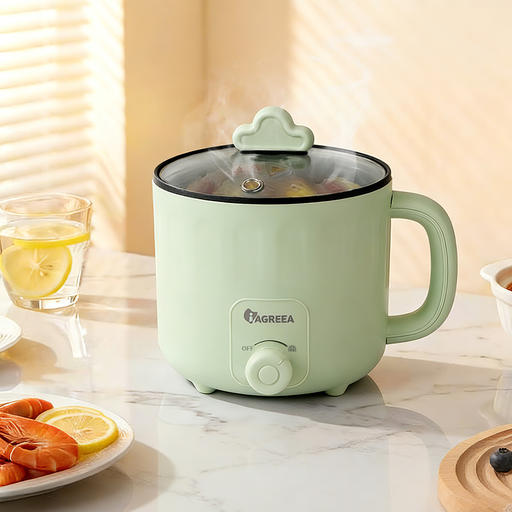 No image available
Another option for smaller quantities of soup if you’re looking for a portable cooker.
The product name lists a capacity of 1.6 l, a non-stick cooking pot and boil-dry protection. Product information says not to immerse the housing in water and to use only wooden or silicone utensils.
 No image available
The stated capacity may appeal if you’re making larger batches; be mindful of escaping steam when using the appliance.
The product name lists a capacity of 4.1 l, a steam-cooking function and Micro-Pressure technology. Product information says to switch off the appliance and wait before opening the lid.
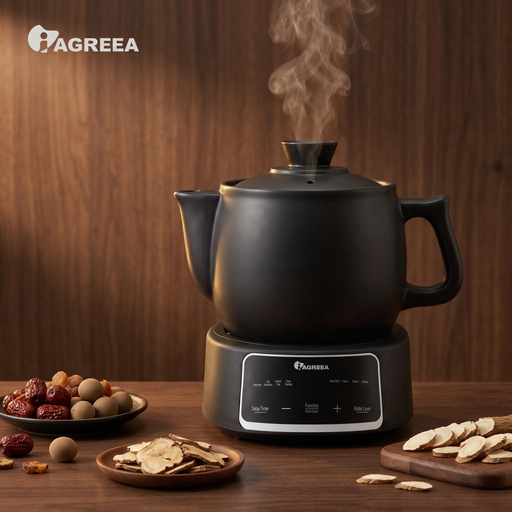 No image available
Product information also lists the cooker as suitable for making soup. Check that the available programmes work for your recipes.
The product name lists a capacity of 3.5 l, 600 W, a programmable delay start and an automatic keep-warm function. If you plan to eat the food later, keeping it warm is no substitute for cooling it promptly and storing and transporting it chilled.
No. The appliance isn’t a substitute for proper storage. The German Federal Institute for Risk Assessment recommends keeping prepared perishable ingredients chilled until you’re ready to use them. You should also follow the instructions for your chosen appliance.
For longer storage, cool hot food promptly to below 7 °C and keep it chilled while you’re on the go. The German Federal Institute for Risk Assessment also recommends planning for the chilling facilities available where you’ll be eating and transporting meal-prep containers in a cool bag.
Always follow the instructions for the specific model. Philips states that no parts of the HR2203/80 are dishwasher-safe; a cleaning function on another model doesn’t mean it’s suitable for the dishwasher.
For these types of goods, the statutory limitation period for claims relating to defects under sales law is generally two years from delivery. The German Federal Ministry of Justice and the Federal Office of Justice set out this period in § 438 BGB. Any additional manufacturer’s guarantee is separate and subject to its own terms and conditions.
The German Federal Network Agency lists the CE marking, identification of the product and manufacturer, German-language instructions and safety warnings, and the declaration of conformity among the checks carried out during market surveillance. According to the European Commission, the CE marking is the manufacturer’s declaration that the product meets the relevant requirements; it isn’t an independent test of cooking performance.