Packed lunches for several people
You want to fill as many containers as possible in one batch, so you’re comparing the usable soup capacity rather than just the size of the jug.


For smaller portions and limited worktop space, a compact soup maker is likely to be the better fit; if you’re filling several lunch containers, consider a larger model. A cooking blender offers extra versatility if you’d also like to make cold recipes. Plan how you’ll transport your soup separately, as the appliance won’t automatically keep it hot or chilled once it’s been decanted.
You want to fill as many containers as possible in one batch, so you’re comparing the usable soup capacity rather than just the size of the jug.
You’re more likely to make smaller portions and want to know whether the appliance and its cleaning routine will fit into your kitchen.
You’re preparing lunch for later, so alongside making the soup, you’ll need to arrange for it to be kept hot or transported chilled.
First, compare the capacity for hot soup with the amount you need, then check the appliance’s footprint and cleaning requirements. Extra programmes matter most if you’ll actually use them at your holiday cottage.
| What matters to you | What to check before buying | Who is this important to? |
|---|---|---|
| Transport and temperature | Plan how you’ll keep the soup hot or transport it chilled separately from the cooking appliance. If keeping it hot, the German Federal Institute for Risk Assessment recommends maintaining a temperature of at least 60 °C throughout until it’s eaten. | If I’m not eating the soup straight away, I need to plan how to manage its temperature in transit and while it’s being stored. Around 33% of consumers put transport and temperature first. |
| Amount per batch | Compare the permitted capacity for hot food with the amount you plan to make. For the Krups KB835D, the manufacturer gives a capacity of 1,4 l for hot recipes and 1,75 l for cold ones. | If you want to fill several lunch containers, check whether one batch will be enough or whether you’ll need to cook another. Around 27% of consumers put batch size first. |
| Space and cleaning | Check the dimensions, cable length and care instructions for the specific model. A cleaning function doesn’t mean the parts are dishwasher-safe. | If there’s little free worktop space in your holiday cottage kitchen, you’ll need to consider where the appliance will go and how easy it is to clean. Around 20% of consumers prioritise space and cleaning. |
| Texture and other recipes | Think about whether you prefer chunky or smooth soup, and whether cold blended recipes or plant-based drinks are also important to you. | If I want to choose between chunky and smooth soup, or make other recipes too, I check which programmes are available. Around 20% of consumers put texture and extra functions first. |
For the Krups KB835D, the manufacturer gives a lower capacity for hot recipes than for cold ones. You may therefore need to make another batch for your soup-packed lunches.
When planning, check the capacity for hot food for the exact model you’re considering.
Depending on how much you need, making an extra batch could mean more preparation time.
A cleaning function and whether individual parts are dishwasher-safe are two different things. Philips doesn’t list any dishwasher-safe parts for the HR2203/80.
Before buying, read the care instructions for the jug, lid and blades.
If the parts aren’t dishwasher-safe, washing them by hand is part of the clean-up.
A soup maker cooks the soup, but won’t automatically keep it hot or chilled until you’re ready to eat.
Plan how you’ll manage the temperature during storage and transport separately from your choice of appliance.
Depending on your journey, you may also need a suitable insulated food flask or a way to keep the soup chilled.
The SoupMaker HR2203/80 is an option for smaller batches, with pre-set soup programmes.
The DO737BL and DO716BL soup makers differ in several ways, including their capacities.
The Perfectmix Cook KB835D is a cooking blender for anyone who wants to make cold blended recipes as well as soup.
According to the manufacturer, the SVD 1400 combines soup-making with programmes for plant-based drinks.
The Joybuy appliances below list soup as one of their uses or combine it with other cooking functions. For multi-purpose appliances, compare the stated uses, capacity and pot layout with what you need.
 No image available
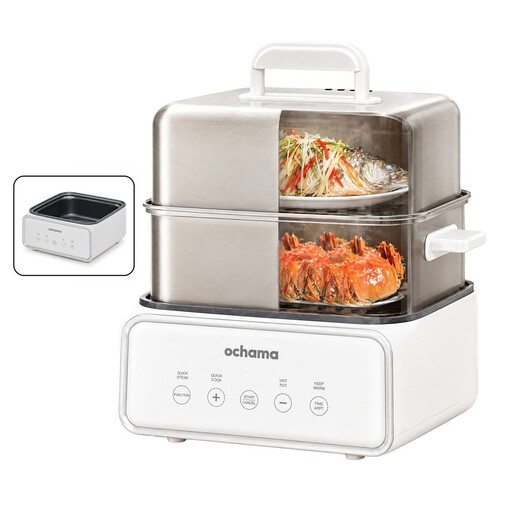
Could be worth considering for larger quantities if you’d like to steam food as well as make soup.
The product description lists soup and stews among the dishes you can prepare, and says the two steaming tiers can be used independently. The product title gives the power as 1500 W and the capacity as 12 l.
Hot steam and surfaces are created during use. Place the appliance on a flat, heat-resistant surface and let it cool before cleaning.
 No image available
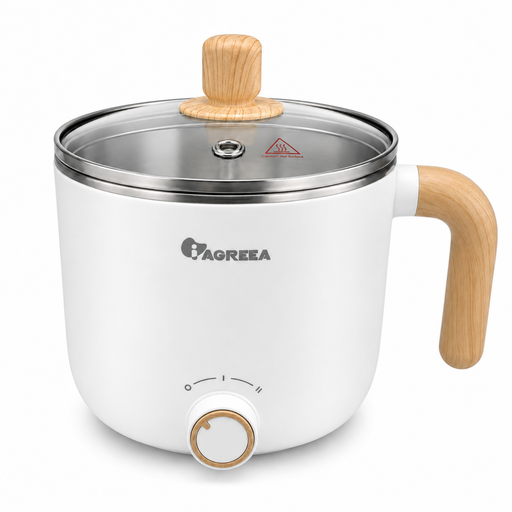
It could be suitable for soup and other hot meals if its stated cooking method and pot size match your needs.
The product description lists a capacity of 2,6 l, two heat settings, a non-stick inner pot and a detachable power cord.
According to the product description, the appliance isn’t designed for high-temperature frying.
 No image available
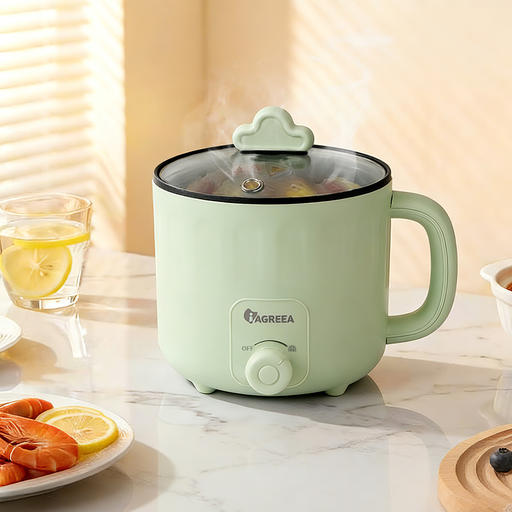
This compact cooking pot could be a good option for smaller quantities of soup if its capacity suits the portions you have in mind.
The product title lists a capacity of 1,0 l, a stainless-steel inner pot and two power settings of 300 W and 600 W.
 No image available
Soup is listed as one of its uses, and it could suit smaller quantities if the capacity is enough for your lunch portions.
The product title lists a capacity of 1,6 l and a non-stick coating; the description mentions an automatic shut-off function.
According to the description, the outer casing mustn’t be immersed in water when cleaning. Wooden or silicone utensils are recommended for the coated inner surface.
 No image available
If you’re making several portions, the pot layout could be important. Check which containers you’d use for the soup.
The product description lists a 2,5-l main pot, four 0,4-l inner pots and a steaming rack. The stated 4,1-l capacity isn’t the capacity of the main pot alone.
Hot steam may escape when you open the appliance. The description recommends letting it cool for a few minutes after cooking and observing the maximum fill line.
Only if you can keep it at the right temperature. The German Federal Institute for Risk Assessment recommends keeping hot food at a minimum of 60 °C throughout until it’s eaten; if you’re transporting it chilled, keeping it sufficiently cold is important. Check that your container and journey are suitable.
Check the dimensions, cable length and care instructions for the specific model against the facilities in your kitchen. For example, Philips lists a 1-m cable for the HR2203/80 and says its parts aren’t dishwasher-safe; DOMO lists a cleaning function for the DO737BL.
Your statutory rights if a product is faulty are separate from any voluntary manufacturer’s guarantee. The Verbraucherzentrale (German Consumer Advice Centre) explains that repair and replacement are possible ways of putting things right. If you find a fault, contact the seller and check the terms of any voluntary guarantee as well.
The CE mark is the manufacturer’s declaration that the product meets the applicable EU requirements; it isn’t an approval or certificate issued by a central EU body. The mark alone doesn’t mean you need to register the appliance for private use. Check with the relevant authority about any requirements that apply to your specific appliance.