People with staggered breaks
If you’re not eating your soup until several hours after making it, plan in advance how to keep it safely chilled or hot enough until then, and which container is suitable for transporting it.


Choose a soup maker based on the amount you actually need to prepare at once for your lunchboxes, and the soup consistencies you prefer. If your breaks are staggered, it’s also essential to have a safe plan for keeping the soup chilled or hot: a keep-warm function on the appliance doesn’t guarantee that the soup will stay hot enough after decanting and transport.
If you’re not eating your soup until several hours after making it, plan in advance how to keep it safely chilled or hot enough until then, and which container is suitable for transporting it.
If you’re making several portions in one batch, the usable capacity and the programmes available for smooth or chunky soups are key considerations.
If you use your soup maker regularly, take a close look at how easy the specific model is to use and clean. Pay particular attention to care instructions for the jug, lid and blades.
If your breaks are staggered, plan not only how you’ll cook the soup, but also how you’ll keep it safe until mealtime. The German Federal Institute for Risk Assessment (BfR) recommends keeping hot food at a temperature of at least 60 °C throughout. For hot food that needs to be stored for longer, it recommends cooling it quickly to below 7 °C.
| What matters | What to look for when buying | Who will find this particularly important? |
|---|---|---|
| Safe storage until your break | Check in advance whether you’ll be able to chill the soup and reheat it later where you’ll be eating, or keep it hot enough throughout. An appliance feature doesn’t tell you what temperature the soup will be in your lunch container. | If my break is much later, I plan to chill the soup or keep it hot throughout rather than relying on a keep-warm button alone. Around 33% of consumers put safe storage until mealtime first. |
| Enough for several lunchboxes | Compare the planned quantities for your containers with the appliance’s jug size and maximum fill markings. Don’t assume the stated capacity is the same as the usable amount for a recipe. | If I want to fill several lunchboxes from one batch, I work out their actual capacity and compare it with the usable jug capacity. Around 27% of consumers prioritise making several portions per batch. |
| The right soup consistency | If you switch between smooth and chunky soups, check whether the specific model has programmes for both. | If I make both smooth and chunky soups, I look for programmes designed for each. Around 20% of consumers prioritise having a choice of soup consistencies. |
| Easy cleaning for frequent use | Check the care instructions for each part, and distinguish between an appliance with a cleaning programme and one with parts that are actually dishwasher-safe. | If I batch-cook regularly, I want to know which parts need to be washed by hand after every batch. Around 20% of consumers prioritise a straightforward cleaning routine. |
An appliance feature doesn’t tell you what temperature the soup will be after decanting and during transport. Even a manufacturer’s stated serving temperature of 55 °C doesn’t prove that the soup is kept at 60 °C or above throughout.
Before you buy, decide whether you can chill the soup until your break and reheat it later, or keep it hot enough throughout.
Depending on your routine, you may need a suitable container for transport or access to refrigeration and a way to reheat the soup when you arrive.
The jug size and usable capacity may differ, and the recipe and fill limits matter too. If the batch is too small, you may need to cook another one.
Add up the quantities you need for your lunchboxes and compare them with the maximum fill markings for the specific model.
A cleaning programme and whether individual components can be washed in a dishwasher are two different things.
Read the care instructions for the jug, lid and blades on the specific model before choosing it.
Philips describes the HR2203/80 as a soup maker with a 1.2 l jug and programmes for smooth and chunky soup.
DOMO gives the DO498BL a jug capacity of 1.6 l and three programmes, including ‘smooth’ and ‘chunky’.
Tescoma describes the PRESIDENT soup maker with blending function as having a 1.75 l capacity and programmes for soups, sauces and purées.
The SVD 1400 Vera combines soup and plant-based drink programmes. Rommelsbacher gives the inner container a maximum capacity of 1.3 l.
essen & trinken includes the HB150EU in an editorial selection of soup makers, describing it as a cooking blender with additional programmes.
The following products list soup programmes or soup as a cooking option. Compare the stated jug capacity and recommended cooking method with your lunchboxes and mealtimes.
 No image available
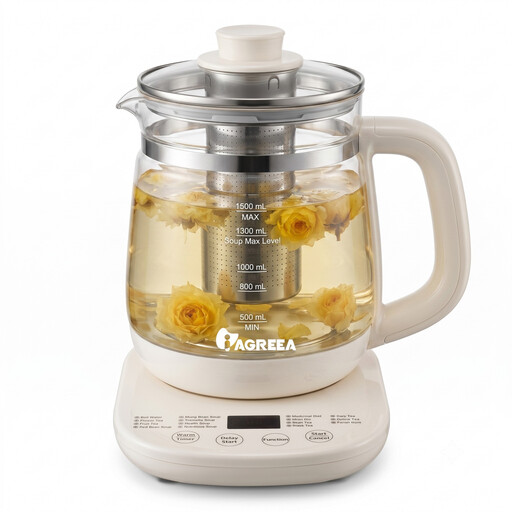
Could be a good fit if a model with explicitly listed soup programmes and a delayed start suits your routine.
According to the product description: 1.5 l, 14 programmes, delayed start and an automatic keep-warm function after cooking. The keep-warm function doesn’t confirm the temperature in your lunch container until your break.
 No image available
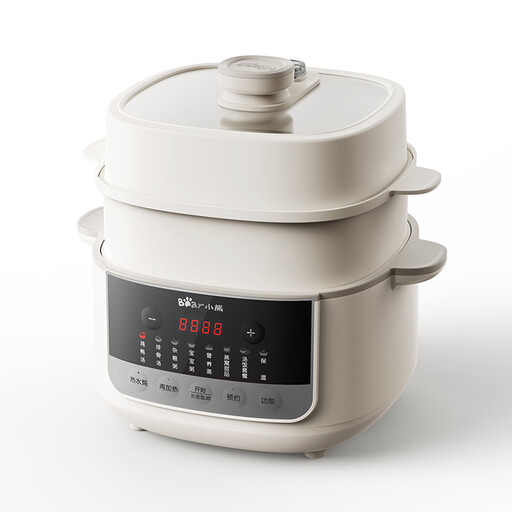
Could be worth considering for several containers if the stated configuration suits the way you prepare your food.
The product description lists a 2.5 l main pot, four 0.4 l inner pots and a steamer insert. Check which containers are intended for your soups.
 No image available
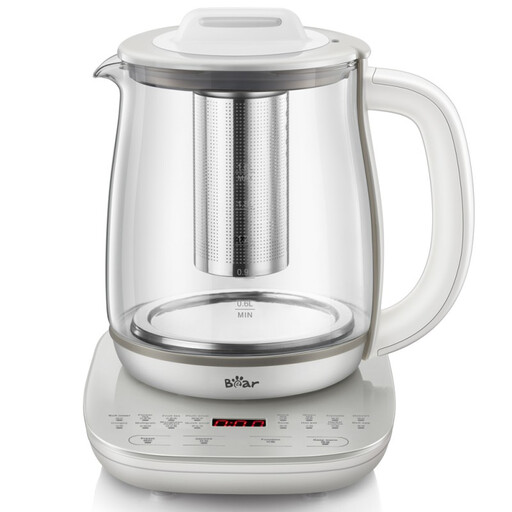
Could be a good fit if you’d like to use the stated soup function and preset timer when preparing food.
The product description lists a 1.8 l capacity, 16 preset programmes including soup, and a preset timer adjustable up to 9.5 hours.
 No image available
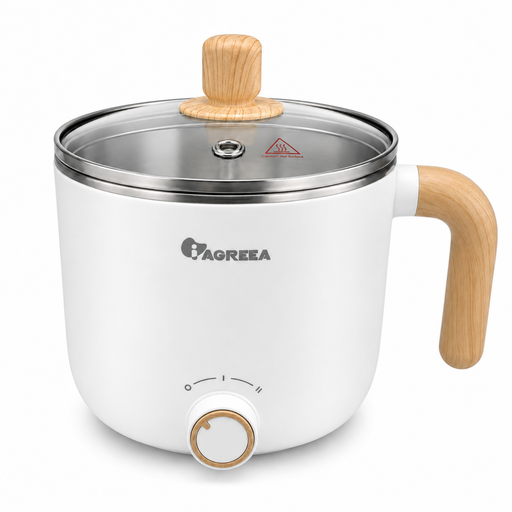
Could suit a smaller batch. If you’re making several lunchboxes in one go, bear in mind that it’s specified for 1–2 people.
The product description lists a 1.0 l capacity, soup as a cooking option and a choice of 300W/600W power settings.
 No image available
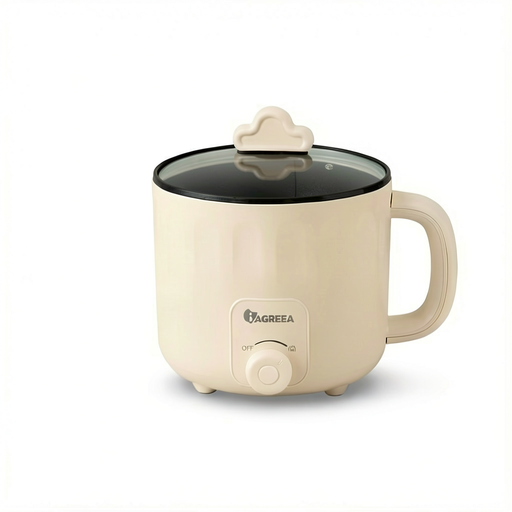
Could suit smaller quantities. The product information says it’s designed for individuals or couples, so it may be less suitable for making several lunchboxes in one batch.
The product description lists a 1.6 l capacity, 600W power and stewing soup as a cooking option.
Not on the strength of a keep-warm function alone. The BfR recommends keeping hot food at a temperature of at least 60 °C throughout. Hot food that needs to be stored for longer should be cooled quickly to below 7 °C and kept chilled during transport. Plan the entire journey until you’re ready to eat.
The BfR’s food hygiene advice is to heat food to at least 70 °C throughout for at least two minutes. Check in advance whether you’ll be able to do this where you take your break.
Check the care instructions for the exact model and every component. Philips says that no parts of the HR2203/80 are dishwasher-safe; the Rommelsbacher SVD 1400 is listed as having a cleaning programme. These are different features and neither means you won’t need to wash parts by hand.
Electrical appliances covered by the EU Low Voltage Directive must carry the CE marking. For the specific product listing, check the appliance identity, markings and safety information. CE is the manufacturer’s declaration of conformity, not an independent quality mark.
For consumer purchases made at a distance, you generally have a 14-day right to cancel. You must notify the other party to the contract that you wish to cancel. The Verbraucherzentrale distinguishes this right from voluntary manufacturer warranties and your rights if a product is faulty.