For anyone who wants to control soup colours under kitchen lighting
If you regularly take photos under kitchen lights, look for even lighting and set a suitable white balance. RAW can give you more flexibility when editing later.


For whole bowls of soup and table scenes, a suitable zoom lens is often the more obvious place to start; the key factors are the framing and close-focusing capability of the specific lens. If you want small ingredients to fill the frame, a compatible macro lens may be a good choice. If you’re dealing with colour shifts or flickering light, check your lighting, white balance and available shutter settings first – simply choosing a different camera body won’t automatically solve these problems.
If you regularly take photos under kitchen lights, look for even lighting and set a suitable white balance. RAW can give you more flexibility when editing later.
If you switch between framing a single bowl and a full table setting, the focal-length range of the included lens, the space available and the shooting distance all matter.
If you want small ingredients to fill the frame, it’s the close-focusing capability of the lens you’re actually using that matters – not just the camera body.
Nikon Germany recommends setting a fixed white balance and using the most even lighting possible. Canon Academy notes that artificial light can cause banding or colour shifts. So first work out whether your biggest challenge is colour, framing, low light or fine detail.
Suitable if: You want to photograph whole bowls, several dishes or table scenes with different framings.
Consider: Close-focusing capability depends on the specific kit lens; also check how much space you’ll need to shoot.
Suitable if: You often want small ingredients or surface textures to appear large in the frame.
Consider: The extra lens must fit the camera mount and means carrying more equipment. Sony specifies a 1:1 magnification ratio for its separate E 30 mm F3,5 Macro lens.
Suitable if: You first want to work out whether lighting, colour or camera shake is your main issue.
Consider: This doesn’t establish that it’s equivalent to a particular mirrorless camera. RAW or interchangeable lenses may become relevant to your choice later on.
| Consideration | What to check before buying | Who is it most important to? |
|---|---|---|
| Colours under artificial light | White balance, RAW shooting and model-dependent anti-flicker settings. | If I want the bowl and ingredients to look consistent in colour under kitchen lighting, I check the white balance and lighting. Around 33% of consumers rank colour control as their most important buying consideration. |
| Fitting the whole bowl in the frame | The focal-length range of the included lens and the available shooting distance. | If I want to switch between a single bowl and a table scene, the lens needs to suit the angle of view and the space available. Around 25% of consumers prioritise flexible framing. |
| Sharp photos in low light | A stable place to position the camera; assess stabilisation only for the specific camera and lens combination. | If the kitchen is dimly lit, I want to be able to position the camera steadily. A tripod can help prevent camera shake when photographing a stationary bowl. Around 25% of consumers put low-light photography first. |
| Showing small ingredients in detail | Magnification ratio, lens mount and whether you’ll need an additional lens. | If I want small ingredients to fill the frame, the close-focusing capability of a compatible lens matters to me. Around 17% of consumers prioritise magnifying fine details. |
Focal length and magnification ratio depend on the lens you use. A camera body alone therefore can’t guarantee close-up, frame-filling shots of ingredients.
First decide whether you want to photograph whole bowls or small details. Then check the exact kit name and lens compatibility.
You may need an additional compatible lens for close-up photography.
White balance and flickering light are separate shooting conditions. RAW and model-dependent shutter settings offer different ways to correct them.
Test the lighting and settings in the kitchen where you plan to shoot before assuming that changing cameras will solve the problem.
Lens combinations and included accessories vary. Nikon explicitly states that the Z50II kit with 18–140 mm does not include a charger.
Check the complete model and kit name, as well as the list of included accessories for the specific offer.
Depending on the kit you choose, you may need to buy charging accessories separately.
The EOS R50 system works with RF and RF-S lenses. The kit with RF-S 18–45 mm described by Canon is an option for switching between wider and tighter compositions.
The Z50II is available in different Z lens kits. The kit specified with the NIKKOR Z DX 18–140 mm VR lets you explore a range of framing options.
The APS-C E-mount system includes the α6400 and a separately available E 30 mm F3,5 Macro lens for close-ups.
The X-S20 is an X-mount mirrorless camera for buyers who want to consider in-body stabilisation as well as the lens.
Camera offers with zoom or display features for flexible framing. Before buying, check whether the specific model meets your needs for close-ups, white balance and artificial lighting.
 No image available
The offer includes a zoom lens for flexible framing. For soup photography, also check the close-focusing capability you need and the available settings for artificial light.
APS-C camera; 16–50 mm power zoom lens; tilting screen.
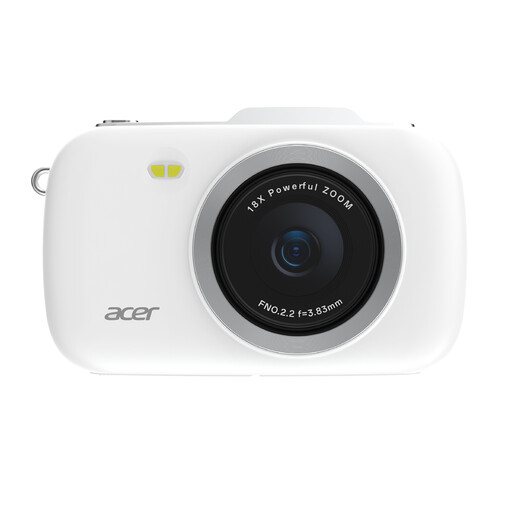 No image available
The stated zoom function may be useful for changing your framing. Before buying, check whether it can capture small ingredients in focus from the distance you need.
4K digital camera; 18x digital zoom.
 No image available
Optical zoom gives you a way to adjust your framing. Check separately whether the close-up capability and colour control work with your kitchen lighting and meet your needs.
12x optical zoom; 4K; Wi-Fi.
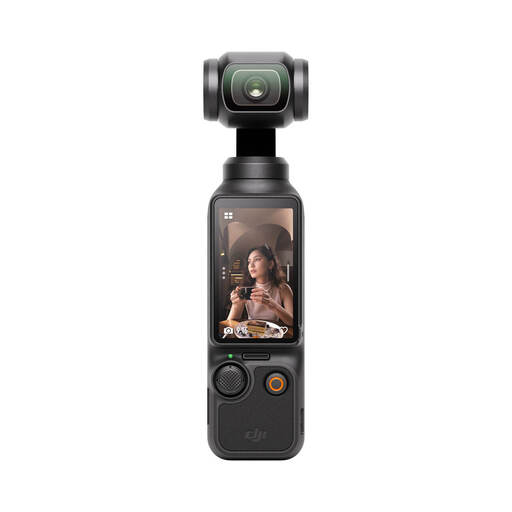 No image available
The offer lists a rotating touchscreen for checking your framing. Check whether the camera suits your preferred angle and is suitable for close-ups of ingredients.
1-inch CMOS; 4K/120fps video; 3-axis mechanical stabilisation; rotating 2-inch touchscreen.
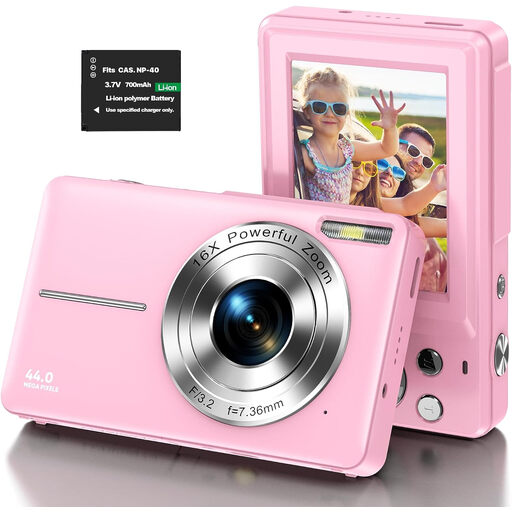 No image available
The stated digital zoom can change your framing. Before buying, check whether the close-up capability, focus and artificial light settings suit your subject.
4K; 16x digital zoom.
Use even lighting wherever possible and set the white balance for the scene. If you edit your photos, RAW gives you more flexibility for adjusting the white balance later than JPEG.
First check whether the light source is flickering. Depending on the camera model, anti-flicker features or other shutter settings may help. Check the manual to see which options your model actually offers.
Not necessarily: a standard zoom may give you a suitable angle of view for whole dishes. A macro lens is most useful when you want small ingredients to appear large in the frame.
For a stationary bowl, a tripod can reduce camera shake and make it easier to position your shot. Before setting it up, check that you can position the camera securely at your preferred angle.
For a distance contract with a consumer, § 312g BGB generally provides a right of withdrawal, subject to statutory exceptions. If newly purchased goods are faulty, you generally have statutory warranty rights against the seller; the Verbraucherzentrale states that these apply for two years from delivery or receipt. A voluntary guarantee is separate from these rights.