What should you look for when buying?
First, think about what matters most when friends come round: serving several guests, how your soy drink works, having control over preparation, or the space and ongoing costs involved.
| What matters |
What to look for |
Who will care most? |
| Making several drinks with minimal effort |
Check the cappuccino programme on the specific model and which parts of the milk system need cleaning. |
If several guests want cappuccino one after another, I want to know how much work each extra cup involves. Around 36% of consumers put catering for several guests first. |
| Frothing soy drink |
Check whether the manufacturer lists plant-based alternatives as suitable for the specific milk system, and try your drink before the occasion. |
If I’m bringing a particular soy drink, I want to try it out for myself before serving it. Around 29% of consumers prioritise frothing their soy drink. |
| Control over the espresso and milk texture |
Check whether the steam wand is manual or assisted, and whether you’ll need accessories such as a grinder. |
If I want to make the espresso and foam myself, how the steam wand works and the settings available matter more to me than making a drink at the touch of a button. Around 21% of consumers put this control first. |
| Space and ongoing costs |
Measure the space needed for the complete set-up and check the accessories and consumables required. |
If I’m short on worktop space or need to factor in regular consumables, I want to assess the whole set-up in advance. Around 14% of consumers put space and ongoing costs first. |
Related products at Joybuy
This selection includes bean-to-cup machines and espresso machines with cappuccino or milk-frothing functions. Check the information for your specific model to see what it says about plant-based drinks, and try your soy drink before the occasion.
 No image available
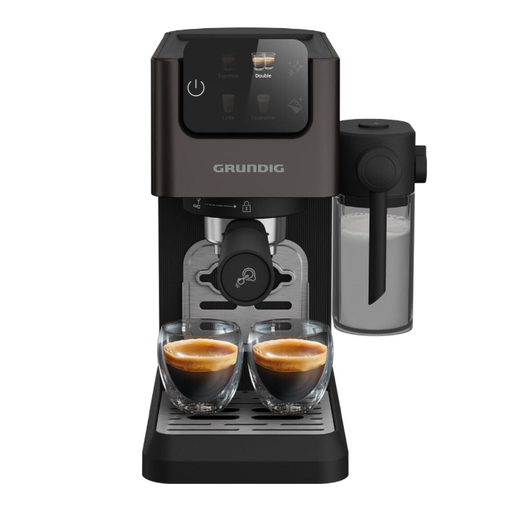
Grundig KSM 6430 espresso machine with integrated milk container
Could suit you if you’re making drinks for several guests: the product information lists cappuccino and dispensing two cups at once.
The product description lists 1628 W, 20 bar pump pressure and a colour touchscreen.
View at Joybuy
 No image available
De’Longhi Magnifica Evo ECAM290.61.SB bean-to-cup coffee machine
Could be a good fit if you want to serve cappuccino with only a few manual steps. The product information says LatteCrema foam can also be used with plant-based drinks; this doesn’t guarantee a result with every variety.
View at Joybuy
 No image available
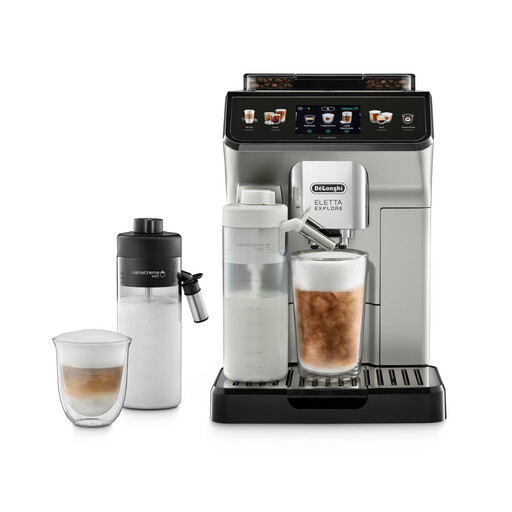
De’Longhi Eletta Explore ECAM450.55.S bean-to-cup coffee machine
An option if you’re considering a range of milk-based drinks: the product information lists LatteCrema Hot & Cool and soy as a possible plant-based alternative. It doesn’t predict how your own soy drink will froth.
View at Joybuy
 No image available
Ninja Luxe Premier ES601EU coffee machine with grinder and milk frother
Could be worth considering if you want to try different froth settings; the product description lists four presets.
The product description lists an integrated grinder, as well as espresso, cold brew and filter coffee.
View at Joybuy
 No image available
Sage Barista Touch espresso machine with grinder
Could suit you if you want to control the milk texture and temperature; the product information lists an automatic milk frother with adjustable settings.
The instructions include extra manual steps such as grinding, tamping and locking in the portafilter.
The product description lists an integrated conical burr grinder and a touchscreen.
View at Joybuy
Frequently asked questions
Does a cappuccino programme prove that my soy drink will froth well?
No. Philips also promotes LatteGo on the EP3347/90 for plant-based alternatives; this is a manufacturer’s claim about the milk system, not a test of every type of soy drink. Try the drink you plan to serve before the occasion.
What should I clean after frothing?
Follow the instructions for your specific machine. The Coffee Makers recommend wiping residue off a steam wand straight away; Philips describes the LatteGo system on the EP3347/90 as having two parts and no tubes. Cleaning methods aren’t interchangeable between models.
Who should I contact about a fault after buying in Germany?
If a fault was already present when the product was handed over, the seller is generally your point of contact for your statutory rights. The Consumer Advice Centre says new goods are generally covered for two years; a voluntary manufacturer’s guarantee is separate.
What should I look out for when it comes to electrical safety?
Check the product information for the version intended for Germany. The European Commission describes the Low Voltage Directive as applying to electrical equipment with an input or output voltage of 50 to 1,000 V AC; this doesn’t establish whether an individual product listing is compliant.
What should I bear in mind when serving soy cappuccinos?
Ask about soy allergies and identify soy as an ingredient, rather than describing the drink simply as “plant-based”. The German Federal Institute for Risk Assessment highlights the risk of potentially severe allergic reactions; this doesn’t amount to a general statement about labelling requirements at a private get-together.


