Hosts making soy cappuccinos
You want to make cappuccinos with a plant-based drink for several people, and it matters to you that the specific milk system is described as suitable.


If you want to make several soy cappuccinos with minimal effort, a bean-to-cup machine could be a good option, provided its specific milk system is explicitly described as suitable for plant-based drinks. Even then, results aren’t guaranteed with every soy drink. If you’d like more control over the espresso and froth, you could choose an espresso machine, but bear in mind that it involves extra preparation and cleaning. A capsule machine can be handy for the occasional cappuccino, but it commits you to a capsule system.
You want to make cappuccinos with a plant-based drink for several people, and it matters to you that the specific milk system is described as suitable.
You want to control the espresso and milk froth yourself, and don’t mind the extra steps involved in preparing and cleaning the machine.
You only make cappuccino now and then, and are weighing up the convenience of making one serving at a time against being tied to a capsule system.
A good fit if: you want to make several cappuccinos regularly with minimal effort.
The trade-off: Automatic milk systems still need looking after, and suitability for soy drinks depends on the model.
A good fit if: you want to make the espresso and froth yourself and control the texture.
The trade-off: Brewing, frothing and cleaning all involve separate steps, and a particular frothing result with soy drink is not guaranteed.
A good fit if: you only want to make cappuccino occasionally, one serving at a time.
The trade-off: You’re tied to the relevant capsule system, and should check how well it froths the soy drink you use.
For an evening with friends, it’s not just about the froth: consider how many drinks you can make at once and how much cleaning is needed afterwards.
| What matters to you | What to look for | Who is this important to? |
|---|---|---|
| Frothing soy drink | Check the information about the specific milk system. Philips describes LatteGo on the EP3347/90 as suitable for plant-based alternatives; De’Longhi notes that results with LatteCrema vary depending on protein content. | If I use a particular soy drink, I want to know whether the specific system is described as suitable for it. Around 36% of consumers put suitability for soy drink first. |
| Making several drinks | Check whether the specific model can make two milk drinks at once, or whether you’ll need to refill it and repeat the process. Siemens lists this feature for the TE657F03DE. | If several guests want cappuccino, I want to make their drinks as conveniently as possible, either one after another or at the same time. Around 29% of consumers say making multiple drinks is their top buying priority. |
| Cleaning up after a meal | Compare which parts that come into contact with milk need cleaning. Philips says LatteGo on the EP3347/90 has two parts and no tubes; Siemens describes a cleaning programme for the EQ.6 plus. | If there’s little time for cleaning after a meal, I want to know what’s involved beforehand. Around 21% of consumers are primarily concerned with keeping cleaning to a minimum. |
| Ongoing costs | Factor in coffee or capsules, as well as how often you’ll use the machine. The Lattissima One uses Original capsules. | Whether I use the machine regularly or only occasionally, I want to weigh up the ongoing costs in line with how much I use it. Around 14% of consumers focus on the overall cost. |
A cappuccino programme alone doesn’t tell you how well your soy drink will froth. De’Longhi notes that results with LatteCrema vary depending on protein content.
Check the information for the milk system on the specific model, and try the drink you actually plan to use.
A rinse or cleaning programme doesn’t eliminate the need to clean parts that come into contact with milk.
Before buying, compare the cleaning steps for the specific machine and allow time to look after it after making cappuccino.
Depending on the model, you’ll still need to set aside time for cleaning; the instructions may also specify particular cleaning products.
Whether a machine can make two milk drinks at once depends on the specific model. With other machines, you may need to make another batch or refill the container.
Estimate how many cappuccinos you’ll make in an evening, and check whether the machine can prepare several at once, as well as the milk container’s capacity and how easy it is to refill.
A different model number or bundle may mean you’re not looking at the individual machine you researched.
Compare the full model name and what’s included before choosing a machine or an accessory set.
Bean-to-cup machines with LatteGo, such as the EP3347/90, offer an automatic way to make cappuccino.
The Dedica EC685.M is an espresso machine with a manual cappuccino system; other models feature LatteCrema.
The Bambino Plus combines an espresso machine with a partly automated steam wand.
The EQ.6 plus TE657F03DE is a bean-to-cup machine for making a range of milk drinks.
The Lattissima One is a capsule machine for making cappuccinos one serving at a time.
This selection includes bean-to-cup and espresso machines with a steam wand for making cappuccino, whether you want the machine to froth the milk or prefer to do it yourself.
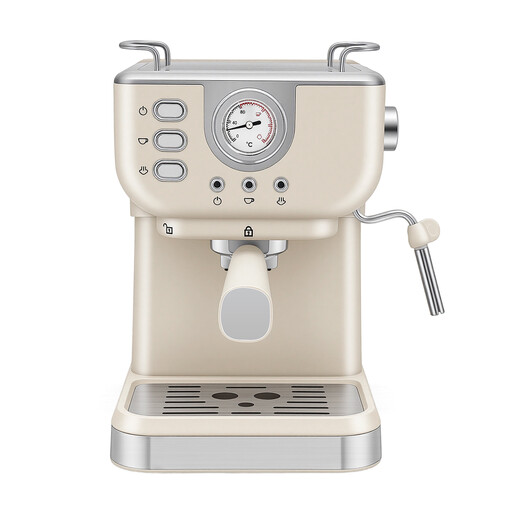 No image available
Could be worth considering if you want to make cappuccino and prepare several drinks.
The product name specifies semi-automatic operation, temperature-controlled extraction at 197.6°F, a cup warmer and a milk-frothing function.
 No image available
A better fit if you want to make the froth yourself and control the process.
The product name specifies a pressure gauge, steam wand, cup warmer, single and double shots, and a removable 1.1-l water tank.
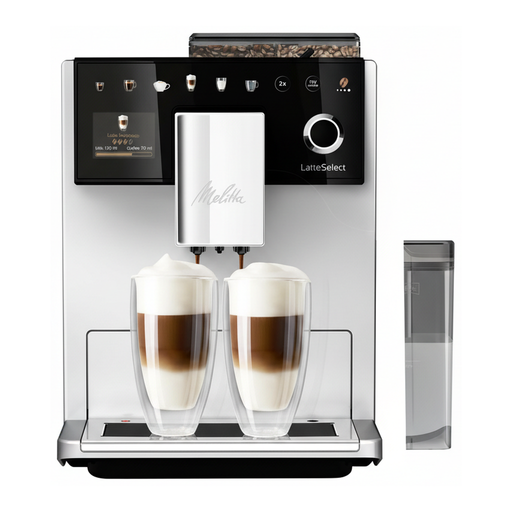 No image available
Could be a good choice for cappuccino with few manual steps; remember to clean the milk system every day.
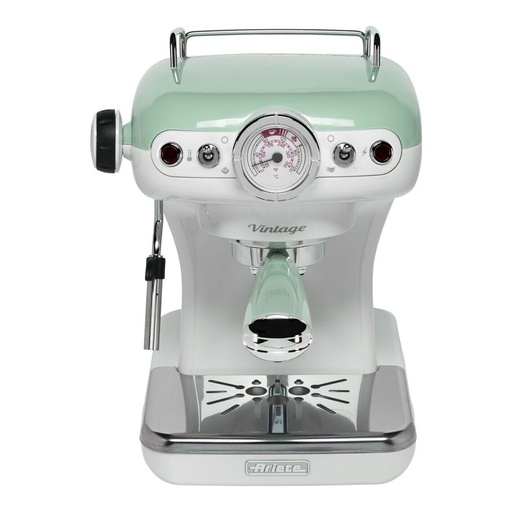 No image available
If you’re making drinks for several guests, allow for extra brewing cycles: the product description says it makes one or two cups per cycle.
The machine is described as suitable for ground coffee or ESE pods, and has a 0.9-l water tank and a cappuccino wand.
No, consistent results aren’t guaranteed. De’Longhi lists soy as suitable for use with LatteCrema, but notes that results vary depending on protein content; Philips describes plant-based alternatives for LatteGo. Check the information for the specific machine and the soy drink you want to use.
Clean the parts that come into contact with milk according to the instructions for your machine. Siemens describes a dedicated cleaning programme for the milk system on the EQ.6 plus; according to the Verbraucherzentrale, opened plant-based drinks should be put back in the fridge.
Don’t assume that cleaning a shared machine will make it allergen-free. De’Longhi points out that the cleaning methods described don’t guarantee the complete removal of allergens.
No. Your statutory rights are against the retailer; a guarantee is an additional, voluntary offer. Check its terms separately.
If the specific machine is covered by an EU regulation requiring CE marking, it must meet the relevant requirements and be marked accordingly. The Low Voltage Directive generally applies to electrical equipment with a rated voltage between 50 and 1,000 V AC, subject to its exclusions. CE marking is a manufacturer’s declaration, not an independent quality mark; check the marking and documentation for the specific product you’re considering.