
Lieferung heute & morgen

Qualitätsgarantie

Willkommens-Angebote freischalten: KOSTENLOSE Lieferung | Bis zu 80 % RABATT | Kostenlose 30-Tage-JoyPlus-Testphase
App herunterladen
Finding the right plant-based meat substitute can be a challenge. The market is vast, with products varying greatly in texture, preparation, and use. Soy-based products, in particular, offer enormous variety, from fine flakes to coarse chunks.
This article serves as your guide. We'll introduce different forms of soy meat alternatives, provide practical tips for your purchasing decision, and present a selection of products suited for various needs—whether you enjoy elaborate cooking with soy or need a quick everyday meal.
To find the perfect product for your kitchen, three aspects are particularly important: the form, the origin of the raw materials, and the ingredients list.
The texture of the soy product largely determines its application.
For many consumers, the origin of the soybeans and sustainable agriculture are crucial criteria. Organic soy products guarantee that no chemical-synthetic pesticides and fertilisers were used in cultivation. Another aspect is the place of cultivation. Soy from European farms can be an alternative for those who value shorter transport routes and GMO-free agriculture. Look for corresponding labels like the EU organic logo on the packaging when buying soy products.
The range of plant-based meat substitutes can be roughly divided into two categories:
Based on the criteria mentioned, we have compiled a selection of versatile soy products that cover different cooking needs.
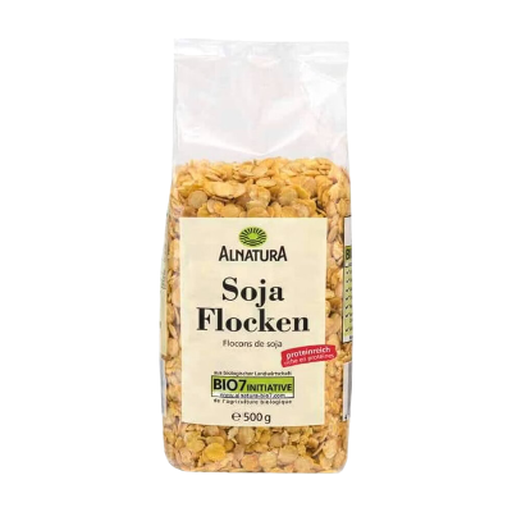
What makes it stand out: These soy flakes are a versatile product for creative cooking. With a protein content of 41 g per 100 g (according to the manufacturer), they are a nutritious base for sweet and savoury dishes. The flakes come from organic farming.
Advantages:
Who it's for: For those looking for a versatile staple ingredient suitable for both breakfast and preparing main courses like a vegan Bolognese.
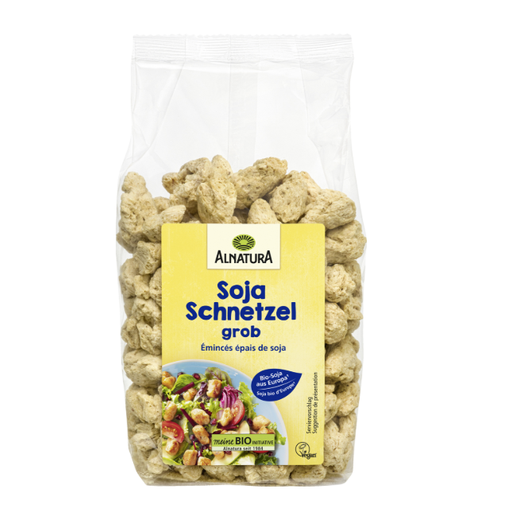
What makes it stand out: The coarse soy chunks from Alnatura offer a firm, meat-like texture. According to the manufacturer, the soybeans are sourced from European farms. With a protein content of 50 g per 100 g (in their dry state), they are a very protein-rich ingredient. Preparation is straightforward: soak in broth for ten minutes, then process further.
Advantages:
Who it's for: Ideal for anyone who enjoys preparing savoury dishes like goulash, stroganoff, or stir-fries and prefers an ingredient with a firmer bite.
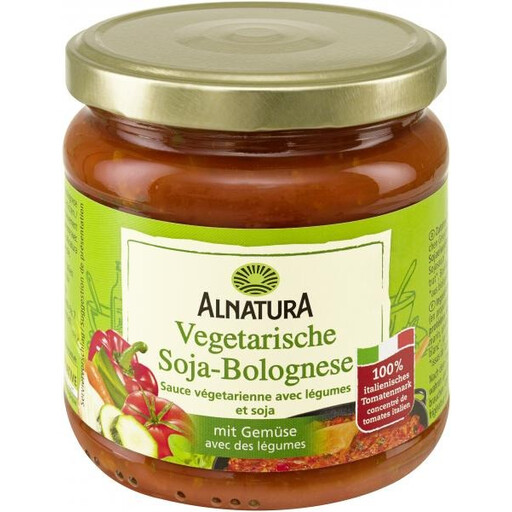
What makes it stand out: This ready-made Soy Bolognese is a convenient solution for quick meals. According to the manufacturer, it consists of 42% vegetables and soy granules in a fruity tomato sauce. All agricultural ingredients are organically sourced. The sauce just needs to be heated.
Advantages:
Who it's for: For those with little time to cook who are looking for a quick and easy base for pasta or gnocchi dishes without compromising on organic quality.
The products featured already cover a broad spectrum, but the world of plant-based proteins is even larger. If you're looking for other alternatives like lentil, pea, or hemp protein, or simply want to browse, you'll find a wider selection in our category.
Discover our entire range of organic protein here.
Most dried soy products like chunks or granules need to be rehydrated before use. Place the desired amount in a bowl and cover it completely with hot vegetable broth. Let the pieces soak for about 10–15 minutes. Afterwards, squeeze out the excess water thoroughly, for example, with your hands or in a sieve. This step is crucial for the soy pieces to develop a pleasant texture when fried and to properly absorb the flavours of marinades or sauces.
Soy meat substitutes in their pure form, such as soy chunks or flakes, are rich in protein and fibre and low in fat. According to the nutritional information for the Alnatura products featured here, the protein content ranges from 41 g to 50 g per 100 g of the dry product. As with any food, the overall composition of the meal matters. For ready-made products, it's advisable to check the ingredients list and nutrition facts to assess the salt, sugar, and additive content.
Organic soy products are now widely available. You can find them in organic supermarkets, health food stores, and well-stocked drugstores and supermarkets. A convenient alternative is buying online, where you can often find a larger selection of different forms and brands. The products featured in this article, as well as other options, are also available online.