
Lieferung heute & morgen

Qualitätsgarantie

Willkommens-Angebote freischalten: KOSTENLOSE Lieferung | Bis zu 80 % RABATT | Kostenlose 30-Tage-JoyPlus-Testphase
App herunterladen
The selection of soy sauces on the shelf can be overwhelming. Light, dark, sweet, for fish—the differences are often not obvious at first glance. Yet, choosing the right soy sauce is crucial for perfecting authentic Asian dishes. This guide will help you find the right Asian seasoning sauce for your kitchen and confidently buy the soy sauce that will round out your dish in both flavour and appearance.
As your Joybuy Product Recommendation Officer, I have gathered the essential information to provide you with clear guidance.
To make the right decision, it helps to know the basic types and their uses. Here are some practical tips to assist you with your selection.
The distinction between light and dark soy sauce is the most important foundation in Chinese cooking. Both have different functions:
In addition to the two basic types, there are specialised varieties optimised for particular cooking methods:
The quality of a soy sauce can often be judged by its ingredients. Traditionally made soy sauces are produced through the natural fermentation of soybeans, wheat, water, and salt over several months. Check the ingredients list to find a product that meets your expectations for authentic flavour. Brands like Lee Kum Kee Soy Sauce have a long tradition of producing such sauces.
Here you will find a selection of soy sauces, each suited for specific culinary applications.

Why It Stands Out This dark soy sauce is a classic for Chinese soy sauce cuisine. Its primary role is to give dishes a deep, rich colour and a complex layer of flavour. It is thicker and has a slight sweetness that balances the salty taste.
Benefits
Who It's For For cooks who want to prepare authentic braised dishes like "Hong Shao Rou" (red-braised pork belly) or braised chicken wings, and who value an appetising dark colour and richness of flavour.

Why It Stands Out This sweet soy sauce is thick, aromatic, and represents the typical flavour of Hong Kong cuisine. It combines the salty umami note of soy sauce with a pronounced sweetness to create a syrupy consistency.
Benefits
Who It's For For lovers of Cantonese cuisine and anyone looking for a versatile, sweet seasoning sauce to quickly and easily give dishes a special finish.
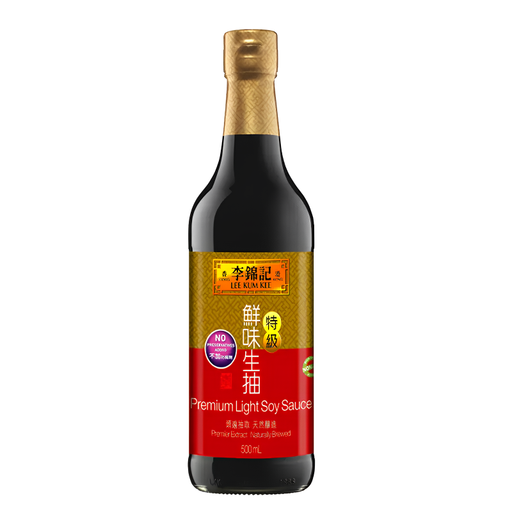
Why It Stands Out This is the fundamental light soy sauce for everyday use. Made from non-GMO soybeans, it delivers a distinct salty and umami-rich flavour. Its reddish-brown, clear colour seasons food without darkening it.
Benefits
Who It's For For any home cook looking for a high-quality, all-purpose soy sauce for cooking and seasoning. It is the standard seasoning for stir-fries, soups, and enhancing vegetables.

Why It Stands Out This seasoned soy sauce for fish is specially designed to enhance the delicate flavour of seafood. It is lighter and often refined with additional flavourings to create a perfect balance for steamed or pan-fried fish dishes.
Benefits
Who It's For For anyone who enjoys preparing Cantonese-style steamed fish. It is the ideal sauce to highlight the natural flavour of fish, prawns, or scallops.
The world of Asian seasoning sauces is diverse and offers the right product for every taste. If you haven't found what you're looking for in our selection or wish to discover other specialities, you can find a broader range in our category.
Discover our entire range of Premium Table Sauces here.
1. What is the difference between Chinese and Japanese soy sauce? Chinese soy sauce is typically made with a higher proportion of soybeans, whereas Japanese soy sauce (shoyu) often has a higher wheat content, giving it a slightly sweeter and more complex flavour. Chinese light soy sauce is generally saltier, while dark soy sauce is primarily used for colouring—a distinction that is less common in Japanese cuisine.
2. How do I store soy sauce correctly? Unopened bottles can be stored in a cool, dark place like a pantry. After opening, it is recommended to store soy sauce in the refrigerator. This slows down the oxidation process and helps to preserve the flavour and colour over a longer period.
3. Can I substitute light and dark soy sauce for each other? Swapping them is not recommended, as they serve different functions. If you use dark soy sauce instead of light, your dish will become much darker and possibly sweeter, but less salty. Conversely, if you use light soy sauce instead of dark, your dish will lack the desired deep colour and rich flavour notes.