Soya cappuccino without the milk-system mess
You share the machine with other people and want to know whether it can froth soya drink and which parts that come into contact with milk need cleaning afterwards.


For soya cappuccino in a shared kitchen, a bean-to-cup machine with a removable milk system is a good choice if several people want to make drinks in just a few steps and can clean the parts after each use. An espresso machine makes more sense if you want to control the soya foam yourself and are happy to do a little more by hand. A capsule machine needs a separate frother and ties your espresso-making to a capsule system. Always check the exact model and the soya drink you plan to use: manufacturers’ claims don’t guarantee the same result with every recipe.
You share the machine with other people and want to know whether it can froth soya drink and which parts that come into contact with milk need cleaning afterwards.
You want to texture soya drink yourself and are weighing up whether a slim manual machine or a more automated model would suit your daily routine better.
You have little worktop space and need to allow room for a grinder, capsules or a separate frother as well as your espresso machine.
A good fit if: several people sharing the machine want to make cappuccino in as few steps as possible.
The trade-off: parts that come into contact with milk still need cleaning, and claims about soya apply only to the models and conditions specified.
A good fit if: you want to control the foam yourself and prefer a slim machine such as the De’Longhi Dedica Duo EC890.M; the Sage Barista Touch Impress BES882 has a dedicated soya setting.
The trade-off: making espresso and frothing are manual steps on the Dedica Duo; the Sage settings mentioned here don’t automatically apply to other models.
A good fit if: you’re mainly looking for a compact espresso unit for individual servings.
The trade-off: you’ll need a separate frother for cappuccino, and the Essenza Mini uses Original-compatible capsules.
| What to consider | What to check before buying | Who is it important to? |
|---|---|---|
| Frothing soya drink | Check the claim for the exact model and see whether a soya setting is specifically mentioned. | If I’m making soya cappuccino in a shared kitchen, I want to know whether my particular soya drink will froth; the recipe can affect the result. Around 31% of consumers say soya foam is their top buying priority. |
| Cleaning after use | Check which parts are removable and what cleaning is needed after making a milk drink. | When several people use the same machine, I want the parts that come into contact with milk to be easy to reach and straightforward to clean after each drink. Around 25% of consumers prioritise easy cleaning in a shared kitchen. |
| Total footprint | Measure the space needed, including room to operate and clean the machine, as well as any accessories. | With limited shared worktop space, I want to know that the whole set-up will fit, not just the main machine. Around 19% of consumers put footprint first. |
| Steps involved | Check whether the milk and espresso are made automatically or whether you’ll need to grind, prepare and froth them yourself. | When several people take turns using the machine, I want to make cappuccino with as few manual steps as possible. Around 13% of consumers prioritise a simple process. |
| Maintenance and system compatibility | Check what regular maintenance is required and whether the machine is tied to a particular capsule or coffee system. | I want to know in advance what day-to-day maintenance involves and how much choice I’ll have over the coffee system. Around 12% of consumers put these ongoing requirements first. |
Manufacturers’ claims about plant-based drinks apply to specific models or systems. The recipe of the drink you use can affect the result.
Check the claim for the exact model and take into account the soya drink you actually plan to use.
Removable or tube-free milk systems still need cleaning after use. Cleaning is also part of the process with a machine that has a steam wand.
Agree who will clean the parts that come into contact with milk after each use, and check the care instructions for the specific model.
A compact espresso machine won’t necessarily froth milk itself. A separate frother or other accessories may also take up space.
Allow space for the whole preparation and cleaning set-up, not just the machine.
LatteGo bean-to-cup machines, including the Philips EP3347/90, are worth considering for automatic milk drinks with removable milk-system components.
The range includes the slim manual Dedica Duo EC890.M and the Eletta Explore ECAM450.55.S bean-to-cup machine.
The Barista Touch Impress BES882 is worth considering if you want to choose a specific milk texture for soya drinks.
The Essenza Mini C is a compact Original capsule machine for espresso and lungo.
The Joybuy products below are designed for making espresso and cappuccino. Check each model separately to see which milk system or frothing method it uses and whether there’s information about your soya drink.
 No image available
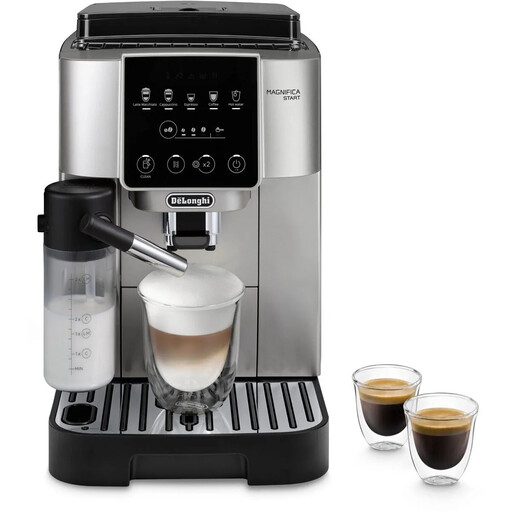
For people sharing a machine who want automatic cappuccino preparation; this model features LatteCrema Hot.
Five one-touch drinks, built-in grinder with 13 grind settings, 250-g bean hopper and 1.8-l water tank.
Regular rinsing and cleaning of the milk system is required.
 No image available
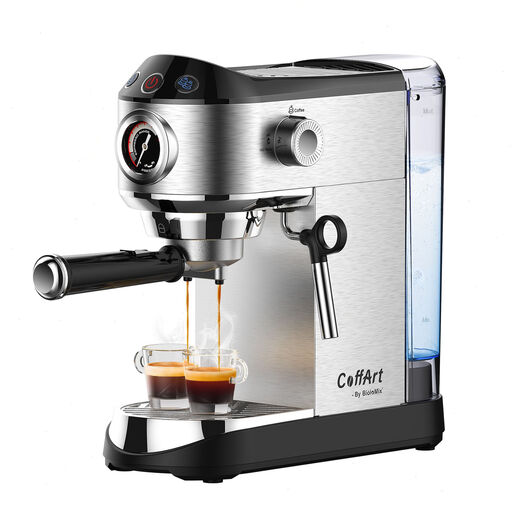
For making espresso and milk foam by hand using a steam system.
Removable 1.1-l water tank and one- or two-cup options.
Before buying, check whether the frother is suitable for the soya drink you plan to use.
 No image available
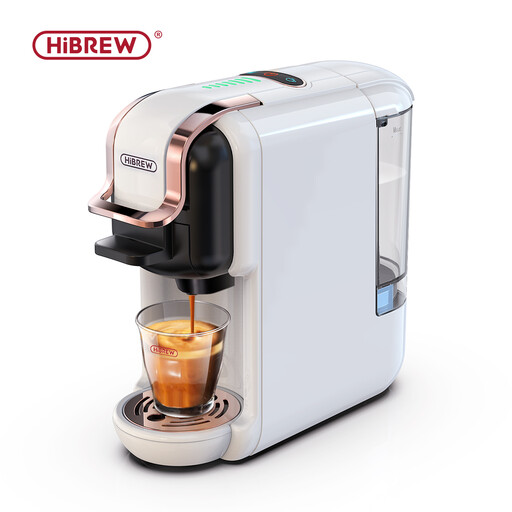
For people who want to choose between different coffee formats; the product title mentions cappuccino and hot and cold brewing.
According to the product title, it supports Nespresso, DG and ESE formats, as well as ground coffee.
Check which frothing method is used for cappuccino and whether it’s suitable for your soya drink.
 No image available
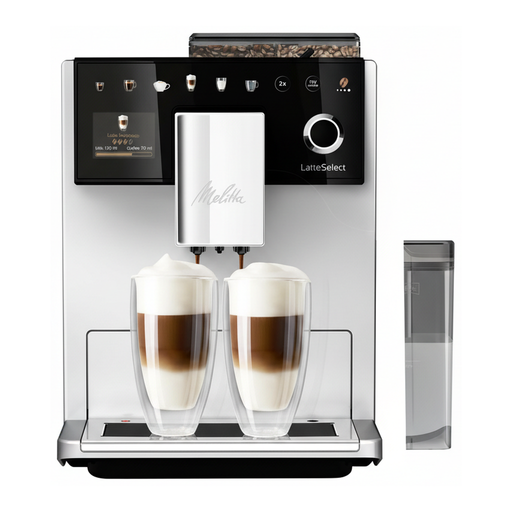
For people sharing a machine who want to make cappuccino automatically and adjust individual drink settings.
You can adjust the grind size, coffee strength, drink volume, brewing temperature and milk foam consistency.
Daily cleaning of the milk system and a cleaning programme after use are required.
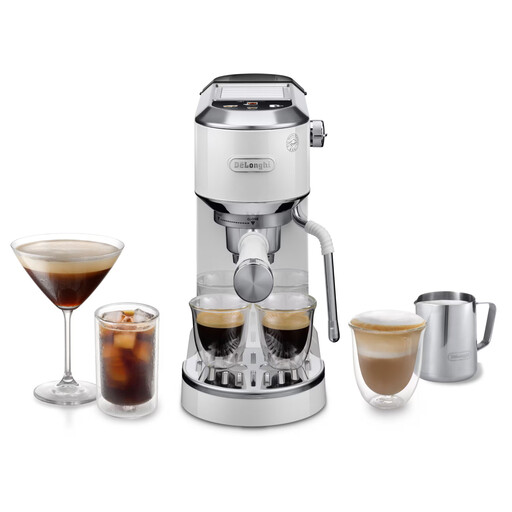 No image available
For people who want to make espresso and milk foam themselves and are happy to handle each step.
15 cm wide, with a 1.1-l water tank and manual steam wand.
A tamper and milk jug are included in the stated package contents. Check whether the soya drink works with the manual frothing method.
No. A general cappuccino claim doesn’t prove that. Philips Germany specifically mentions plant-based drinks for the EP3347/90, while Sage lists a soya setting for the BES882. De’Longhi Germany notes that results can vary depending on the recipe of the plant-based drink.
Clean the parts according to the instructions for the specific machine straight after use. Philips Germany describes the EP3347/90’s LatteGo system as a two-part, tube-free design and notes that the parts still need additional cleaning.
No, not for anyone with a soya allergy. The European Commission lists soya beans as a food allergen that must be declared. If someone sharing the kitchen has an allergy, take the ingredients you use and any shared parts that come into contact with milk into account.
For electrical equipment that requires CE marking and is placed on the market in the European Economic Area, the manufacturer must check the applicable requirements, complete the conformity assessment and EU Declaration of Conformity, and apply the required CE marking. A product description alone doesn’t prove that a specific item complies; check the relevant product documentation if in doubt.