
Lieferung heute & morgen

Qualitätsgarantie

Willkommens-Angebote freischalten: KOSTENLOSE Lieferung | Bis zu 80 % RABATT | Kostenlose 30-Tage-JoyPlus-Testphase
App herunterladen
Anyone living in a city apartment, studio, or shared flat knows the challenge: space is limited, but the need for functionality and style is not. The search for the right furniture can quickly become frustrating. The market for space-saving furniture is full of promises, but not every solution delivers. Before you make a purchase, it's crucial to understand the common pitfalls that often lead to disappointment and wasted money.
As your Joybuy Product Recommendation Officer, I'm here to help you distinguish marketing hype from genuinely functional solutions. Let's focus on the facts that truly matter.
Many compact furniture pieces look appealing in product photos but prove impractical in daily use. Pay close attention to these three weak points:
To avoid a bad buy, let hard facts, not pretty pictures, guide your decision. Before purchasing, check these three core aspects to ensure your new furniture is a lasting, sensible addition to your home.
The most important metric for furniture for small spaces isn't just the width or depth, but how efficiently its footprint is converted into usable storage. A small nightstand that is 30 cm wide but offers two deep drawers is far more practical than a 40 cm model with only a single small shelf.
The longevity and safety of a piece of furniture depend directly on its material and construction. Look for precise specifications regarding the material type and load capacity.
In small apartments, every piece of furniture counts twice. Look for designs that can serve multiple functions. A tall, narrow table can act as a breakfast bar, a standing workstation, or a console table in the hallway. A side table with a removable top that doubles as a tray offers extra flexibility. This type of niche furniture adapts to your needs instead of limiting you.
Here are some recommendations tailored to different needs and room situations. Each product has been selected based on the objective criteria mentioned above.
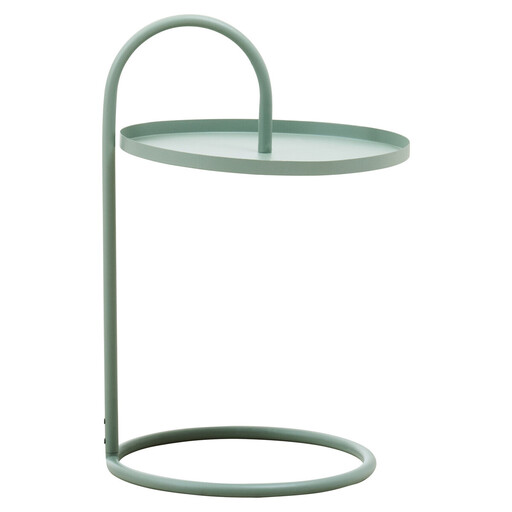
Why This Fits Their Persona: Ideal for those seeking a functional piece with sculptural character. The minimalist design blends seamlessly into modern living concepts without visually cluttering the space. Perfect as a side table next to the sofa or as a contemporary nightstand.
The 100% iron construction with a stable, round base bypasses the issue of instability. The design is engineered for durability and sturdiness.
Arrives fully assembled, saving time and effort. The raised edges of the tabletop prevent items from rolling off.
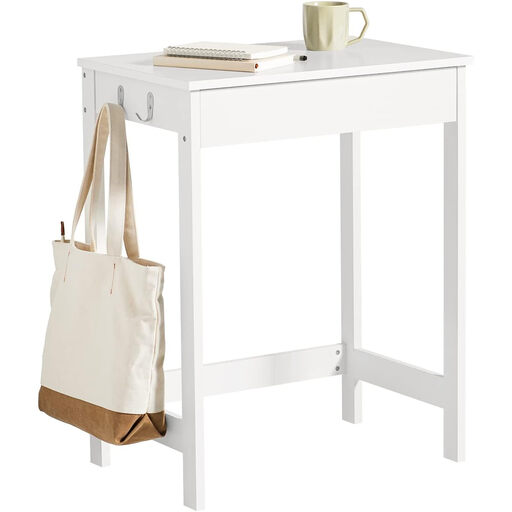
Why This Fits Their Persona: Perfect for students or professionals who need a dedicated workspace in a small bedroom or living room. With a footprint of just 60x40 cm, it fits into almost any corner without sacrificing functionality.
This model avoids the "inefficient design" trap by including a drawer and two side hooks. Despite its compact size, it provides organised storage for documents, headphones, and accessories.
High load capacity of 60 kg thanks to its sturdy iron frame. The E1-grade MDF tabletop is scratch-resistant and easy to clean.
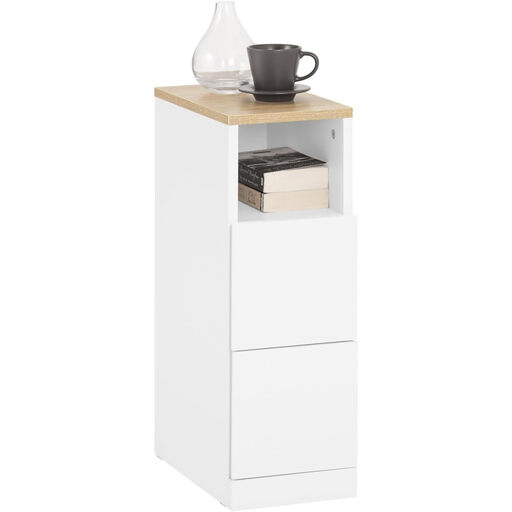
Why This Fits Their Persona: The ultimate solution for unused, narrow gaps, such as between a bed and a wall or next to a sofa. At just 20 cm wide, this niche furniture is specifically designed to make lost space usable.
It maximises efficiency in the smallest of spaces. Instead of being just a shelf, it offers maximum storage for its extremely narrow footprint with two drawers and an open compartment.
The maximum load capacity is 20 kg. Felt pads protect the floor from scratches. An anti-tip kit is included to ensure stability.
We've compiled a full, up-to-date list of products that fully meet these strict selection criteria and German safety regulations.
Measure the width, depth, and height of the niche in several places (e.g., at the top, middle, and bottom), as walls are not always perfectly straight. Use the smallest measurement as your maximum dimension. Also, account for skirting boards, power outlets, or light switches, and leave a few centimetres of clearance for air circulation.
The E1 standard is a European regulation that governs the emission of formaldehyde from engineered wood products like MDF or particleboard. Furniture that meets this standard releases only a very low, harmless amount of formaldehyde into the ambient air. This is a key quality indicator for a healthy living environment.
Yes, provided they are well-constructed. Look for features like a solid metal frame, stabilising cross-braces, adequate material thickness, and a clearly defined maximum load capacity. For taller, narrow furniture, an included anti-tip kit to secure the piece to the wall is a crucial safety feature.