
Lieferung heute & morgen

Qualitätsgarantie

Willkommens-Angebote freischalten: KOSTENLOSE Lieferung | Bis zu 80 % RABATT | Kostenlose 30-Tage-JoyPlus-Testphase
App herunterladen
Small flats, narrow hallways and compact kitchens call for well-thought-out solutions. Space-saving home essentials can keep clothes, laundry, towels and dishes neatly stored without permanently taking up valuable floor space. But a compact design is only part of the picture. Dimensions, weight capacity, installation method and everyday practicality all determine whether a solution will work well in the long term.
As a Joybuy Product Recommendation Officer, I assess product information against clear criteria and explain which features matter before you buy. This can help you avoid common mistakes, such as choosing a clothes rail that is too low, an unstable airer or a dish rack whose drainage direction doesn’t suit your kitchen.
A narrow home essential may save floor space, but that doesn’t automatically mean it offers enough usable room. For a clothes rail, consider the combination of width, height, depth and usable hanging length. A telescopic clothes rail can be flexible if its adjustment range is right for your alcove. However, a small clothes rail may not be large enough for several coats or heavy winter clothing.
Drill-free systems are often clamped between the floor and ceiling. For this to work, the ceiling height and surfaces need to be suitable, and the system must be aligned vertically. This type of setup is particularly useful for renters, but you’ll still need to check the tension regularly. Wall-mounted solutions, such as a wall-mounted clothes airer, require a suitable surface for fixing.
The maximum load usually applies to the whole product or a specific section. Clothes, damp laundry and dishes all have different weights. Damp textiles weigh more than dry clothes, so avoid using the product right up to its stated limit. Distribute the load as evenly as possible.
Measure the space you have in mind in at least three places before you buy. Ceilings and walls in older properties can be slightly uneven. If you’re choosing an adjustable clothes rail, check:
For example, the SoBuy telescopic clothes rail with shelves can be adjusted from 52 to 80 cm wide and from 233 to 295 cm high. Another version adjusts from 75 to 126 cm wide and from 200 to 295 cm high. These dimensions help you work out whether it will fit in an alcove or between the floor and ceiling.
Look for a clearly stated weight limit, and check whether it applies to the whole system or to individual shelves. Metal or iron tubes can provide a sturdy frame, but you should also consider the plastic connectors and joining points.
With a clothes rail that has shelves, place heavier clothing towards the bottom where possible. A dish rack needs to remain stable when plates, cups and kitchen utensils are loaded together. For an airer, stability on smooth floors matters just as much as weight capacity.
Foldable and mobile home essentials are useful when you use rooms for different purposes. Wheels make products easier to move, but they may be less stable on uneven floors. For an over-door towel rack, check that the door thickness is suitable for the hooks. The model below is designed for doors up to 4.4 cm thick.
For kitchen and bathroom products, also look for easy-to-clean surfaces and effective drainage. A dish rack with drainage helps prevent water from pooling on the worktop, but it still needs to be cleaned and dried regularly.
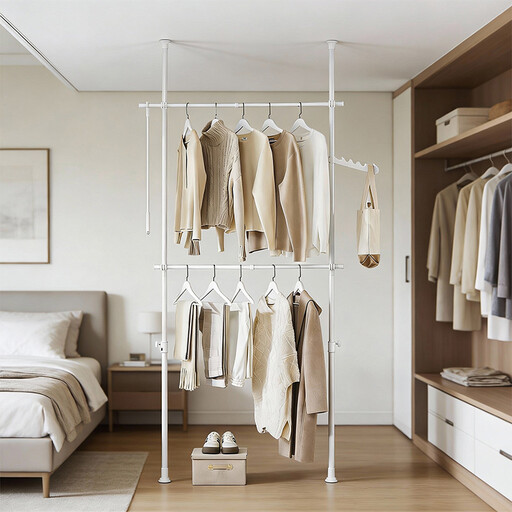
Why this product suits this profile: The width adjusts from 75 to 126 cm and the height from 200 to 295 cm. Two hanging rails and a side hook make it a neat storage solution for bedrooms or dressing areas.
The clearly stated adjustment range and weight capacity of up to 25 kg make planning easier than with products that don’t give precise dimensions.
Drill-free tension installation, two hanging rails and a compact weight of 3.5 kg.
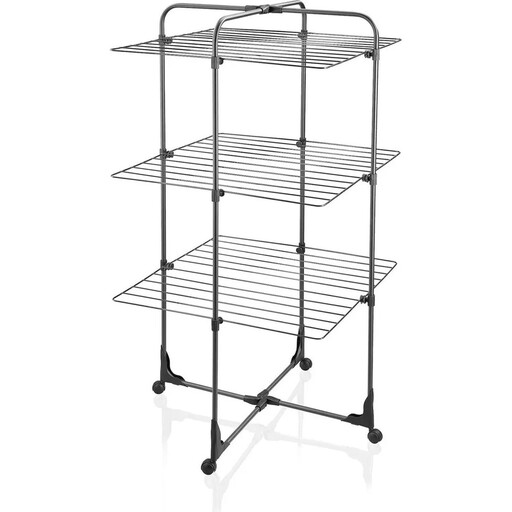
Why this product suits this profile: This tower airer has three levels, 27 m of drying space and a footprint of 68 × 68 cm. Some of the levels fold down, so you can also use the airer close to a wall.
The stated footprint and folded size of around 4.2 × 126 cm show how much floor and storage space you’ll actually need.
Four 360-degree swivel wheels, three foldable levels and room for longer garments.
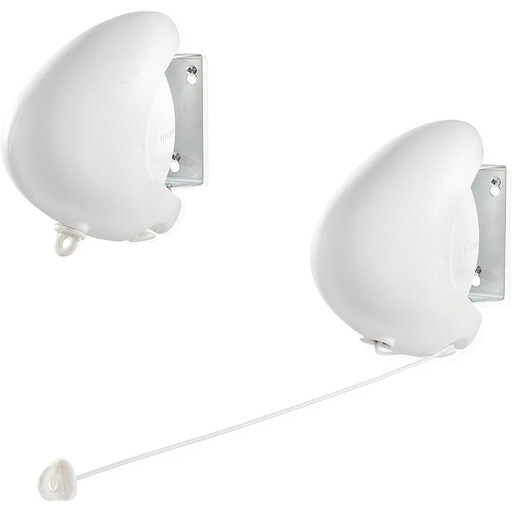
Why this product suits this profile: This wall-mounted clothes airer is suitable for bathrooms, balconies, kitchens or utility rooms where a freestanding airer would take up too much space.
The line retracts when not in use and the housing folds flat against the wall. You’ll still need a suitable surface and secure fixings.
Up to 8 m of line, a swivelling housing and a stated maximum load of 5 kg.
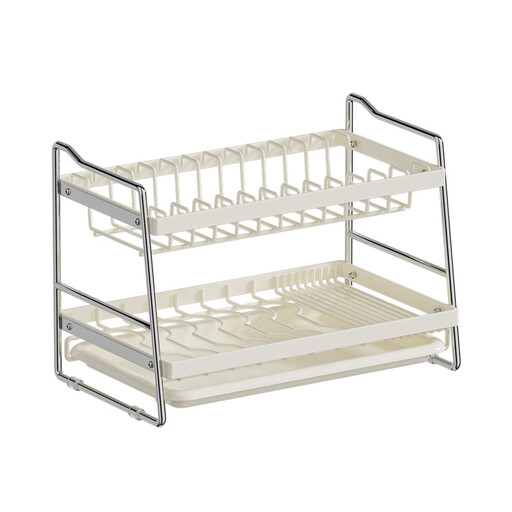
Why this product suits this profile: Two tiers make use of the space above your worktop. Measuring around 40 × 23.6 × 28.7 cm, this rack is designed to fit many kitchens with limited depth.
The stated depth and built-in drainage system help you check whether water can run into the sink or a suitable container.
Two tiers, freestanding use and draining areas for plates, cups and kitchen utensils.
We’ve put together a complete, regularly updated list of products that meet these strict selection criteria and fully comply with the safety regulations in force in the EU.
Stability depends on correct installation, suitable floor and ceiling surfaces, and an evenly distributed load. The tension poles must be vertical and sufficiently tight. Check the connection points before first use and regularly thereafter. Do not exceed the stated weight limit.
It depends on the model. A tower airer makes use of vertical space and can have a footprint of just 68 × 68 cm. A wall-mounted clothes airer takes up much less room when retracted, but requires two suitable fixing points or an appropriate wall installation.
The clothes rails, airers, over-door towel racks and dish racks featured here don’t use electricity. Any energy use is indirect, from the washing machine or dishwasher used beforehand. Mechanical systems can therefore be a practical way to add storage in small spaces.