Solo monitor pilot who wants the full picture
If you want to see more of the game or fit more information on one screen while following a trading route, first check how your specific game handles wider formats.


A 34-inch 21:9 monitor can be a sensible middle ground if your game displays the wider format properly and your PC can handle 3440 × 1440. If space is limited or you’re unsure whether the format is supported, 16:9 is the obvious alternative. 32:9 is worth considering mainly if you’ve checked the in-game view and the space available on your desk first. OLED may be a good choice if contrast matters to you, as long as you check the care guidance and warranty terms for the exact model variant.
If you want to see more of the game or fit more information on one screen while following a trading route, first check how your specific game handles wider formats.
If space, connectivity and frame rate are limited, check that your PC and available monitor connections can handle your preferred resolution.
If contrast matters to you, factor in fixed cockpit displays, care guidance and the warranty terms for the specific OLED variant before making your choice.
A good fit if: you have limited desk space or aren’t sure whether your game supports wider formats.
The trade-off: It offers less horizontal screen space than 21:9 or 32:9.
A good fit if: you want a wider view on one screen and your game makes good use of the format.
The trade-off: 3440 × 1440 requires more rendering power than 2560 × 1440; your connection and PC need to support your chosen frame rate.
A good fit if: your top priority is plenty of horizontal screen space and your game actually makes use of it.
The trade-off: Check the in-game cockpit view and measure your available desk space before buying.
The percentages below refer to consumers choosing a single monitor for space-trading games; each person is grouped according to their main buying priority.
| Priority | What to check before buying | Who is this most relevant to? |
|---|---|---|
| A wider view on one screen | Check the game’s aspect ratio, usable resolution and monitor width; don’t assume Picture-by-Picture gives you a wider in-game view. | If I want to see both the game and its information at a glance on one screen while following a trading route, how the specific game displays is crucial. Around 37% of consumers say a wider view is their top priority. |
| Resolution and frame rate | Check the native resolution and refresh rate for each input, then compare the frame rate you can achieve in-game with your PC and connection. | If I want to play at a particular frame rate, the resolution, graphics card and connection all need to work together. Around 27% of consumers prioritise this technical compatibility check. |
| Contrast and OLED | Check the screen finish, lighting conditions, protection features and warranty for the exact model variant. | Contrast can matter in dark game scenes, but I also want to know how fixed displays and warranty terms affect my choice of OLED. Around 18% of consumers prioritise image contrast. |
| Desk space and running costs | Check the dimensions, including the stand, as well as the model’s energy label and any HDR information. | If my desk is short on space, the monitor needs to fit with its stand; for running costs, I compare the stated energy consumption. Around 18% of consumers focus mainly on space and running costs. |
The EU energy label for electronic displays uses a scale from A to G and also provides information on HDR power consumption. For a meaningful comparison, check the details for the specific models you’re considering.
A wide display or the ability to split input signals doesn’t tell you how a particular game—which hasn’t been specified here—will appear on screen.
Check screenshots or settings for your specific game, and measure your desk before choosing a Super Ultrawide monitor.
Unused screen width can take up valuable desk space for no good reason.
ASUS specifies up to 180 Hz for the VG34VQ3B at 3440 × 1440 over DisplayPort, but up to 144 Hz over HDMI. MSI also lists different limits for the MAG 345CQR depending on the input.
Check your preferred resolution and frame rate against the specifications for both ends of the connection and the exact model variant.
MSI lists the MPG 341CQR QD-OLED X36 and the MPG 341CQRDE QD-OLED X36 under different part numbers.
Ask for the full part number and confirmation of the warranty that applies to the product on offer; similar technical names don’t tell you which variant it is.
An independent review of the MSI MPG 341CQRDE QD-OLED X36 praised its contrast, but also noted that the screen has a slightly reflective finish.
Take any light sources near your desk into account, and check the care guidance and warranty wording for the exact model variant.
The LG 34U650A-B is a 34-inch 21:9 option with an IPS panel and 3440 × 1440 resolution.
The TUF Gaming VG34VQ3B is a 34-inch VA monitor with a curved panel and 3440 × 1440 resolution.
The AW3426DWM is a 34-inch VA model with 3440 × 1440 resolution and a 240 Hz refresh rate; the AW3426DW is a separate QD-OLED model.
The MPG 341CQRDE QD-OLED X36 is a contrast-focused 34-inch 21:9 option; the MAG 345CQR is a separate VA model.
The Odyssey G9 G91F offers a 49-inch 32:9 option with a 144 Hz refresh rate.
This selection includes conventional 27-inch models, 34-inch Ultrawide monitors and one 49-inch 32:9 monitor.
 No image available
For an especially wide view on a single screen; check how your game and its HUD appear, as well as how much room you have on your desk.
Listed in the product name: 5120 × 1440, 165 Hz, 32:9, HDMI 2.1 and DisplayPort 1.4.
 No image available
For consumers who value contrast in dark game scenes and want to factor OLED care guidance into their decision.
Listed in the product name: QD-OLED, UWQHD, curved 21:9 format and 175 Hz. For longer sessions with fixed cockpit displays, check the care guidance for this variant.
 No image available
For a wider view on one screen, if your game supports 21:9 and your PC can handle your preferred resolution.
ASUS specifies up to 180 Hz over DisplayPort and up to 144 Hz over HDMI; the stand isn’t height-adjustable.
 No image available
For consumers looking for a curved Ultrawide view on one screen; you’ll still need to check how your specific game displays.
Listed in the product name: WQHD, 180 Hz and a contrast ratio of 4000:1.
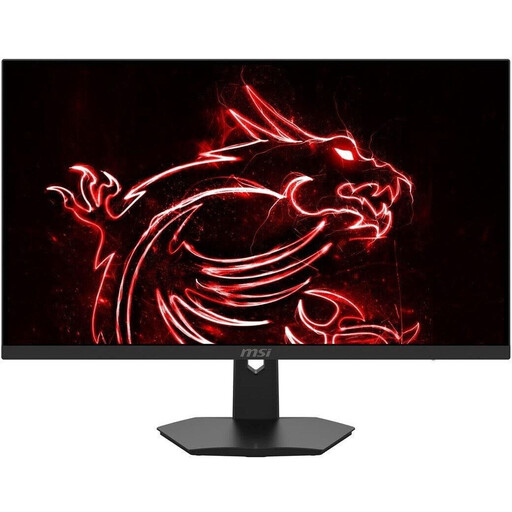 No image available
A 16:9 option if you’d prefer a conventional screen format while you’re unsure about Ultrawide support.
Listed in the product name: Full HD, IPS panel and 180 Hz.
No. 21:9 gives you a wider view if your specific game makes good use of it. Before buying, check how the game displays the format and HUD; monitor specifications alone won’t tell you.
Check the input, your PC’s output and the display settings. ASUS specifies up to 180 Hz for the VG34VQ3B at 3440 × 1440 over DisplayPort, but up to 144 Hz over HDMI. The stated maximums for the MSI MAG 345CQR also depend on the input.
Read the care guidance and warranty terms for your exact model variant. MSI specifies OLED Care 3.0 and a three-year burn-in warranty for the MPG 341CQRDE QD-OLED X36; this manufacturer claim applies to that model, not to OLED monitors in general.
Compare the consumption figures on the EU energy labels for the specific models, and check the relevant HDR figures. To estimate your own costs, you’ll also need suitable consumption figures and your typical usage time.
If a product is faulty, you’re entitled to statutory rights against the seller; these are separate from any voluntary manufacturer’s warranty. Online purchases generally come with a right to cancel, usually within 14 days of receiving the goods. The details and any exceptions depend on the contract.