
Lieferung heute & morgen

Qualitätsgarantie

Willkommens-Angebote freischalten: KOSTENLOSE Lieferung | Bis zu 80 % RABATT | Kostenlose 30-Tage-JoyPlus-Testphase
App herunterladen
A spanner set is part of the basic equipment in many workshops, garages and tool kits. Yet poor purchases are often not down to the price, but to choosing the wrong set: it may not include the sizes you need, the spanners may be too long for confined spaces, or the storage solution may lead to individual tools going missing.
Before buying, DIYers, fitters, mechanics and professional tradespeople should check three things: intended use, size range and design. Marketing terms such as ‘professional’ or ‘universal’ are no substitute for clear details about materials, spanner sizes and mechanisms.
A set with lots of tools can still be missing important spanner sizes. For general repairs, for example, a metric combination spanner set with a complete range of sizes from 8 to 19 mm is a sensible choice. For larger fasteners, you may need a range such as 6-22 mm or a separate set that includes 20, 22 or 23 mm.
Before buying, check:
A ratchet spanner set saves time because you do not have to remove the spanner completely each time you turn it. However, the mechanism needs enough room to swing back. For very tight fasteners or heavily soiled connections, check the manufacturer’s maximum load guidance.
A 72-tooth mechanism with a stated 5-degree swing angle can be useful in confined spaces. This figure describes the movement needed to operate the ratchet; it does not automatically indicate the maximum permitted force.
A polished or chrome-plated finish can make cleaning easier and help protect against corrosion. However, the shape of the ring end, the jaw opening, the offset and the fit are also important for the job at hand.
A 12-point ring end can make it easier to position the spanner. Even so, when applying significant force, make sure the tool sits fully and squarely on the fastener to help prevent slipping and damage.
Many sets are made from chrome vanadium steel, often abbreviated to Cr-V. Product details should also state whether the tool has been heat-treated or forged. These terms describe how it is made, but are no substitute for specific information about permitted use.
Also look for:
An open-ended spanner set is useful when you need to fit the spanner onto a nut from the side. A ring spanner set surrounds the fastener and provides a more secure fit when you have straight access. A combination spanner brings both designs together in one tool.
For confined spaces, you could also consider:
For many jobs involving bicycles, furniture, machinery and vehicles, a range of 8-19 mm spanners is a practical starting point. If you also work with larger nuts, look for a 6-22 mm spanner set or a similar range.
A storage bag, roll-up case or sturdy case helps keep the tools organised and the set complete. Look for printed size markings, secure holders and a fastening that keeps the tools in place during transport.
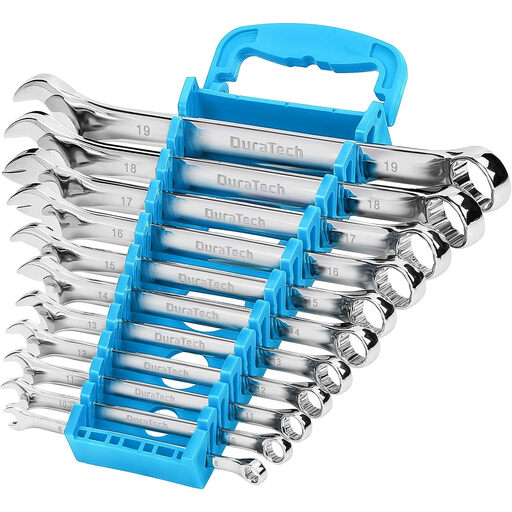
Why this product suits this user: The 6 to 22 mm size range covers many common jobs around the home, for DIY projects and on vehicles. The ring and open ends are the same size on each spanner.
The product description specifies the size range and confirms that 12 spanners are included. This makes it easier to check for gaps before you buy.
Cr-V steel, a 15-degree offset and a roll-up pouch with size markings, according to the product details.
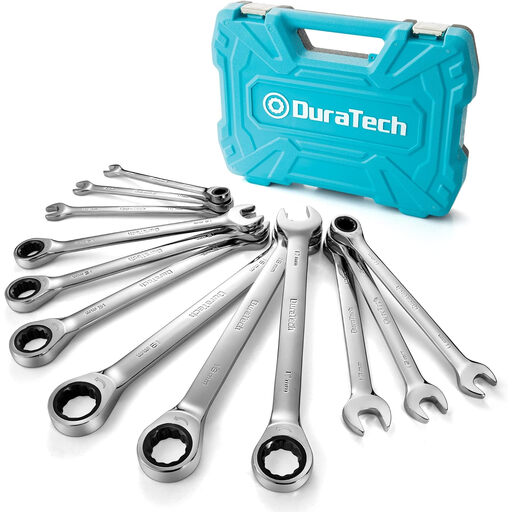
Why this product suits this user: The combination of a pivoting head and ratchet mechanism is designed for people who often work on hard-to-reach fasteners.
The pivoting head, 72 teeth, 5-degree swing angle and 8 to 19 mm size range are all clearly specified, making it easier to compare the set with the jobs you do.
180-degree flex head, 12-point ring end and roll-up pouch, according to the product description.
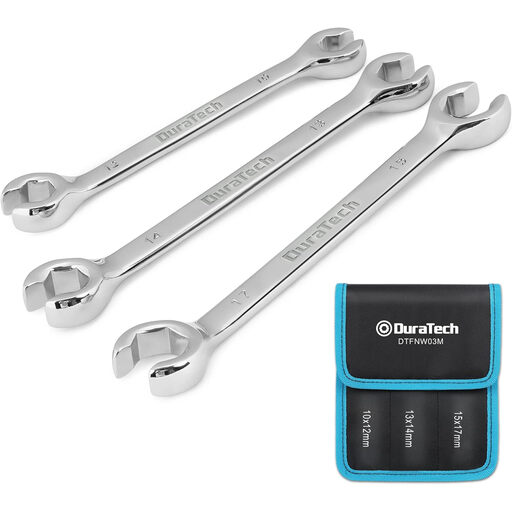
Why this product suits this user: This set is designed for brake pipe fittings and similar pipe connections, where an ordinary open-ended spanner may not be suitable.
The double open ring design fits around pipes. According to the product details, the three spanners cover 10x12, 13x14 and 15x17 mm.
The supplier lists Cr-V steel, a 15-degree offset and a storage bag.

Why this product suits this user: The offset double ring spanners are designed for work on vehicles and machinery with recessed or offset fasteners.
The 75-degree offset is clearly specified as part of the design. The nine spanners cover paired sizes from 6x7 to 21x23 mm.
12-point ring ends, Cr-V steel and a roll-up pouch with size markings, according to the product description.
We’ve put together a complete, regularly updated list of products that meet these strict selection criteria and the safety regulations in force in the EU.
Always use the exact spanner size you need and, where possible, fit the tool straight onto the fastener. Using a pipe as an extension can significantly increase the load and damage the tool or fastener. When working on vehicles, make sure you have a stable footing and wear suitable eye protection.
After use, remove any grease, moisture and dirt. Storing tools in a dry place reduces the risk of corrosion. For ratchet models, also check that the mechanism moves freely and that there are no unusual noises or visible signs of damage.
Common metric ranges such as 8 to 19 mm are suitable for many general jobs. A range of 6 to 22 mm may be more useful for work on vehicles, machinery or installations. The key is to consider which nuts and bolt heads you actually need to work on.
A combination spanner has an open end and a closed ring end. A ratchet spanner also has a ratchet mechanism, allowing you to keep turning without removing it completely. For confined spaces, models with a small swing angle or flexible head are worth considering.
Its lifespan depends on the material, build quality, load, care and correct use. Exceeding the manufacturer’s load limits, hitting the tool with a hammer or leaving it in damp conditions can shorten its lifespan. Regular cleaning and dry storage help your tools last longer.