Teachers leading group discussions
When several people are speaking around a table, check that the intended seats fall within the stated microphone range. HP lists different ranges for its Poly models; test the actual setup in the room.


For conversation practice in a small meeting room, choose a speakerphone based on the distance between seats and the way people will speak. The stated microphone range needs to cover the seating positions, and full-duplex audio matters when speakers change frequently. HP lists different ranges for certain Poly variants, while Jabra and EPOS specify full-duplex audio for the models mentioned. Check that the USB and Bluetooth connections, and the items included, match the exact variant and your teaching device. Test the audio from every seat.
When several people are speaking around a table, check that the intended seats fall within the stated microphone range. HP lists different ranges for its Poly models; test the actual setup in the room.
Full-duplex audio is a useful feature for role-play, follow-up questions and people speaking over one another. Jabra and EPOS list this feature for selected speakerphones.
If you use different computers or teaching locations, check the USB connection, Bluetooth connectivity and what comes with the exact variant. HP and EPOS note that features or included accessories can vary between model variants.
First, consider where participants will sit and how they will speak to one another. Then check that the connections and features are compatible with your teaching device.
| What you need | What to check when buying | Who it matters most to |
|---|---|---|
| Cover all the seats | Compare the distance between seats with the stated range of the specific model, then test the audio from every seat. | If you need to hear people clearly from seats further away, coverage of the seating layout matters more than the number of microphones alone. Around 33% of consumers put seat coverage first. |
| Allow speakers to take turns | Look for an explicitly stated full-duplex feature and test it with the conversation app you use. | In dialogues with follow-up questions and people speaking over one another, it matters that everyone can speak and listen at the same time. Around 27% of consumers prioritise natural turn-taking. |
| Connect to your teaching device | Check whether your computer has USB-A or USB-C, and confirm what comes with the complete model variant. | If you want to use the speakerphone with your existing teaching device, you need a compatible connection. Bluetooth connectivity with a mobile phone does not necessarily mean that a PC adapter is included. Around 20% of consumers prioritise connection compatibility. |
| Take room noise into account | Use the manufacturer's information on microphone technology or noise reduction as a guide, then test the device with the room's usual background noise. | If echo or background noise is an issue in your teaching room, test the audio in those conditions. Around 13% of consumers focus on background noise and room echo. |
| Move between rooms | Check the battery specifications, charging requirements and connection options for each computer you use. | If you use the device in different teaching locations, make sure you can power and connect it appropriately in each one. Around 7% of consumers prioritise using their device in different locations. |
Information about microphone numbers and range does not tell you how clearly voices will be picked up from every seat in your teaching room.
Compare the distance between seats with the stated range of the exact model, then test the audio in a practice call from every intended seat.
With the HP Poly Sync 20 and Sync 20+, and the EPOS EXPAND 40, the PC connection and included adapter can vary by model variant.
Before you buy, check the full model name, the USB connector you need and what is included.
If the package does not include a PC adapter you need, you may have to buy one separately.
Manufacturer claims about reducing echo or background noise do not show how the device will perform in a specific conversation exercise.
Test it with the room's usual background noise, the actual seating layout and people speaking over one another.
The Poly Sync 20 and Sync 40 are speakerphones designed for small groups around a table and compact meeting rooms.
The Speak2 55 is a speakerphone for mobile, dialogue-focused sessions.
The EXPAND 40 is designed for conversations with several speakers and connects via USB-C or Bluetooth.
The PowerConf S3 is positioned as a tabletop speakerphone with USB-C and Bluetooth connectivity.
The OfficeCore Luna is a portable option with several connectivity choices.
The Joybuy products below cater to different needs, including USB-C or Bluetooth connectivity for group discussions around a table, as well as a USB speakerphone with full-duplex audio. Check the features of each model and test the audio from the seats you plan to use.
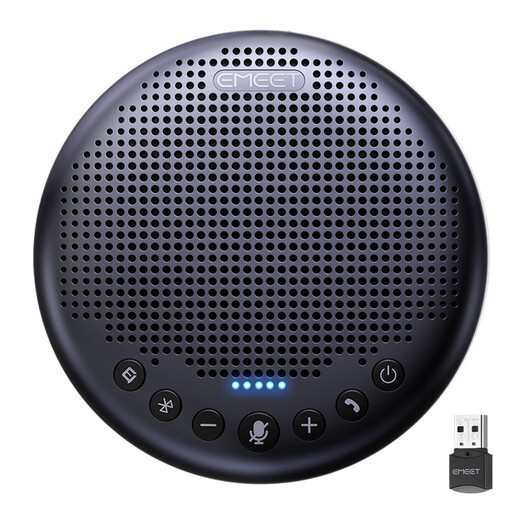 No image available
For a group around a table where voice pickup from all directions and a USB-C or Bluetooth connection are important.
The product details list eight microphones, a 3 m microphone range, 360° voice pickup and up to 10 hours of talk time.
USB-C and Bluetooth are listed as connection options. Check that they are compatible with your teaching device.
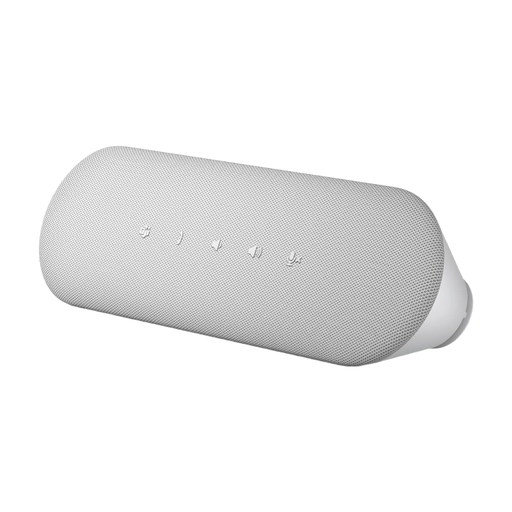
 No image available
An option if a stated microphone range and Bluetooth connectivity are important for your seating layout.
The product details list an eight-microphone array, Bluetooth, several recording modes and a built-in battery with up to 12 hours of battery life.
The microphone array range is listed as 16.4 feet. Check that this suits your room layout.
 No image available
For conversation practice on a computer when you need a USB connection and the ability to speak and listen at the same time.
The model is listed with full-duplex audio, echo cancellation and stereo output.
USB-A and USB-C connections are listed. Check which one is available on your teaching device.
Position it according to the seating layout and the stated microphone range of the exact model. HP lists a range of up to 2 m for the Poly Sync 20 USB-A and up to 2.5 m for the Sync 40. Then test every seat using the conversation app you plan to use.
No. The features of a product family do not automatically mean that every variant supports a wireless PC connection. HP distinguishes between the Poly Sync 20, which connects to a PC via USB, and the Sync 20+, which comes with a Bluetooth PC adapter. Check the full model name and what is included.
Before you buy, check the warranty terms, how repairs are handled and whether any adapters you need are included. The Verbraucherzentrale distinguishes between your statutory rights against the seller and a voluntary guarantee. The warranty terms for a particular HP model cannot be applied to other variants or brands.
No, you cannot record without considering the rules. Under § 201 StGB, recording another person's non-public spoken words on an audio medium without authorisation is a criminal offence. If you plan to record, check that you have the necessary authorisation and meet any other data protection requirements. Buying a speakerphone does not give you permission to record.
The CE marking is not independent evidence of sound quality or speech clarity. The European Commission describes it as a marking through which a manufacturer declares that a product meets the requirements of the relevant EU product legislation. For products within its remit, the Bundesnetzagentur checks matters including the marking, product information, German-language instructions and declaration of conformity.