
Lieferung heute & morgen

Qualitätsgarantie

Willkommens-Angebote freischalten: KOSTENLOSE Lieferung | Bis zu 80 % RABATT | Kostenlose 30-Tage-JoyPlus-Testphase
App herunterladen
The market for special lamps & lighting is vast, offering solutions for a wide range of needs—from alleviating seasonal blues to providing perfect illumination for digital content. However, this wide selection also has its pitfalls. Many products fail to deliver on their marketing promises, leading to disappointment and wasted money. As your Joybuy Product Recommendation Officer, I'm here to help you identify the crucial features and make an informed decision.
Before you make a purchase, you should be aware of the most common problems that often only become apparent after you buy.
To avoid the pitfalls mentioned above, focus on objective, technical criteria. These three parameters are central to most special lighting products.
For a lamp for winter depression, often called a light therapy device, the most important value is light intensity, measured in lux. The benchmark for simulating daylight is an intensity of 10,000 lux at a specific distance. The colour temperature, measured in Kelvin (K), should resemble natural daylight, corresponding to values around 6,500 K. UV-free light is essential to protect your eyes.
For a red light lamp for muscle tension, the power in watts is an indicator of the heat radiation's intensity. Higher-wattage models can cover a larger area and achieve a deeper heating effect. Essential safety features include an integrated timer with automatic shut-off and overheating protection. An adjustable tilt angle also ensures precise and comfortable use.
For lighting in damp environments, like a bathroom mirror with lighting, the IP rating is a crucial quality indicator. The IP44 designation means the product is protected against splashing water from all directions—a minimum standard for the bathroom. Also, look for rust-proof materials like aluminium for the frame and a sealed backing to permanently protect the electronics from moisture and dust.
Here you'll find product recommendations tailored to different user profiles and their specific requirements.

Why This Fits Their Persona: Ideal for those seeking a compact solution to boost well-being during the darker months. Its slim design fits on any desk or nightstand.
The product specifies a light intensity of up to 10,000 lux and UV-free LED technology. This addresses the pitfalls of misleading performance claims and a lack of safety.
Compact, travel-friendly format with an adjustable stand for flexible positioning (horizontal/vertical). Simple one-button operation.

Why This Fits Their Persona: Suitable for users who need powerful heat treatment for larger body areas like the back or shoulders and who value controlled application.
With an integrated timer (1-15 min) and active ventilation to prevent overheating, it minimises the typical safety risks of heat lamps. The high 300 W output ensures effective application.
A large treatment area (approx. 30 x 40 cm) and a continuously adjustable shade (0-50 degrees) allow for targeted and comfortable heat therapy.
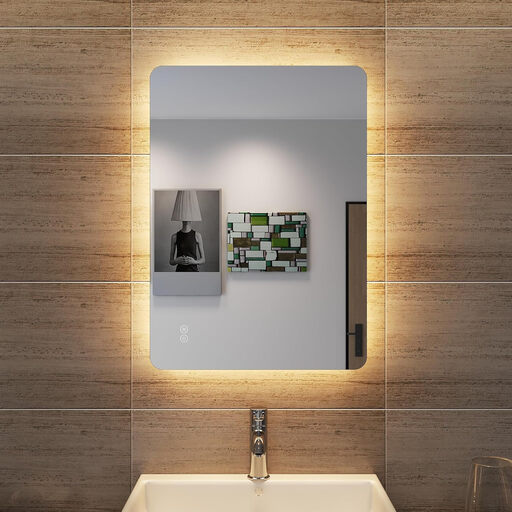
Why This Fits Their Persona: Perfect for modernising a bathroom. It combines functionality (light, anti-fog) with a modern, frameless design that seamlessly integrates into various interior styles.
The IP44 protection rating and fully sealed backing reliably protect the electronics from moisture. The aluminium frame and copper-free mirror glass prevent corrosion and material fatigue.
Integrated anti-fog function, three adjustable light colours (cool, neutral, warm white), and a memory function for personalised comfort.
We have compiled a complete, up-to-date list of products that fully meet these strict selection criteria and safety regulations.
1. How long should you use a daylight lamp each day? The recommended duration of use depends on the lamp's light intensity and your distance from the device. For a 10,000 lux lamp, a daily session of 20 to 60 minutes is often recommended, preferably in the morning. It's advisable to position the lamp to your side to avoid looking directly into the light source. Always follow the manufacturer's specific recommendations.
2. What is a safe distance to maintain from an infrared lamp? A safe distance is crucial to prevent skin irritation or burns. As a general guideline, maintain a minimum distance of 30 to 40 cm between the lamp and your skin. The heat should feel pleasant, not hot. Start with shorter treatment times and adjust the distance based on your personal comfort.
3. Can an LED bathroom mirror replace the main lighting in a bathroom? In most cases, an LED bathroom mirror is designed as task or ambient lighting and is not sufficient as the sole light source for the entire room. It provides excellent, shadow-free illumination for your face, for tasks like applying makeup or shaving. For complete room illumination, an additional ceiling light is typically required.