Speculoos biscuits aren’t the obvious choice for a regular snack, but they may be suitable as an occasional small treat if the ingredients are right for your child. Whether you choose a spiced, butter or chocolate variety, check the allergens and nutritional information on the specific pack.
Who should think carefully about snack choices?
Parents who need to check for allergens
If your child needs to avoid wheat or gluten, the ingredients list will determine whether a product is suitable at all. Milk and egg may also be relevant in butter speculoos biscuits, as shown by the information for an EDEKA product.
Parents who offer the occasional treat
If you’re planning to offer speculoos biscuits as a seasonal treat, you can decide on a small portion before opening the pack. The Verbraucherzentrale advises limiting sweets for children rather than offering them throughout the day.
Parents looking for an everyday snack
A regular snack calls for a different choice from an occasional biscuit. Should speculoos biscuits be part of your snack routine, or would a family food prepared in an age-appropriate way be better suited to the occasion?
What should you look for when buying?
First decide whether you’re looking for an occasional treat or a regular snack. For a specific speculoos biscuit, check the allergen labelling and nutritional information on the pack.
| Criteria |
What to check before buying |
Who it matters most to |
| Allergens |
Check the ingredients and highlighted allergens on the specific pack; look for precautionary ‘may contain’ statements too, if relevant. |
If my child needs to avoid wheat or gluten, I can’t choose speculoos biscuits based on the variety alone. This check is the main priority when buying for around 45% of consumers. |
| Nutritional information and portion |
Compare sugar and saturated fat per 100 g, and decide on the portion in advance. |
I want to offer a seasonal biscuit without making it an unrestricted snack. A limited portion of sweets is the main concern for around 36% of consumers. |
| Snack routine |
Decide whether you’re looking for an occasional biscuit or a food for regular snacks. |
If I need something for my child to eat between meals every day, a seasonal sweet biscuit isn’t my first choice. Around 19% of consumers prioritise choosing an everyday snack. |
Common selection mistakes
-
Assuming a biscuit is a suitable everyday snack
Child-friendly packaging says little about whether a sweet biscuit is right for regular snacking. The Verbraucherzentrale points out that many snacks specially made for children contain a lot of sugar or salt.
Before buying, decide whether you need an occasional treat or a snack for your child’s daily routine.
-
Assuming you can tell the allergens from the variety name
The spiced speculoos biscuits described by EDEKA contain wheat; the butter variety described also contains milk and egg. Other recipes may differ.
Check the ingredients and highlighted allergens on the actual pack for every variety, especially if your child needs to avoid certain ingredients.
-
Assuming butter and chocolate varieties are the same without checking
The EDEKA products described have different nutritional values and ingredients: the butter speculoos biscuits contain 13 g of saturated fat per 100 g, compared with 9 g in the spiced variety. Soy is listed as an ingredient in the dark chocolate speculoos biscuits.
Compare the nutritional information and allergen lists for the specific varieties rather than relying on their names alone.
Useful brands to compare
Bahlsen
Bahlsen makes several varieties of speculoos biscuits. For a snack comparison, the recipe matters more than the brand name alone.
- A Bahlsen Finest Spiced Speculoos listed by REWE contains 26 g of sugar per 100 g.
- Wheat and skimmed milk powder are listed for this product. If relevant, also check for possible traces of egg, hazelnuts and almonds.
GUT&GÜNSTIG
The spiced speculoos biscuits described by EDEKA offer a useful point of comparison for an uncoated, spiced variety.
- EDEKA lists 29 g of sugar and 9 g of saturated fat per 100 g for this product.
- Wheat and gluten-containing cereals are listed; EDEKA also notes possible traces of other allergens. This information applies to this product, not every variety from the brand.
EDEKA Herzstücke
The butter speculoos biscuits from this EDEKA own-label range are one option for comparing ingredients and nutritional values.
- EDEKA lists 29 g of sugar and 13 g of saturated fat per 100 g for the product described.
- The ingredients include wheat, milk and egg. This product isn’t suitable if your child needs to avoid any of these.
Butter speculoos biscuits at Joybuy
This product is a butter speculoos variety for an occasional treat. Before offering it to your child, check the allergens in particular and choose a suitable portion.
 No image available
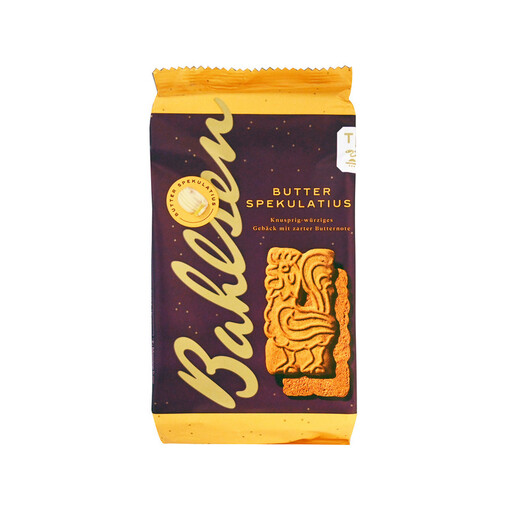
Bahlsen Finest Butter Speculoos, 200 g
May be suitable as an occasional small treat, provided the ingredients are right for your child.
Butter speculoos biscuits in a 200 g pack. This variety isn’t suitable if your child needs to avoid wheat or gluten, or milk. Check the information about possible traces of egg, almonds and hazelnuts too.
Check the information on the pack before offering it and choose a portion that’s right for your child.
View at Joybuy
Frequently asked questions about speculoos biscuits for toddlers
Can a toddler eat speculoos biscuits occasionally?
Speculoos biscuits are better treated as an occasional small treat than a regular snack, provided the ingredients are right for your child. The Verbraucherzentrale recommends limiting children to a small portion of sweets. You should also check the allergen labelling on the specific product.
Are regular speculoos biscuits suitable for someone with coeliac disease or a wheat allergy?
Speculoos biscuits containing wheat or gluten-containing cereals aren’t suitable if these need to be avoided. The spiced and butter varieties described by EDEKA contain wheat; check the ingredients and allergen information on each specific pack.
What’s the difference between butter and spiced speculoos biscuits?
Both varieties described by EDEKA contain 29 g of sugar per 100 g, but their ingredients and saturated fat content differ. The butter speculoos biscuits contain milk and egg, and have 13 g of saturated fat per 100 g; the spiced variety has 9 g. These figures won’t necessarily apply to every recipe.
Is the product name enough to help me choose?
No. You can’t tell from the name alone whether a variety is right for your child. Compare the ingredients, highlighted allergens and nutritional information on the pack, even if you’ve bought the same variety before.


