
Lieferung heute & morgen

Qualitätsgarantie

Willkommens-Angebote freischalten: KOSTENLOSE Lieferung | Bis zu 80 % RABATT | Kostenlose 30-Tage-JoyPlus-Testphase
App herunterladen
Buying a new speed cube can quickly become overwhelming. The market is flooded with models that promise a wealth of features, but not every innovation is useful for every user. Many buyers invest in expensive pro-level features they don't need, or get frustrated with cubes that jam or have stickers that peel off after a short time. As your Joybuy Product Recommendation Officer, I'll help you navigate these common pitfalls and make an informed decision.
Before we look at the important features, let's highlight the three most common problems that can lead to a bad purchase:
To avoid these problems, you should pay attention to three core aspects before you buy a puzzle cube. These determine the performance and longevity of any model.
The heart of every speed cube is its internal mechanism. It determines how smoothly and controllably the cube turns.
The choice of surface is more than just a matter of aesthetics.
The world of twisty puzzles is diverse. The choice of the right type depends on your experience level and your goals.
Here are some recommendations tailored to specific user profiles that purposefully avoid the pitfalls mentioned above.

Why This Fits Their Persona: Ideal for anyone looking to get into the world of speedcubing. It focuses on the essentials: a solid, smooth mechanism and a durable construction, without overwhelming the user with complex settings. Perfect for learning the basic algorithms.
The stickerless design completely eliminates the problem of peeling stickers. It forgoes expensive pro features, instead offering reliable baseline performance that is budget-friendly.
Standard competition size (5.5 cm) and a stable core structure that ensures smooth turns and good corner cutting. Made from eco-friendly ABS plastic.

Why This Fits Their Persona: For cubers who want to actively improve their solve times. This cube offers an entry into the world of magnetic cubes from a renowned brand, providing more control and stability at high speeds. A true pro speed cube for training.
The internal magnetic system actively counteracts "popping" and catching by stabilising the layers. It's a meaningful pro-level feature that has a direct impact on performance without being overly complex.
Tactile feedback from magnets for more precise turns. Based on the proven 356 core architecture from GAN, it offers a very smooth turning feel right out of the box.
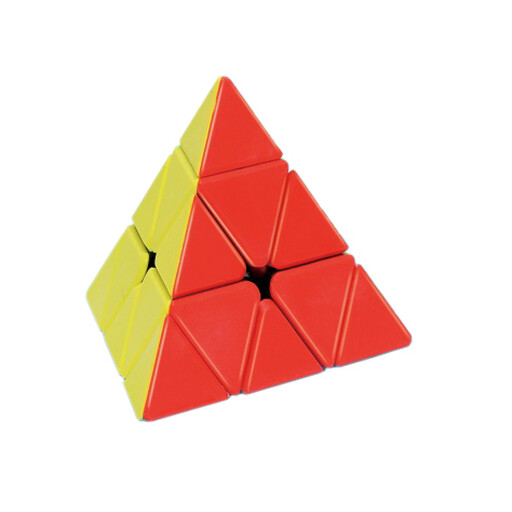
Why This Fits Their Persona: For anyone who has mastered the 3x3 cube and is looking for a new challenge. The Pyraminx offers a different geometry and requires new solving approaches. This model is an asset to any collection and promotes spatial reasoning in a new way.
Instead of getting lost in the details of 3x3 variations, this puzzle offers a completely new experience. The stickerless design also ensures maximum durability, which is important for collector's items.
The steel ball positioning mechanism provides distinct, clicky feedback with every turn, enabling very precise and satisfying handling.
We have compiled a complete, up-to-date list of products that fully meet these strict selection criteria and German safety regulations.
1. How do you maintain a speed cube to keep it turning smoothly? To maintain smoothness, the cube should be kept clean and free of dust. Wipe it regularly with a dry, soft cloth. For optimal performance, a special silicone-based lubricant for speed cubes can be applied to the contact surfaces of the internal pieces from time to time. This reduces friction and preserves the smooth turning feel.
2. What does "corner cutting" mean on a puzzle cube?Corner cutting describes a cube's ability to complete a turn even when the layers are not perfectly aligned. Good corner cutting is crucial for high speeds, as it compensates for small inaccuracies in handling and prevents the cube from locking up.
3. Are magnetic puzzle cubes suitable for beginners? Yes, absolutely. A magnetic puzzle cube can even be beneficial for beginners. The magnets help to stabilise the layers after each turn, leading to a more controlled and less frustrating experience. It prevents the feeling of the cube being "too loose" and makes it easier to learn precise movements. Models like the GAN 356 M Lite are a great entry point.