
Lieferung heute & morgen

Qualitätsgarantie

Willkommens-Angebote freischalten: KOSTENLOSE Lieferung | Bis zu 80 % RABATT | Kostenlose 30-Tage-JoyPlus-Testphase
App herunterladen
Spelt baked goods are growing in popularity among health-conscious consumers and families in the UK. However, the expanding market makes choosing the right product complicated. Marketing terms like "naturally sweetened" or "with whole grain" can be misleading. This guide will help you separate the wheat from the chaff and find spelt products that truly meet your needs.
As your Joybuy Product Recommendation Officer, I have compiled the most important criteria to help you avoid common purchasing traps and provide you with an informed basis for your decision.
Before you decide on a product, you should be aware of the following points that often lead to disappointment or unnecessary expense:
To ensure you get the right product, focus on these three objective criteria.
The order of the ingredients indicates their proportion by weight. If a sweetener (sugar, syrup, concentrate) is listed near the top, its content is correspondingly high. Pay attention to the "sugars" value in the nutritional table. Products sweetened exclusively with the natural sweetness of whole fruits (not concentrates) are rare but are an option for purists. For organic spelt cookies, it is also relevant that all ingredients come from organic farming, which is verified by seals such as the EU organic logo or association seals (e.g., Soil Association, Demeter).
Spelt flour is available in different milling grades (types), which indicate the mineral content.
For a high-fibre diet, the whole grain content should be as high as possible. Reputable manufacturers often state this as a percentage (e.g., "with 52% whole-grain spelt flour").
The range of spelt products is diverse. Your choice should depend on the intended use:
Here is a selection of products tailored to specific needs.
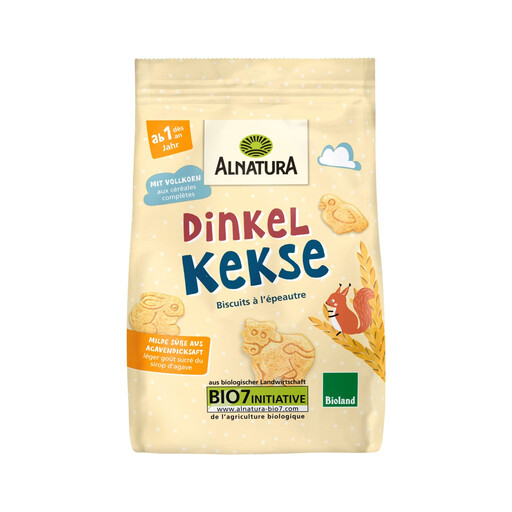
Why It's a Good Fit: Specially developed for toddlers from one year of age. The recipe is based on organic ingredients certified by Bioland and is sweetened with agave syrup instead of granulated sugar.
The product avoids the trap of unsuitable snacks for children with a clear age recommendation and a low-salt recipe (0.16 g/100 g). The sweetening source is transparently declared.
High spelt whole-grain flour content of 52% and added thiamine (vitamin B1), which, according to the manufacturer, is important for energy metabolism.
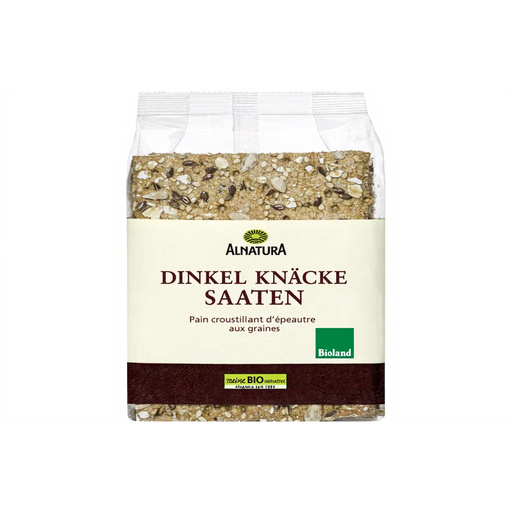
Why It's a Good Fit: An excellent choice for anyone looking for a crunchy, high-fibre, and savoury snack. Ideal as a base for spreads or as a side.
This crispbread avoids the trap of vague whole grain content with a clear composition: according to the manufacturer, it consists of 62% whole-grain spelt flour and meal. The sugar content is very low at 2.2 g/100 g.
Very high fibre content of 12 g per 100 g. The recipe is vegan, and the ingredients are from Bioland-certified farms, with the spelt grown in Germany.
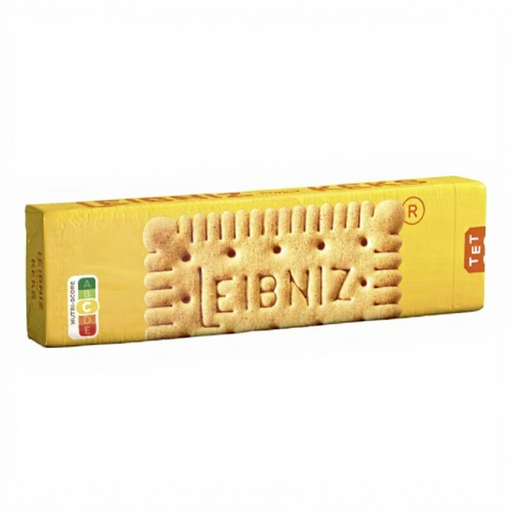
Why It's a Good Fit: For lovers of the traditional butter biscuit who want to try an alternative with spelt. It offers the familiar taste and crispy texture in a new variation.
This product avoids the "health washing" trap. It is clearly positioned as a treat. The sugar content (19 g/100 g) and the use of light spelt flour are transparent, so no false expectations are created.
A very high proportion of 74% spelt flour forms the base of the biscuit. According to the manufacturer, the packaging is 100% recyclable, which is a relevant factor for environmentally conscious buyers.
We have compiled a complete, up-to-date list of products that fully meet these strict selection criteria and UK regulations.
Spelt is an ancient grain and is related to wheat. Some people find spelt products more digestible. However, whether a spelt snack is a healthier choice depends not just on the grain but on the entire recipe. A spelt cookie with high sugar and fat content is not necessarily more nutritious than a comparable wheat cookie. The decisive factors are the whole grain content, the sugar and salt levels, and the type of fats used.
When choosing spelt snacks for children, several factors are important. Look for the lowest possible sugar and salt content. Products with no added sugar or sweetened only with fruit are often a good choice, but you should still check the nutritional information. The texture should be appropriate for the child's age to minimise the risk of choking. Products with a clear age recommendation, such as "from 1 year," provide good guidance here.