
Lieferung heute & morgen

Qualitätsgarantie

Willkommens-Angebote freischalten: KOSTENLOSE Lieferung | Bis zu 80 % RABATT | Kostenlose 30-Tage-JoyPlus-Testphase
App herunterladen
A day cream with SPF 30 is a fundamental cornerstone of any skincare routine aimed at protecting and maintaining healthy skin. It combines moisturisation with essential protection against daily UV radiation, the primary cause of premature skin ageing like wrinkles and dark spots. However, the market is overwhelming, and many products don't live up to their claims. This guide will help you understand the crucial criteria and make an informed choice.
Before you make a decision, it's important to question common marketing promises. Many buyers invest in products that are unsuitable for their needs.
To avoid a purchase you'll regret, you should focus on objective and verifiable product features. The following three parameters are crucial.
The type of UV filter determines the texture, feel on the skin, and suitability for different skin types.
The SPF is only one part of the equation. The cream's base must match your skin's needs.
The Sun Protection Factor (SPF) primarily indicates protection against UVB rays, which are responsible for sunburn. At least as important is protection against UVA rays, which penetrate deeper into the skin and are a major contributor to the formation of wrinkles and loss of elasticity. Look for the UVA logo (UVA in a circle) on the packaging. It guarantees that the UVA protection is at least one-third of the stated UVB protection, as recommended by the EU Commission.
Based on the criteria above, we have identified several products that represent a considered choice for different needs and skin types.
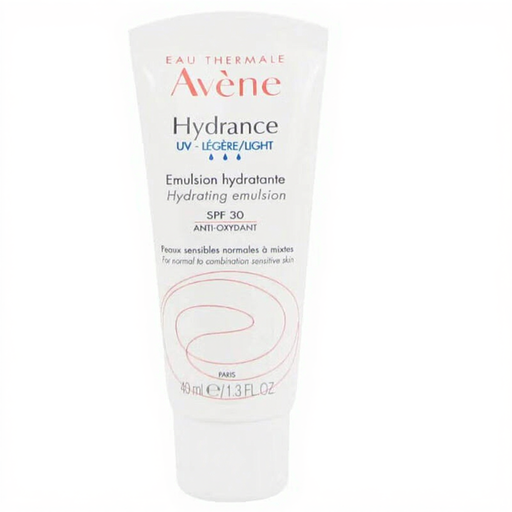
Why it's a great fit: Ideal for users seeking a straightforward, reliable, and well-tolerated moisturiser with SPF 30 for daily use. The lightweight texture is excellent for normal to sensitive combination skin.
The light, non-sticky texture encourages the application of the correct amount without feeling heavy, thus ensuring full SPF protection. It focuses on its core functions: hydration and protection.
Contains skin-soothing Avène Thermal Spring Water. The formula is hypoallergenic and non-comedogenic, making it a safe choice for sensitive and blemish-prone skin.
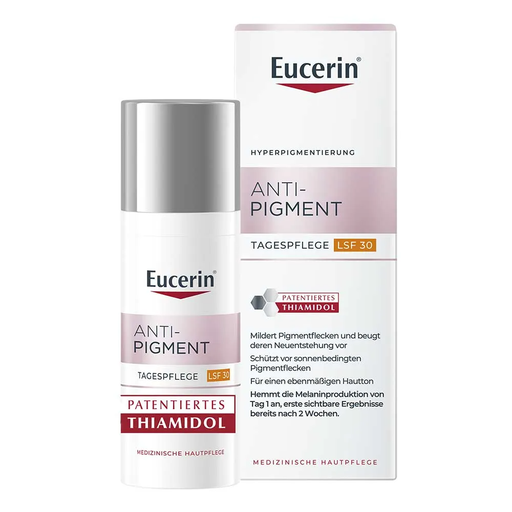
Why it's a great fit: For individuals whose main concern is reducing existing dark spots and preventing new sun-induced discolouration. The formula is specifically designed for this skin issue.
Instead of vague promises, this product relies on the patented active ingredient Thiamidol. According to the manufacturer Beiersdorf, it acts at the source of hyperpigmentation. This is a targeted approach rather than a non-specific "all-in-one" solution.
In addition to UVA/UVB protection, it also offers protection against High-Energy Visible Light (HEVIS light, also known as blue light), which can also contribute to the formation of dark spots.
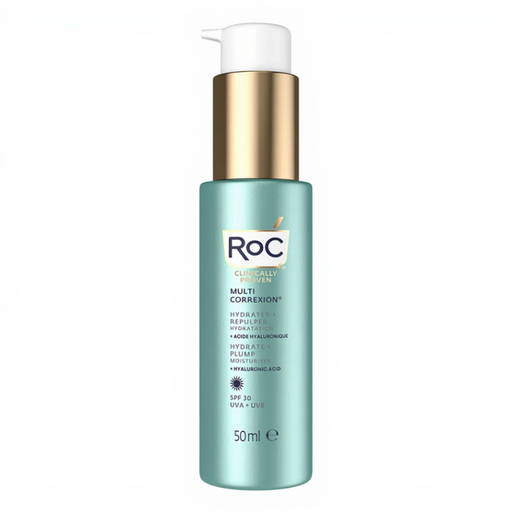
Why it's a great fit: For users seeking a day cream with hyaluronic acid and SPF 30 that hydrates, visibly plumps the skin, and simultaneously protects against sun-induced ageing.
The formula combines synergistic ingredients like Hyaluronic Acid and Niacinamide. Instead of mixing many ingredients in low doses, it focuses on an effective combination for hydration and skin barrier support.
The lightweight, non-greasy formula absorbs quickly and leaves the skin feeling smooth without a heavy film, making it an excellent base for makeup.
We have compiled a complete, real-time updated list of products that fully meet these strict selection criteria and UK/EU safety regulations.
To achieve the SPF 30 listed on the packaging, a generous amount is necessary. A good rule of thumb for the face and neck is the "two-finger method": apply two strips of cream along your index and middle fingers. This roughly corresponds to the recommended amount. Applying too little significantly reduces protection.
For a normal day with office work and short periods outdoors, a face cream with SPF 30 is generally sufficient. However, for prolonged and intense sun exposure, such as at the beach, during sports, or on long hikes, a dedicated, water-resistant sunscreen with a high SPF should be used and reapplied every two hours.
Yes. Up to 80% of UVA rays can penetrate cloud cover. Since UVA radiation is one of the main causes of skin ageing (photoageing), the daily use of a facial sunscreen or a daily moisturiser with broad-spectrum protection is a fundamental, year-round step for prevention.