
Lieferung heute & morgen

Qualitätsgarantie

Willkommens-Angebote freischalten: KOSTENLOSE Lieferung | Bis zu 80 % RABATT | Kostenlose 30-Tage-JoyPlus-Testphase
App herunterladen
An SPF 30 day cream is a fundamental cornerstone of any skincare routine. It combines hydration with essential protection against UV radiation, the primary cause of premature skin ageing. However, the market is flooded with products whose marketing claims often create more confusion than clarity. Many consumers invest in creams that don't suit their skin type or whose protective effects are disappointing in practice.
As your Joybuy Product Recommendation Officer, I'm here to help you identify these pitfalls. This guide focuses on the objective criteria that define a quality day moisturiser with UV protection, ensuring your next purchase is an informed one.
Before we dive into the solutions, it's important to understand the most common issues that lead to dissatisfaction and unnecessary spending.
To make an informed decision, focus on three verifiable product characteristics. These will help you see through the marketing claims and find a suitable day cream for mature skin or other specific needs.
The Sun Protection Factor (SPF) 30 indicates how well a product protects against UVB rays, which are responsible for sunburn. However, protection against UVA rays is just as important, as they penetrate deeper into the skin and are a major contributor to the development of wrinkles and dark spots.
An effective anti-ageing SPF 30 day cream or moisturiser with sun protection relies on a thoughtful combination of ingredients that support each other.
The best anti-wrinkle face cream with sun protection is useless if its texture doesn't suit your skin.
Here are some product recommendations tailored to specific needs and user profiles, taking the above criteria into account.
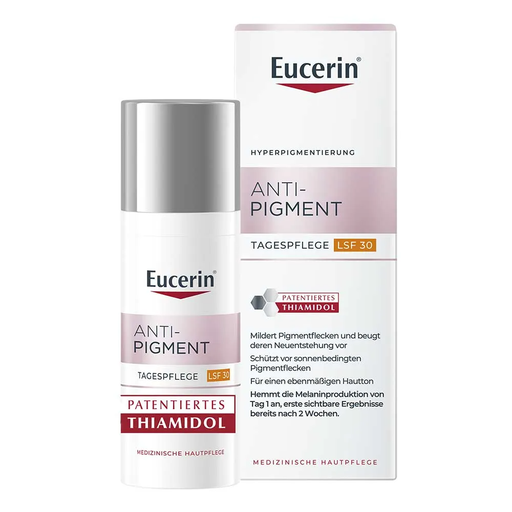
Why This Fits Their Persona: Ideal for users who want a reliable day cream with UV protection that also specifically targets existing dark spots, without needing to layer multiple products.
This product bypasses the "all-in-one" myth with a clear focus: its formula concentrates on reducing dark spots with the active ingredient Thiamidol and combines this with solid broad-spectrum protection.
Contains the Beiersdorf-patented active ingredient Thiamidol, which targets hyperpigmentation at its root. The texture is lightweight and absorbs quickly.
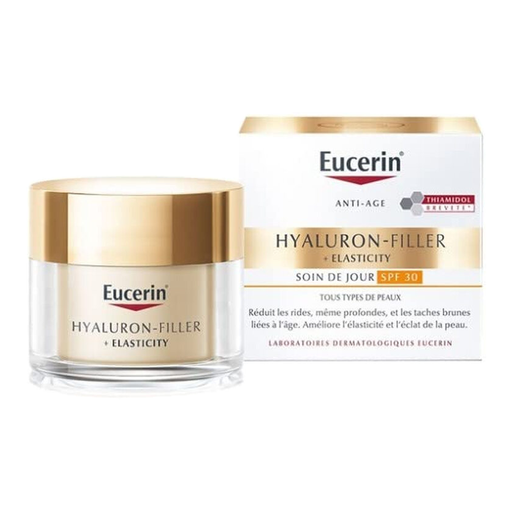
Why This Fits Their Persona: Perfect for users with mature skin looking for a day cream that not only protects from the sun but also specifically improves elasticity and reduces deep wrinkles.
This cream avoids the pitfall of an unsuitable texture as it's specifically formulated for the needs of more mature skin, which is often drier. It delivers richer care without feeling heavy.
Combines Hyaluronic Acid with Arctiin, an active ingredient that, according to the manufacturer, stimulates collagen production. Offers comprehensive anti-ageing care for mature skin.
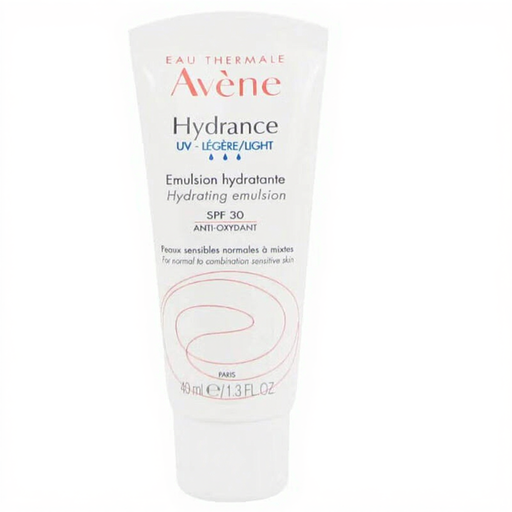
Why This Fits Their Persona: Suitable for individuals with sensitive, normal to combination skin whose priority is low-irritation yet effective hydration and reliable sun protection.
This product avoids the pitfall of misleading active ingredients by relying on a minimalist yet proven formula. The focus is on soothing Avène Thermal Spring Water and a solid hydration complex.
The formulation is hypoallergenic and non-comedogenic. Its lightweight emulsion texture is ideal for skin prone to shine that still requires moisture.
We have compiled a complete, up-to-date list of products that fully meet these strict selection criteria and safety regulations.
Do I need to use an SPF 30 day cream in the winter? Yes. UVA rays, which are responsible for skin ageing, have a nearly constant intensity throughout the year. They penetrate clouds and window glass. Therefore, using a daily moisturiser with UV protection is a sensible step to prevent photoaging, even on cloudy days and in winter.
Does an SPF 30 day cream replace a dedicated sunscreen? For normal daily life with brief, indirect sun exposure (e.g., the commute to work), an SPF 30 day cream is generally sufficient. However, for prolonged, direct sun exposure, such as at the beach, while hiking, or during outdoor sports, a dedicated, water-resistant sunscreen with a high SPF should be used. It should be applied generously and reapplied regularly (about every two hours).
How much cream do I need to apply to get the full protection? To achieve the sun protection factor stated on the packaging, the amount you apply is crucial. A common rule of thumb for the face and neck is the 'two-finger method': apply a line of the product to your index and middle fingers. This corresponds to about a quarter to half a teaspoon. Most people use significantly less, which considerably reduces the level of protection.