
Lieferung heute & morgen

Qualitätsgarantie

Willkommens-Angebote freischalten: KOSTENLOSE Lieferung | Bis zu 80 % RABATT | Kostenlose 30-Tage-JoyPlus-Testphase
App herunterladen
SPF 30 and SPF 50 sun creams differ in more than just the number on the packaging. UVA protection, texture, skin tolerance, how much you apply and how you plan to use the product all matter too. A face sun cream for your daily commute has different requirements from a water-resistant sun lotion for a family day out.
If you focus only on a high SPF or appealing skincare claims, you can easily overlook important details. The following selection criteria will help you assess marketing claims objectively and choose a product to suit your skin type and daily routine.
SPF primarily describes protection against UVB rays, which are associated with sunburn, among other things. For balanced sun protection for your face and body, you should also look for clearly stated UVA protection. In the EU, the UVA symbol in a circle or an equivalent statement from the manufacturer should be present.
Applying too thin a layer significantly reduces the protection you actually get. Apply a generous amount to your face, neck and décolletage. If you’re spending a long time outdoors, reapply regularly – especially after swimming, heavy sweating or drying yourself with a towel.
Water-resistant sun protection is practical for the beach, swimming pool and sport. However, water, sweat, friction and towels can reduce its effectiveness. So you’ll still need to reapply, even when using water-resistant formulas.
With products that don’t claim to be water-resistant, protection may wear off even faster after swimming. For everyday use without contact with water, a lightweight sun lotion or face emulsion is often more comfortable.
Terms such as “anti-ageing”, “soothing” or “moisturising” describe additional product benefits, but they’re no substitute for checking the ingredients list. Fragrance, essential oils, alcohol or cooling ingredients may not suit everyone.
If you have sensitive skin, check the full INCI list and test the product on a small area of skin. If your skin is prone to blemishes, claims such as non-comedogenic and a lightweight, oil-free texture may be worth looking for. They’re not, however, a guarantee that the product will suit your individual skin.
SPF 30 sun lotion is often suitable for everyday journeys, cloudy days and less intense sun exposure, provided you apply enough. SPF 50 sun milk offers a higher stated level of UVB protection and may be a good choice for fair, sensitive or sun-sensitive skin, or for spending longer outdoors.
SPF 50 doesn’t let you stay in the sun safely for an unlimited time. Protective clothing, a hat, shade and avoiding the strongest midday sun are still important. Babies and toddlers should be kept out of direct sunlight.
Mineral sun protection uses ingredients such as zinc oxide or titanium dioxide. These filters are listed among the ingredients and may appeal if you prefer a formula based on physical filters. Depending on the formula, however, mineral sun cream can be more visible on the skin. Modern textures aim to reduce this white cast.
Organic UV filters are often used in lightweight, transparent formulas. When choosing a product, consider how well it suits your skin, its stated UVA and UVB protection, and how it feels on your skin – not just the filter category.
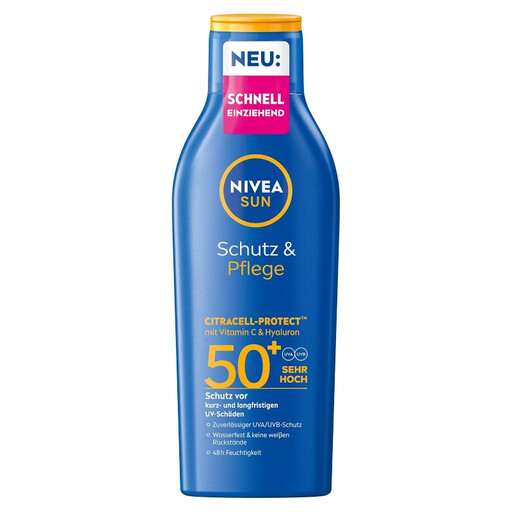
Why this product suits this profile: The 200 ml pack is designed for regular use on your arms, legs and other parts of your body. SPF 50+ is for those who prefer a high stated level of protection.
The larger pack makes it easier to apply enough product, while the product description mentions UVA and UVB protection and regular reapplication.
SPF 50+, 200 ml, and a fast-absorbing lotion that, according to the product description, leaves no visible white residue.
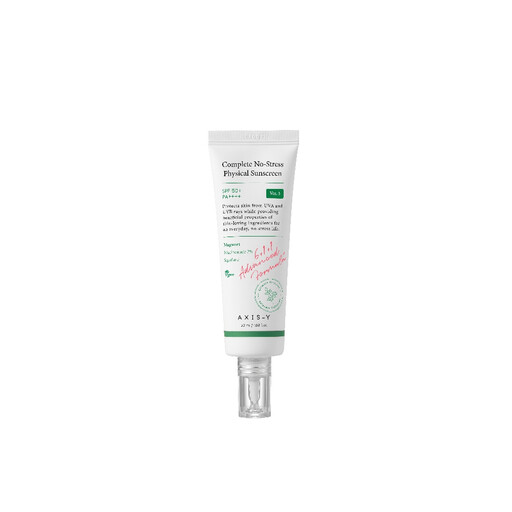
Why this product suits this profile: According to the product description, this mineral face sun cream contains zinc oxide and offers SPF 50 and PA++++. Its fragrance-free, vegan formula is designed for daily use on the face.
The product description says it has a non-chalky texture that leaves no white residue. Even so, test how well it suits your skin before applying it over a larger area for the first time.
Zinc oxide UV filter, SPF 50, PA++++ and 50 ml; stated to be fragrance-free.
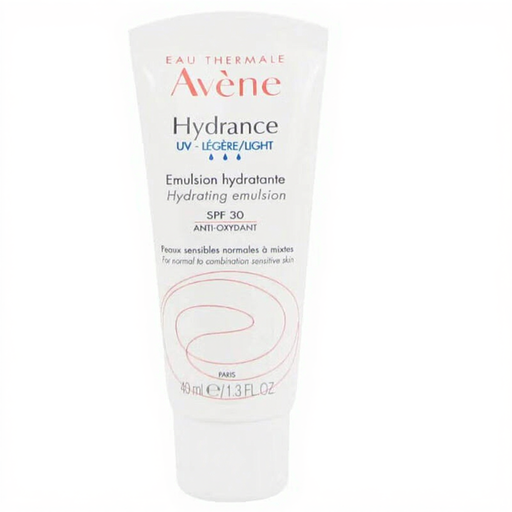
Why this product suits this profile: This emulsion is intended for normal, combination and sensitive skin, and is described as lightweight, non-comedogenic and mattifying.
This compact emulsion combines SPF 30 with a lightweight texture, showing that face sun protection doesn’t have to feel heavy or greasy.
SPF 30, UVA and UVB protection, a matte finish and, according to the product description, a non-comedogenic formula.
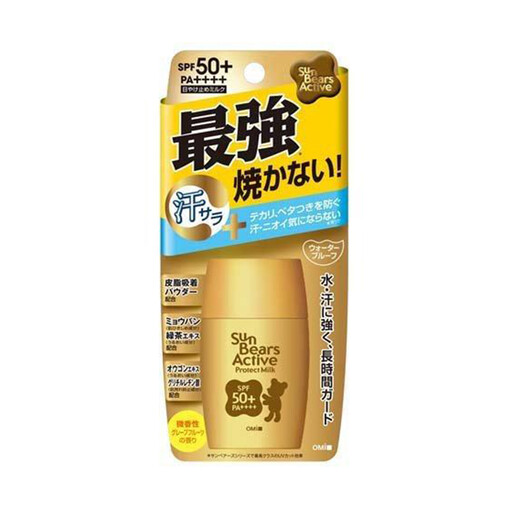
Why this product suits this profile: The compact 30 g size is designed for days out, sport and activities involving sweat or water. According to the product description, the lotion contains zinc oxide and titanium dioxide.
Its water-resistant label makes it suitable for outdoor activities. You’ll still need to reapply after swimming, sweating or drying yourself with a towel.
Compact size and, according to the product description, a water-resistant, sweat-resistant formula for adults and children aged six and over.
We’ve put together a complete, regularly updated list of products that meet these strict selection criteria and the safety regulations in force across the EU.
Apply sun cream generously before going outdoors. When using face sun cream, remember to cover your ears, hairline, neck and décolletage too. Avoid the eye area and mucous membranes. Store the product as directed on the packaging, usually in a cool, dry place away from direct sunlight.
You’ll find a specific expiry date or the period after opening on the packaging. Don’t use an opened product beyond the stated period. If its smell, colour or consistency changes, it’s a good idea to replace it. Stop using the product if you experience redness, itching or stinging.
Not in every case. SPF 30 may be enough for many everyday situations if you apply it correctly and generously. SPF 50 is a suitable option for sensitive or fair skin, strong sunshine and spending longer outdoors.
Reapply regularly, especially after swimming, sweating or drying yourself with a towel. The exact interval depends on the product, your activity and the strength of the sun. Reapplying won’t fully restore the original protection if you’ve already spent too long in direct sunlight.
Yes, many fluids and lightweight emulsions are designed for this. Apply it evenly, allow enough time for it to absorb and choose a texture that doesn’t pill. If you have sensitive skin, check for fragrance and any ingredients you know don’t suit you beforehand.